

Digital marketing KPIs are measurable values that connect your marketing spend directly to business outcomes like customer acquisition cost (CAC), return on investment (ROI), and customer lifetime value (LTV). Startups that track digital marketing KPIs with discipline grow faster because they stop guessing and start allocating budget where it actually produces revenue. Tools like Google Analytics 4 (GA4), AgencyAnalytics, and UTM tagging form the technical backbone of any reliable measurement system. This guide walks you through selecting the right metrics, building accurate tracking infrastructure, and turning data into decisions that scale your business.
Which digital marketing KPIs should startups focus on?
The most effective key performance indicators for startups fall into three categories: acquisition, engagement, and revenue. Trying to monitor every available metric creates noise, not clarity. Start with a focused set of six to eight KPIs that map directly to your current growth stage.
Acquisition KPIs tell you how efficiently you are bringing in new customers:
- Customer Acquisition Cost (CAC): Total marketing and sales spend divided by the number of new customers acquired in a period. A rising CAC signals channel saturation or poor targeting.
- Cost Per Lead (CPL): The cost to generate a single qualified lead from a specific channel. CPL lets you compare paid search against social or email at a granular level.
- Click-Through Rate (CTR): The percentage of people who click your ad or link after seeing it. Low CTR on paid campaigns usually points to weak creative or mismatched audience targeting.
Engagement and retention KPIs reveal whether your content and product experience are working:
- Bounce Rate and Session Duration: High bounce rates on landing pages often indicate a disconnect between your ad copy and the page content.
- Email Open Rate and Conversion Rate: Open rates measure subject line effectiveness; conversion rates measure whether the email body and call to action are doing their job.
- Social Media Engagement Rate: Likes, shares, and comments relative to reach. This metric matters more than follower count for early-stage startups.
Revenue KPIs connect marketing activity to the bottom line:
- LTV (Customer Lifetime Value): The total revenue a customer generates over their relationship with your business. The LTV to CAC ratio is one of the clearest indicators of marketing sustainability. A ratio above 3:1 is generally considered healthy.
- Marketing ROI: Revenue attributed to marketing divided by marketing spend. This is the number your CFO cares about most.
Pro Tip: Understand the difference between a metric and a KPI before you build your dashboard. A metric is any data point you can measure. A KPI is a metric tied to a specific business goal. Knowing the difference between metrics and KPIs prevents you from tracking data that looks interesting but drives no decisions.
How to implement consistent and accurate tracking
Accurate tracking is not a one-time setup. It is an ongoing discipline that requires clear naming conventions, the right tools, and regular audits.
-
Set up GA4 as your primary web tracking platform. GA4 tracks both web and app behavior in a single property, uses an event-based data model, and integrates natively with Google Ads. Configure conversion events for your most important actions: form submissions, purchases, demo bookings, and email sign-ups. The GA4 setup process follows the same core steps regardless of your industry.
-
Implement UTM parameters on every external link. UTM tags tell GA4 exactly where a visitor came from. The three required parameters are "utm_source
(e.g., google),utm_medium(e.g., cpc), andutm_campaign` (e.g., spring-launch-2026). Flyn recommends precise UTM usage and consistent casing to maintain clean channel data across paid, email, social, podcast, and offline campaigns via QR codes. -
Enforce lowercase naming conventions across your entire team. GA4 treats UTM values as case-sensitive, so “Email” and “email” appear as two separate channels in your reports. Inconsistent capitalization fragments data and makes channel comparisons unreliable. Use a shared UTM builder spreadsheet or a tool like Flyn to enforce standards.
-
Never tag internal links with UTMs. This is the most common and most damaging tracking mistake startups make. Tagging internal navigation with UTMs causes GA4 to start a new session and overwrite the original acquisition source, which corrupts your attribution data entirely.
-
Centralize your data in a startup KPI dashboard. Pulling reports from Google Ads, Meta Ads Manager, Mailchimp, and GA4 separately wastes time and creates version conflicts. Integrating data from multiple sources into a single view is what separates teams that optimize effectively from those that just report. AgencyAnalytics connects these channels into one live dashboard.
| Tool | Primary Function | Best For |
|---|---|---|
| Google Analytics 4 | Web and app behavior tracking | All startups |
| AgencyAnalytics | Multi-channel dashboard | Teams managing 3+ channels |
| Flyn | UTM link management | Campaign attribution hygiene |
| Google Looker Studio | Custom reporting and visualization | Stakeholder reporting |
Pro Tip: Run a UTM audit every quarter. Pull a source/medium report in GA4 and look for duplicate entries caused by capitalization drift, like “Facebook” vs. “facebook” or “CPC” vs. “cpc.” Catching this early prevents months of corrupted data from distorting your budget decisions.

Advanced techniques to analyze and validate KPI data
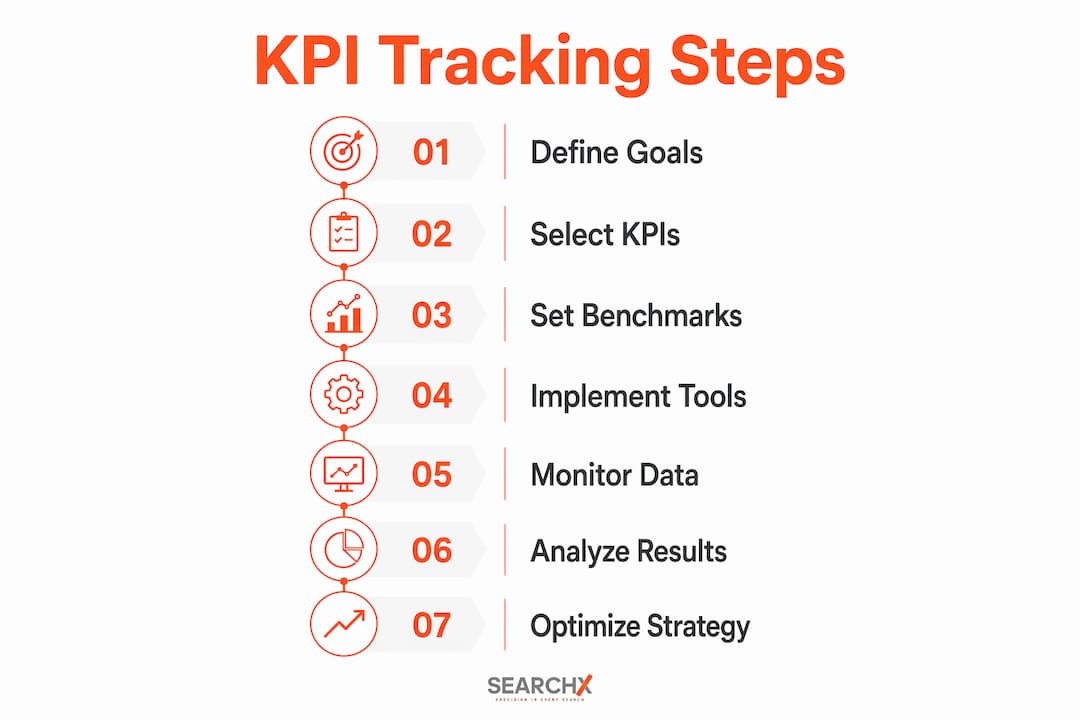
Basic KPI tracking tells you what happened. Advanced analysis tells you why it happened and whether your marketing actually caused it.
The most underused technique in startup marketing measurement is incrementality testing. Incrementality testing isolates the true causal impact of a campaign by comparing results between a group exposed to your marketing and a holdout group that was not. Without this, you risk attributing conversions to campaigns that would have happened organically anyway.
Think with Google documented a case where demand generation campaigns delivered 23% more value than originally modeled after incrementality testing was applied. That gap represents real budget that would have been misallocated without the test.
- Incrementality testing recalibrates marketing mix modeling (MMM). MMM estimates how each channel contributes to revenue, but it relies on historical correlations. Incrementality testing adds causal validation, which makes your MMM outputs far more reliable for media planning.
- It exposes the limits of platform-reported ROAS. Google Ads and Meta both report return on ad spend using their own attribution windows, which almost always overcount conversions. Incrementality testing gives you an independent check on those numbers.
- It shifts your team from vanity metrics to full-funnel thinking. Vanity metrics like impressions and follower counts feel good but do not prove business impact. Incrementality testing shifts marketers toward decisions grounded in causal evidence.
- It applies across channels. YouTube awareness campaigns, paid search, and even email re-engagement sequences can all be tested for true incremental lift.
“Marketing measurement aims to increase certainty about causal impact.” — Think with Google. For startups with limited budgets, this certainty is the difference between scaling a winning channel and burning cash on one that looks good in a dashboard.
Budget allocation decisions require both operational metrics like platform ROAS and strategic causal estimates from incrementality testing for media planning. Relying on only one of these creates blind spots that cost real money.
How to interpret KPI reports and optimize marketing performance
Data without a review process is just storage. Building a regular rhythm for analyzing startup growth metrics is what turns tracking into growth.
-
Set a weekly and monthly review cadence. Weekly reviews catch anomalies early: a sudden drop in CTR, a spike in CPL, or a conversion rate collapse on a key landing page. Monthly reviews assess trend lines and inform budget reallocation decisions.
-
Use automated alerts in GA4 for anomaly detection. GA4 allows you to set custom alerts that notify you when a metric moves outside a defined threshold. Set alerts for traffic drops above 20%, conversion rate changes above 15%, and bounce rate spikes on high-value pages.
-
Connect CRM data to your marketing analytics. GA4 tells you what happened on your website. Your CRM tells you what happened after. Connecting the two lets you trace a paid search click through to a closed deal, which is the only way to calculate true marketing ROI. Tools like HubSpot and Salesforce both offer GA4 integration.
-
Use KPI trends to drive creative and targeting decisions. If your Facebook CPL is rising month over month, the data is telling you one of three things: audience fatigue, creative fatigue, or increased competition. Test a new audience segment, refresh your ad creative, or shift budget to a channel with a lower CPL trend.
-
Report to stakeholders in business language, not marketing language. Your CEO does not care about impressions. They care about CAC, pipeline generated, and revenue attributed to marketing. Build a content ROI reporting framework that translates channel metrics into revenue impact.
Pro Tip: When you set SEO KPIs aligned to business goals, tie each KPI to a specific revenue outcome from the start. “Increase organic traffic by 30%” is a weak KPI. “Increase organic traffic to the pricing page by 30% to generate 15 additional demo requests per month” is a KPI your whole team can act on.
Key takeaways
Startups that track digital marketing KPIs accurately, using clean UTM data, centralized dashboards, and incrementality testing, make better budget decisions and grow faster than those relying on platform-reported numbers alone.
| Point | Details |
|---|---|
| Start with six to eight KPIs | Focus on CAC, LTV, ROI, CPL, CTR, and conversion rate before adding complexity. |
| UTM hygiene is non-negotiable | Use lowercase naming conventions and never tag internal links to protect attribution data. |
| Centralize your dashboard | Tools like AgencyAnalytics unify multi-channel data and make optimization decisions faster. |
| Test for true causal impact | Incrementality testing reveals whether campaigns drive real growth or just correlate with it. |
| Review data on a set cadence | Weekly anomaly checks and monthly trend reviews turn raw KPI data into budget decisions. |
What I have learned from watching startups track KPIs the wrong way
Most startups I have seen do not fail at tracking because they lack tools. They fail because they add tools before they have discipline. A founder installs GA4, connects Google Ads, adds Meta Pixel, subscribes to a dashboard tool, and then never enforces a UTM naming convention. Six months later, their source/medium report looks like a ransom note: “facebook,” “Facebook,” “FB,” and “fb” all appear as separate channels. The data is technically there. It is just useless.
The startups that get this right do one thing differently: they treat data governance as a marketing function, not an IT function. Someone on the marketing team owns the UTM spreadsheet. Someone reviews the GA4 source report every Monday. That discipline costs nothing and saves thousands in misallocated budget.
My other strong opinion: do not wait until you are spending $50,000 a month on ads to start incrementality testing. Even a simple holdout test on your email campaigns at $5,000 a month will teach you something that platform attribution never will. The earlier you build the habit of causal thinking, the better your budget decisions become as you scale.
Monitoring website performance effectively is not a technical problem. It is a cultural one. Build the culture first, then add the tools.
— SEO
How SearchX helps startups build a KPI tracking system that works
SearchX builds the kind of measurement infrastructure that turns marketing spend into provable revenue. From GA4 configuration and UTM governance frameworks to keyword research strategies that align with your actual business goals, SearchX delivers tracking setups that give you clean, reliable data from day one. The agency’s approach connects SEO metrics, paid channel performance, and content ROI into a single reporting view, so you always know which channels are earning their budget. If your startup is ready to move beyond vanity metrics and build a performance measurement system grounded in real outcomes, SearchX is the partner that makes it happen.
FAQ
What are the most important KPIs for a startup to track?
CAC, LTV, conversion rate, and marketing ROI are the four KPIs every startup should track from day one. These metrics connect marketing activity directly to revenue and sustainability.
How do UTM parameters improve digital marketing tracking?
UTM parameters tag every external link with source, medium, and campaign data, which tells GA4 exactly where each visitor came from. Consistent UTM naming conventions are required for accurate channel attribution.
What is incrementality testing in digital marketing?
Incrementality testing measures the true causal impact of a campaign by comparing results between an exposed group and a holdout group. Think with Google found that campaigns can deliver 23% more value than originally modeled once incrementality is measured.
Why does GA4 show duplicate channel entries in my reports?
GA4 treats UTM values as case-sensitive, so “Email” and “email” appear as separate channels. Enforcing lowercase naming conventions across your team eliminates this fragmentation.
How often should startups review their marketing KPI data?
Weekly reviews catch anomalies and short-term performance shifts, while monthly reviews assess trends and inform budget reallocation. Both cadences together create a complete picture of marketing performance.