
Seasonal content aligns your website with customer needs during peak times, boosting search rankings and driving conversions. For HVAC businesses, timing is everything – people search for "AC repair" in summer and "furnace repair" in winter. By publishing content 2–3 months before demand spikes, you can capture these searches and get ahead of competitors.
Key Takeaways:
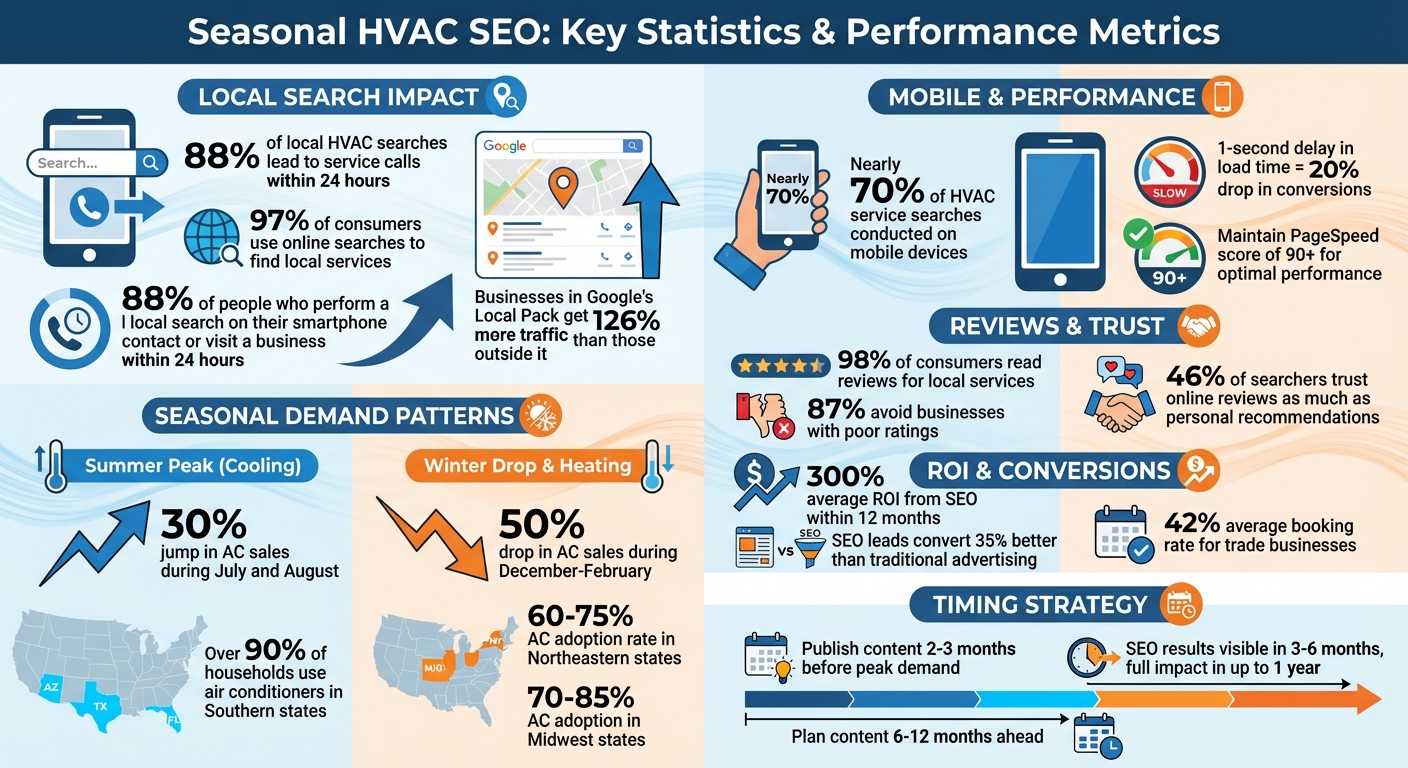
- 88% of local HVAC searches lead to service calls within 24 hours.
- Businesses in Google’s Local Pack get 126% more traffic than those outside it.
- Tools like Google Trends and Analytics can reveal seasonal search patterns.
- Create a 12-month content calendar to stay ahead of demand.
- Use seasonal landing pages, local SEO tactics, and schema markup to maximize visibility.
Seasonal SEO isn’t just about traffic – it’s about generating qualified leads, increasing conversions, and driving revenue when it matters most.
HVAC Seasonal SEO Statistics and Performance Metrics
How I Get HVAC Leads For FREE Using SEO (New 2025 Method)
How Seasonal Trends Affect HVAC Search Behavior
Weather plays a key role in shaping when customers look for HVAC services and what they expect from them.
HVAC Service Demand by Season
Demand for HVAC services tends to follow predictable seasonal patterns, heavily influenced by regional climates. For instance, in Southern states like Texas, Florida, and Arizona, over 90% of households use air conditioners. Compare that to Northeastern states such as New York, where the rate drops to 60–75%. This means a Phoenix-based HVAC company might handle AC repair requests all year, while a Boston business sees a surge in summer.
July and August often bring a 30% jump in AC sales, with search interest ramping up as early as May or June. On the flip side, AC sales can plummet by up to 50% during the winter months of December through February, as heating system searches take center stage in colder regions like the Midwest and Northeast.
Regional climate differences further shape search behavior. Southern California’s mild winters mean less demand for heating services, while Texas summers with temperatures soaring over 100°F drive a spike in AC service inquiries. In the Midwest, where AC adoption ranges from 70% to 85%, businesses often experience dual peak seasons. Spring and fall, meanwhile, are prime times for preventative maintenance and system tune-ups, rather than urgent repairs.
How to Track Seasonal Search Patterns
Tools like Google Trends, Search Console, and Analytics can help you identify seasonal keywords and pinpoint when conversions are most likely to occur. For example, if searches for "emergency furnace repair" consistently peak in January, you can prepare by publishing relevant content in mid-December.
- Google Trends: This tool shows when HVAC-related terms like "AC repair", "furnace maintenance", or "heat pump installation" are trending in your area. By narrowing the data to specific states or metro areas, you can spot annual patterns that guide your content strategy.
- Google Search Console: The Performance report highlights the queries already driving traffic to your site. Comparing year-over-year data reveals recurring search trends.
- Google Analytics: By tracking visitor actions – like phone calls, form submissions, or quote requests – you can identify when conversions are highest. For instance, October maintenance searches might convert better than July emergency calls, giving you actionable insights for refining your strategy.
Planning ahead is crucial. If California has seen record-breaking heat waves for six years running and anticipates 3,820 new HVAC jobs annually through 2028, it’s smart to publish heat-related content well before the summer rush.
Using these insights, you can build a detailed, year-round HVAC content calendar tailored to your market.
Building a Seasonal Content Plan for HVAC Services
To make the most of seasonal trends, a content plan tailored to your HVAC business can help you attract search traffic when it matters most. Timing is key: publish your content 2–3 months before peak demand so it has time to be indexed and ranked by search engines. For instance, writing about furnace maintenance in September ensures you’re ready for the surge in November, rather than scrambling to catch up when interest is already at its highest.
Creating a 12-Month Content Calendar
Planning your content 6–12 months ahead gives you the breathing room to research keywords, craft high-quality articles, and build page authority. Your calendar should align with how customer needs change throughout the year. Start with informational pieces like “How to Know If Your AC Needs Servicing” or “Steps to Prepare Your Furnace for Winter.” As seasonal demand ramps up, shift toward more action-oriented content that encourages bookings and purchases.
Instead of deleting seasonal posts when their time has passed, refresh them annually by updating details like statistics, pricing, or examples. This strategy helps maintain the SEO authority you’ve already built. To make annual updates easier, avoid including dates in your URLs. For example, opt for "/summer-ac-tips/" instead of "/2025-summer-ac-tips/".
Finding Seasonal HVAC Keywords
Seasonal keywords reflect what customers are actively searching for, and Google prioritizes content that’s current and relevant. This “freshness factor” can improve your rankings, so staying on top of keyword trends is essential. Using an SEO keyword research tool, identify terms that see spikes during certain months. For example, searches for "emergency furnace repair" often increase in January, while "AC tune-up" tends to peak in April and May.
Organize your keywords into two main categories: year-round terms (like "HVAC contractor") and seasonal terms (like "heat pump installation before winter"). Break down seasonal keywords by service type – such as repair, maintenance, or installation – and by intent, whether informational or transactional. This structure allows you to create content that aligns with what customers are searching for at specific times of the year. Keep an eye on actual trends and adjust your plan if necessary.
Setting Up Seasonal Landing Pages
Once you’ve identified your seasonal keywords, create dedicated landing pages tailored to each service. For example, you might have pages for spring AC tune-ups, summer repairs, fall inspections, and winter installations. Use simple URL structures like "/ac-maintenance/" or "/furnace-repair/" without including years, so these pages can be easily updated each year.
During the relevant season, link these pages prominently from your homepage navigation. When the season ends, move them to your footer or a services page to keep your site organized while retaining their SEO value. Strengthen these landing pages further with internal links to related blog posts, service area pages, and customer testimonials. This approach not only boosts the authority of your pages but also helps visitors quickly find the information they need.
Local SEO Tactics for Seasonal HVAC Content
To make the most of seasonal content, it’s crucial to focus on your local market. 97% of consumers turn to online searches to find local services, so combining seasonal relevance with local details ensures your business appears when customers need help the most. By tailoring your content to the specific areas you serve and following technical SEO best practices, you can connect with nearby searchers more effectively. This strategy also lays the groundwork for advanced schema implementation and other technical enhancements.
Adding Local Details to Seasonal Content
Incorporate city names, ZIP codes, and neighborhood references directly into your pages. For instance, instead of saying "prepare your furnace for winter", try something like "prepare your furnace for Chicago winters" or "furnace maintenance for homes in 60614." Highlight local climate challenges your audience can relate to – such as Phoenix residents needing AC units that can handle 110°F summers, or Minneapolis homeowners requiring furnaces capable of enduring subzero temperatures. These details not only improve the user experience but also boost your SEO by making your content highly relevant to local searchers.
Stick to U.S. formatting standards: use dollar signs for prices (e.g., $89 tune-up), Fahrenheit for temperatures (e.g., 72°F), and miles for distances (e.g., serving areas within 25 miles). Be specific about your service areas by naming the towns, counties, or regions you cover. This clarity helps Google pinpoint your business location and increases your chances of appearing in "near me" searches. With 88% of people who perform a local search on their smartphone contacting or visiting a business within 24 hours, making this information easy to find can significantly boost conversions.
Implementing LocalBusiness Schema Markup
Schema markup gives search engines structured information about your HVAC business, including your name, address, phone number, hours of operation, and service areas. By labeling your business as a "LocalBusiness", you increase the likelihood of showing up in local map results and "near me" searches. During high-demand seasons, update your schema to highlight seasonal services and showcase customer reviews as rich snippets.
Work with your web team or consider using SearchX’s technical SEO services to implement LocalBusiness schema and, if applicable, HVACService schema on your seasonal landing pages. Don’t forget to keep your Google Business Profile up-to-date with seasonal offerings and ensure your business details are consistent across all online directories. This consistency builds trust with Google and strengthens your local search rankings. With 98% of consumers reading reviews for local services and 87% avoiding businesses with poor ratings, maintaining a positive online presence is essential.
Technical SEO for Seasonal Traffic Spikes
When seasonal demand surges, your website must perform flawlessly. Nearly 70% of HVAC service searches are conducted on mobile devices, and even a one-second delay in load time can slash conversions by up to 20%. To prepare, optimize your images by compressing them and converting them to WebP format, which reduces file size without compromising quality. Enable browser caching to speed up load times for repeat visitors, and use a Content Delivery Network (CDN) to ensure fast site performance, regardless of where users are located.
Leverage Google PageSpeed Insights to maintain a performance score of 90 or above, focusing on Core Web Vitals. Your site should feature responsive design, click-to-call buttons, mobile-friendly menus, and streamlined forms. Strengthen your internal linking structure by connecting seasonal landing pages to related blog posts and service pages. This not only helps search engines navigate your site but also boosts your topical authority. If you’re unsure how to implement these changes, SearchX’s technical SEO services can ensure your site is ready to handle peak-season traffic and convert visitors effectively.
Tracking Results from Seasonal SEO Efforts
Once you’ve built a seasonal content strategy, the next step is to track its performance. After all, the ultimate goal is turning those efforts into actual revenue.
Seasonal content should bring in qualified leads – things like phone calls, form submissions, or chat inquiries. These are the metrics that matter most for HVAC companies. Sure, rankings and traffic are important, but if they’re not leading to customers picking up the phone, there’s a breakdown in your conversion process. For seasonal campaigns, it’s especially important to evaluate how performance shifts during peak periods, such as the summer rush for air conditioning or the winter demand for heating services.
Keep in mind that SEO results take time. You might start seeing progress within 3–6 months, but the full impact can take up to a year. For example, winter content needs time to establish authority before you can expect it to start pulling in leads. Use these insights to fine-tune your seasonal content plans and local SEO strategies, making sure they stay in sync with market needs.
Key Metrics for Seasonal Content Performance
To measure how well your seasonal content is performing, start with your local pack rankings for seasonal keywords. Check where you rank for searches like "AC repair near me" in the summer versus the winter, or "furnace maintenance" in colder months versus warmer ones. Tools that track local rankings can help you monitor your visibility across ZIP codes in your service area. Focus on combinations of service and location, such as "emergency heating repair in [city name]".
Another critical area is your Google Business Profile metrics. Pay attention to views, clicks for directions, and phone calls – these give you a snapshot of how well you’re capturing local search intent. Compare these metrics year-over-year to see if you’re growing. Additionally, track impressions, clicks, and form submissions in your analytics to get a clearer picture of seasonal performance.
Don’t overlook the quantity and quality of reviews on platforms like Google, Facebook, or industry-specific sites. During busy seasons, happy customers are more likely to leave reviews, which can improve your local rankings and influence future customers. Since 46% of searchers trust online reviews as much as personal recommendations, this metric directly ties into your ability to turn seasonal traffic into revenue.
At the end of the day, the most important measure is how much seasonal content contributes to your bottom line.
Connecting Seasonal Content to Revenue
To understand the real ROI of your seasonal SEO efforts, track what happens after someone interacts with your content. For example, use call tracking with dynamic number insertion to link phone calls to specific marketing channels and keywords. This helps you identify which seasonal pages are driving emergency calls during heatwaves or cold snaps. If a page generates 100 calls but only 10 qualified leads, it’s a sign that the targeting or messaging needs work.
Keep an eye on form conversion rates to spot areas for improvement. The average booking rate for trade businesses is 42%. If your rate is lower, it might be time to revisit your follow-up process or make your pricing more transparent.
Another key metric is your cost per lead. Divide your monthly SEO expenses by the number of qualified leads it generates, then compare that to your average customer value. For instance, if your seasonal SEO campaign costs $1,500 per month and brings in 100 qualified leads, your cost per lead is $15. That’s still a good deal if your average service call is worth $300 or more. Also, track which services are most requested through organic search to see which seasonal efforts are delivering the best returns. On average, HVAC contractors report a 300% ROI from SEO within 12 months, and SEO leads convert 35% better than traditional advertising methods.
To simplify tracking, use a dashboard that pulls data from Google Analytics 4, call tracking tools, and your CRM. Focus on metrics that tie directly to revenue and growth, rather than vanity stats. For example, if your winter heating content brought in $45,000 in booked services compared to $28,000 the previous year, that’s a clear success worth replicating for other seasons.
Conclusion
Seasonal content plays a crucial role for HVAC businesses, helping you show up when customers need you the most. By aligning your content with seasonal search intent, you can ensure your business appears during high-demand periods – whether it’s a scorching summer day or a freezing winter night. Plus, Google favors websites that stay updated with fresh, timely content, boosting your visibility when it matters most.
A well-thought-out seasonal content plan that spans all 12 months keeps your business in front of customers year-round, not just during peak seasons. Pairing this strategy with local SEO techniques – like schema markup and optimized landing pages – ensures your business remains visible in your service area. When you also target high-intent searches, you’re not just getting eyeballs on your site; you’re driving real conversions.
Tracking the right metrics is key to understanding the impact of your strategy. Focus on lead quality, conversion rates, and revenue generated from seasonal campaigns. These numbers will show how seasonal content can create a steady stream of customers and long-term growth. Implementing proper tracking methods will help you make the most of your efforts.
SearchX is here to help you capitalize on these opportunities with tailored SEO solutions. From keyword research to technical audits and local SEO management, we provide the tools you need to turn seasonal trends into measurable business growth – whether you’re just starting out or looking to expand.
FAQs
How can I find the best seasonal keywords for my HVAC business?
To find seasonal keywords for your HVAC business, start by diving into local search trends using tools like Google Trends. Keep an eye out for phrases tied to seasonal services, such as spring duct cleaning, summer AC tune-up, fall furnace maintenance, or winter heating repairs. These terms often experience noticeable spikes at specific times of the year, making them perfect for addressing seasonal customer needs.
Another great approach is to review your own service records or customer inquiries. This can reveal patterns in demand that align with the seasons. Pairing these insights with local SEO tactics allows you to craft content that connects with your audience and improves your visibility when demand is at its peak.
When should I publish seasonal HVAC content for the best results?
To get the most out of seasonal HVAC content, timing is everything. Aim to publish your content 2 to 3 months before the peak demand season. This allows search engines enough time to index and rank your content, ensuring it’s front and center when your audience is actively searching. For instance, spring-related topics should go live in late winter, while fall-focused pieces are best published in late summer.
By staying ahead of the curve, you can align your content with seasonal trends and customer needs, boosting visibility and attracting more targeted traffic to your HVAC business.
How does local SEO make seasonal content more effective for HVAC businesses?
Local SEO plays a key role in making your seasonal content more impactful by helping your HVAC business show up prominently in local search results during peak times. By integrating local keywords, fine-tuning your Google Business Profile, and using structured data, you can draw in more local customers actively searching for seasonal HVAC services.
On top of that, local SEO helps establish trust with potential clients. Positive reviews and accurate business information make your business more appealing, especially when people urgently need HVAC services. This strategy ensures your content aligns with local needs, boosting both visibility and customer conversions.