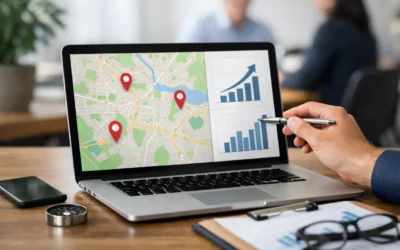

A page-one ranking feels good right up until you look at the pipeline and realize traffic is not turning into opportunities. That is where organic traffic conversion strategies separate high-performing SEO programs from expensive reporting exercises. If your site is attracting visitors but not producing calls, form fills, booked demos, or qualified leads, the problem is not visibility alone. It is conversion design.
The hard truth is simple: more traffic does not automatically mean more business. In many cases, traffic growth hides deeper issues like weak intent matching, poor page structure, unclear offers, or friction in the user journey. Businesses that win with SEO do not just focus on getting found. They build pages and experiences that move the right visitor toward action.
Why organic traffic conversion strategies matter
Organic search traffic tends to be one of the highest-leverage acquisition channels because it compounds over time. But traffic only matters when it produces measurable outcomes. If 5,000 monthly visitors generate five weak leads, the traffic is not performing. If 1,000 visitors generate 30 qualified inquiries, that channel is doing its job.
This is why conversion strategy has to sit inside your SEO program, not next to it. Rankings, content, technical SEO, and user experience should all support one business goal: turning search demand into revenue. Results are counted in dollars, not visitors.
There is also a timing advantage. Organic visitors often arrive with a defined problem and a specific question. That means your page has a short window to confirm relevance, build trust, and present a logical next step. Waste that moment with vague copy or a cluttered layout, and the visitor leaves. Earn trust quickly, and the same visit can become a lead without paid follow-up.
Start with intent, not volume
One of the biggest mistakes in SEO is chasing keywords with the highest search numbers instead of the strongest commercial relevance. A broad informational query may bring in sessions, but a narrower query tied to service evaluation or purchase readiness often brings in better opportunities.
For example, someone searching a general educational term may still be early in the research phase. Someone searching for pricing, comparisons, service-specific help, location-based providers, or problem-solving terms is often much closer to action. That does not mean top-of-funnel content has no value. It means you should not expect every page to convert the same way.
The best organic traffic conversion strategies map content to intent. Informational pages should build trust and move readers toward deeper consideration. Service pages should remove doubt and make contact easy. Local pages should prove relevance fast. If the content type and the visitor intent do not line up, conversions stall even when rankings improve.
What intent matching looks like in practice
A service page should answer the questions that block action. What do you do, who is it for, what outcomes can buyers expect, why should they trust you, and what should they do next? That sounds obvious, but many pages still spend the first half of the screen on generic branding language instead of solving the visitor’s immediate concern.
Intent matching also means using the right conversion action. A visitor on a high-intent service page may be ready to book a consultation. A visitor reading an educational guide may be more likely to request an audit, download a resource, or move to a related case-driven page. Asking for too much too early lowers response. Asking for too little on a money page leaves demand uncaptured.
Fix the page before you blame the traffic
If your rankings are healthy but conversion rates are weak, the page experience usually deserves scrutiny. Not every SEO problem is a traffic problem. Often, it is a page problem.
Start with message clarity. Within seconds, the visitor should understand what you offer, whether it fits their need, and what happens next. If your headline is clever but vague, or your opening copy talks about your company before it talks about the customer’s problem, you are creating drag.
Next, look at friction. Long forms, confusing navigation, intrusive pop-ups, slow load times, weak mobile layouts, and scattered calls to action all reduce conversion rates. These issues matter even more for organic traffic because many users land on an internal page, not your homepage. Every landing page has to stand on its own.
Trust signals also carry real weight. Reviews, proof points, outcomes, certifications, client logos, industry experience, location relevance, and clear process explanations help reduce hesitation. The visitor is asking one question, even if they never say it out loud: why should I trust this business with my time or money?
Build content paths, not isolated pages
A common SEO setup looks fine in a dashboard but underperforms commercially because pages are treated as isolated assets. A blog post ranks. A service page ranks. A location page ranks. But there is no intentional path that moves users from one stage of awareness to the next.
Strong organic traffic conversion strategies connect these assets. An informational article should naturally guide the visitor toward a relevant service page or a higher-intent resource. A service page should reinforce authority with supporting examples, vertical expertise, or answers to common objections. A local page should make it easy to verify geography, service fit, and next-step action.
This does not mean stuffing pages with aggressive prompts. It means designing momentum. If a visitor is engaged enough to keep reading, your site should make the next decision easier, not harder.
Conversion paths should reflect buying complexity
A simple home service business may only need a clear phone number, short form, service-area proof, and fast trust signals. A B2B company with longer sales cycles may need layered conversion points such as consultation requests, resource downloads, pricing conversations, and case-style content.
The right structure depends on sales complexity, average contract value, and user risk. Higher-consideration purchases usually need more evidence before the lead form. Lower-friction services need speed and clarity. There is no universal template, which is exactly why generic SEO campaigns often miss the mark.
Optimize for qualified leads, not just more conversions
A higher conversion rate is not always better if lead quality drops. This is where many businesses create their own reporting problem. They simplify the offer, loosen the form, or use broad CTAs that increase submission volume but reduce sales efficiency.
The better question is whether the page generates the right actions from the right users. For some businesses, that means fewer but more qualified inquiries. For others, it means increasing total lead volume while preserving close rates. You need both SEO data and sales feedback to judge performance accurately.
This is why alignment between marketing and operations matters. If sales says leads from certain pages are weak, that signal should shape keyword targeting, copy updates, CTA strategy, and qualification steps. A conversion strategy that ignores downstream quality is incomplete.
Measure what happens after the click
Most underperforming SEO programs do not suffer from a lack of data. They suffer from a lack of useful measurement. Sessions, rankings, and impressions tell you whether you are visible. They do not tell you whether the channel is producing business value.
Track page-level conversions, assisted conversions, call actions, form completions, engagement depth, and lead quality by source. Then compare performance by page type, keyword theme, geography, and device. You will usually find that some pages attract volume with little business impact, while others quietly drive meaningful revenue.
That is where smart iteration starts. You may need to tighten calls to action on one set of pages, strengthen proof on another, shorten forms for mobile users, or rewrite openings to better match search intent. Small conversion lifts on high-traffic pages can produce major revenue gains over time.
For growth-focused businesses, this is the real value of SEO. Not more charts. Better decisions.
Organic traffic conversion strategies in an AI-shaped search market
Search behavior is changing. Users are getting answers from AI summaries, asking longer questions, and evaluating brands across more touchpoints before they convert. That makes clarity, authority, and usability even more important.
Your site still has to earn the click, but now it also has to validate the brand fast once the visitor arrives. Thin service pages, generic content, and recycled messaging are easier to ignore in a market where users expect direct answers and immediate confidence.
This is also why businesses should think beyond rankings alone. Modern search visibility includes how your brand appears across search results, local listings, review ecosystems, and AI-influenced discovery experiences. The businesses that convert organic demand most effectively are the ones that present a consistent, credible, and action-oriented experience everywhere a buyer looks.
At SearchX, that is the lens that matters most: not whether traffic is up, but whether organic search is producing measurable business growth.
If your SEO program is generating visits without momentum, stop asking how to get more traffic and start asking why current visitors are not moving. That question usually leads to better pages, better leads, and better revenue.