

When patients search for healthcare providers online, they often choose from the top results. To stand out, healthcare practices need local SEO to improve visibility and reputation management to build trust through reviews. These two strategies work together: local SEO brings patients to your website, and positive reviews encourage them to book appointments. For example, practices with strong local SEO and review strategies have seen up to a 22.67% boost in organic traffic.
Key takeaways:
- Reviews impact local search rankings: Google prioritizes practices with more positive, recent reviews.
- Google Business Profile is essential: Keeping your profile updated increases visibility and credibility.
- Consistent information matters: Ensure your practice details match across all platforms.
- Respond to reviews: Address both positive and negative feedback professionally to build trust.
- Citations and backlinks: Listings in directories and links from local organizations improve rankings.
Top 6 SEO Tactics to Build a Stronger Reputation Online
How Local SEO and Reputation Management Connect
Local SEO and reputation management go hand in hand to draw in patients and build trust. Strong local search rankings make your practice visible, while positive reviews help turn that visibility into actual appointments. Together, these two strategies create a powerful combination that drives successful healthcare marketing.
When combined, they create a cycle: high search rankings bring in patients, and positive reviews help maintain those rankings while encouraging even more patient visits. Reviews play a dual role – they not only boost your credibility but also reinforce your local search performance, leading to sustained growth. Without this balance, the strategy falters. A practice with great search visibility but poor reviews will struggle to convert interest into appointments. On the flip side, glowing reviews won’t help much if potential patients can’t find your practice online. Next, let’s dive into how reviews directly impact local search rankings.
How Reviews Affect Local Search Rankings
Google places significant weight on online reviews when determining local search rankings. For example, when someone searches for terms like "pediatrician near me" or "urgent care in [city name]", Google evaluates the number and quality of reviews for each practice. Practices with more positive reviews tend to rank higher than those with fewer or mostly negative ones. Additionally, the frequency of new reviews signals to Google that your practice is active and consistently engaging with patients.
Where those reviews are posted also matters. Reviews on your Google Business Profile carry extra weight in local search results. Meanwhile, feedback on healthcare-specific platforms like Healthgrades, Vitals, Yelp, and Zocdoc can further strengthen your online presence. Actively responding to reviews – whether they’re glowing or critical – shows your dedication to patient care and helps build credibility.
Patient Trust and Online Reputation
Being visible online is only half the battle. Once patients find your practice, they need to trust that you’ll meet their healthcare needs. Positive reviews act as social proof, reassuring potential patients about the quality of care they can expect. When deciding between providers, most people trust feedback from other patients more than a practice’s marketing materials. This trust, built through reviews, turns online visibility into real appointments.
How you handle negative reviews is equally important. Responding with professionalism and empathy (while staying HIPAA-compliant) shows accountability and a commitment to patient care. Addressing criticism effectively can even turn a challenging situation into an opportunity to highlight your dedication. This approach not only improves your reputation but also strengthens your local search rankings, creating a well-rounded strategy for attracting and retaining patients.
Google Business Profile Optimization
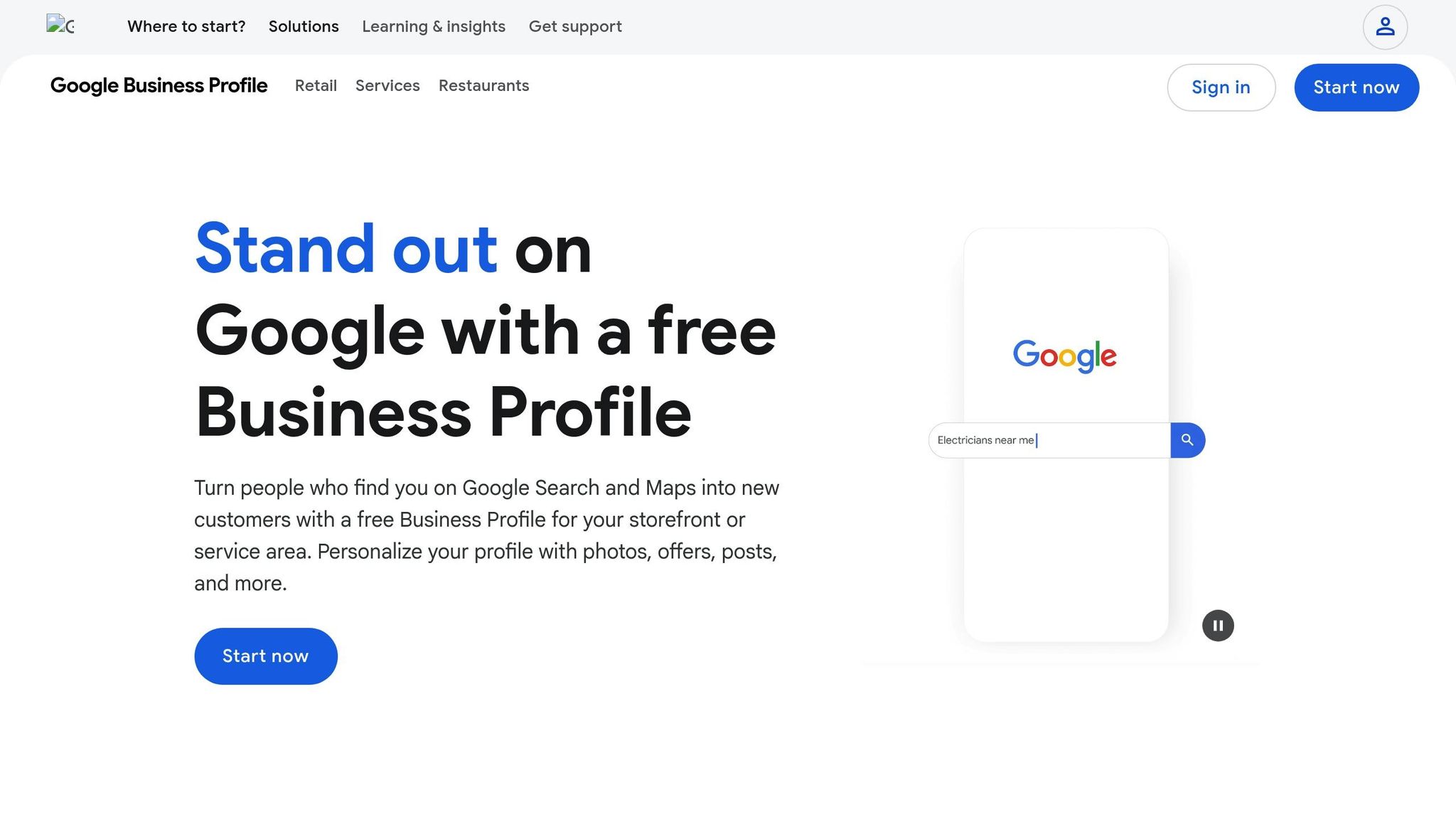
Your Google Business Profile serves as a virtual storefront for your practice, showing up when people search for healthcare services in your area. It’s where potential patients can find your address, phone number, hours, and reviews – basically, everything they need to decide whether to get in touch. For healthcare providers, having a well-maintained profile is key to standing out in local search results and managing your reputation. Securing your profile is the first step to making the most of these benefits.
A polished profile increases your chances of appearing in the local 3-pack – the three listings that show up at the top of Google search results for queries like "dermatologist near me" or "urgent care in Phoenix." Being featured in this prime spot can make all the difference between attracting new patients and being overlooked.
Claiming and Verifying Your Google Business Profile
Before you can start optimizing, you’ll need to claim your profile. Head over to Google Business Profile, find your practice by its name and location, and click "Manage this business" to take ownership.
Google uses several methods to verify that you’re authorized to manage the profile. The most common method is sending a postcard with a unique verification code to your practice’s physical address. This typically takes 5–7 business days. Other options include phone verification, email verification, or instant verification if you have access to your website’s domain. Choose the method that works best for you, but don’t delay – an unverified profile limits your ability to update details or respond to patient reviews.
When verifying, make sure to use your official practice name exactly as it appears on your business licenses and website. Include your full address (street number, street name, city, state, and ZIP code) and your primary phone number. Consistency across platforms builds trust with both search engines and potential patients.
Once verified, you’ll have full control over your profile. This means you can update information, upload photos, respond to reviews, and share updates about your practice. From here, the focus shifts to fine-tuning your profile to improve your visibility in local searches.
Optimizing Business Details for Local SEO
After claiming your profile, it’s important to fill out every available field. Google prioritizes complete profiles, and the more detailed yours is, the easier it is for patients to understand what you offer. Start with the basics: your NAP – Name, Address, and Phone number. These details should match exactly across your Google Business Profile, website, and other directories.
Next, choose the most accurate business category for your practice. Google provides specific healthcare categories like "Medical Practice", "Pediatrician", "Dermatologist", or "Urgent Care Center." Select the primary category that best represents your main service, and add secondary categories to cover additional specialties.
Use the 750-character business description to highlight what makes your practice stand out. Include location-based keywords naturally. For instance, a dermatology practice in Denver might say: "Award-winning dermatology practice serving Denver and surrounding areas with specialized treatments for acne, eczema, and skin cancer prevention". This helps both Google and patients understand your services and the areas you serve.
Keep your operating hours up to date. Patients rely on accurate information when deciding where to go, so update your hours immediately if they change. Don’t forget to include special hours for holidays or unexpected closures – outdated details can erode trust.
Add professional photos regularly to showcase your practice. High-quality images help set clear expectations for patients and show that your practice is active and engaged. Aim to upload new photos monthly to keep your profile fresh.
You can also use your Google Business Profile to share updates, health tips, or announcements about new services. While these posts don’t stay visible forever, they help convey that your practice is focused on patient engagement.
Finally, schedule regular audits of your profile – quarterly at a minimum, though monthly reviews are even better. Check that your phone number works, your hours reflect any seasonal changes, and your service descriptions are accurate. If you’ve added services or opened new locations, update your profile right away. Keeping your information current not only improves your local search rankings but also builds trust with patients by providing clear, reliable details.
Managing Online Reviews and Patient Feedback
Once you’ve polished your Google Business Profile, the next step is managing patient reviews to further cement your local reputation. Patient feedback plays a huge role in shaping how potential patients view your practice and directly impacts your local search rankings. Did you know that 94% of prospective patients base their choice of provider on reputation alone? Reviews on platforms like Google, Healthgrades, Yelp, and Zocdoc don’t just influence opinions – they also affect your visibility in local searches. Plus, fresh reviews matter more than older ones. A steady flow of just five new reviews per month can have a greater impact than a stockpile of 500 outdated ones.
Encouraging Patients to Leave Reviews
Timing is everything when asking for reviews. Sending follow-up emails within 24–48 hours after an appointment can be highly effective. Include direct links to your Google Business Profile, Healthgrades, or Vitals pages to make the process seamless. You can also use in-office signage with QR codes to encourage immediate feedback while the visit is still fresh in the patient’s mind.
Avoid offering incentives for reviews – it’s not only a violation of HIPAA but also erodes trust. Instead, focus on providing excellent care that naturally inspires patients to share their experiences. Train your staff to casually mention the importance of reviews during checkout. A simple comment like, “If you’re happy with your visit, we’d love it if you could share your experience on Google,” can go a long way in encouraging feedback.
Responding to Negative Reviews
Negative reviews are inevitable, but how you handle them can make all the difference. Always respond professionally and promptly while safeguarding patient privacy. Start by thanking the reviewer for their feedback and showing genuine concern for their experience. Avoid discussing any personal health details. Instead, invite the reviewer to continue the conversation privately. For instance:
"We’re sorry to hear about your experience. We’d like to learn more about what happened and work toward a resolution. Please contact us directly at (555) 123-4567 so we can address your concerns."
A thoughtful, professional approach demonstrates your commitment to patient care and can help mitigate the impact of negative feedback. If complaints highlight issues like long wait times or billing confusion, acknowledge the concerns, explain how you’re addressing them, and provide a direct line for further discussion. Regularly monitoring reviews across platforms using tools like Google Alerts or review management software ensures that no feedback slips through the cracks.
Using Positive Reviews as Social Proof
Positive reviews are more than just kind words – they’re a powerful way to build trust with potential patients. Don’t let these glowing testimonials sit unnoticed on review sites. Feature them on your website’s landing pages, blog posts, and social media channels. Just remember to stay HIPAA-compliant by avoiding any identifying patient details.
For example, you can share snippets of five-star reviews on platforms like Facebook or Instagram to highlight patient satisfaction and enhance community trust. You can also incorporate these testimonials into email campaigns or printed brochures, turning passive feedback into an active marketing tool. This not only reinforces your dedication to quality care but also helps prospective patients feel more confident choosing your practice.
Patient reviews can also guide your strategy. Analyzing common themes in feedback allows you to align your website content and local keywords with what patients care about most. This boosts your local SEO efforts while keeping your practice in tune with patient needs.
Building Local Authority with Citations and Backlinks
Once your reviews and online profiles are in good shape, the next step is establishing local authority. This involves leveraging citations – mentions of your practice’s name, address, and phone number (NAP) in online directories – and securing backlinks from credible local websites. Citations signal to search engines that your business details are reliable, while backlinks from trusted local organizations act as endorsements, boosting your visibility in local search results.
When local businesses, community groups, or wellness partners link to your website, search engines see your practice as a trusted resource in your area. These backlinks not only enhance your local SEO but also help you rank higher when potential patients search for healthcare providers nearby. Let’s take a closer look at how consistent directory listings play a key role in this process.
Maintaining Consistent Directory Listings
Consistency is everything when it comes to your NAP details. Search engines trust businesses that provide identical information across all platforms, including Google Business Profile, Yelp, and Healthgrades. Even minor inconsistencies – like a different phone number or address – can harm your rankings.
Start with the directories most relevant to your target audience. For healthcare providers, Google Business Profile is a must, followed by platforms like Yelp and Healthgrades, which are popular with patients searching for providers. From there, branch out to niche directories tailored to your specialty. For example, dermatologists might focus on skin health platforms, while pediatricians could prioritize family health directories. Ensure every listing is complete, including accurate hours (especially around holidays), high-quality facility photos, and detailed service descriptions.
Be wary of duplicate listings, as they can confuse search engines and hurt your local SEO. These duplicates often arise when your practice appears multiple times across directories with slightly different details. Regularly audit your listings to identify and remove duplicates. Claim your primary listing and request the removal of any extras to maintain a unified and authoritative online presence.
If your practice has multiple locations, consistency becomes even more critical. Ensure each location’s details are clear and accurate to avoid confusion and maintain your credibility.
Partnering with Local Organizations
Accurate listings are just the beginning. Building partnerships with local organizations can further enhance your authority and generate valuable backlinks. Collaborating with complementary businesses – like fitness centers, pharmacies, wellness clinics, or community health initiatives – creates opportunities to connect with your community while improving your online presence.
For instance, a primary care practice could team up with a local gym to host a wellness seminar. Not only does this help you engage with health-conscious individuals, but the gym’s website might also link back to your practice. These partnerships are mutually beneficial, expanding both parties’ reach while boosting your local SEO through natural backlinks and citations.
Sponsoring or participating in local events, such as charity fundraisers, health fairs, or community wellness initiatives, is another effective way to build authority. For example, sponsoring a 5K run for cancer awareness or participating in a health fair often results in event organizers linking to your website in promotional materials. These backlinks from community-focused organizations can significantly improve your search rankings.
When engaging in these partnerships, always prioritize HIPAA compliance. Avoid sharing sensitive patient information or medical details that could breach privacy laws. Instead, focus on general health education and practice-related content to maintain professionalism and build trust with both search engines and potential patients.
To measure the success of your citation and backlink efforts, track key performance indicators using tools like Google Search Console. Monitor the number and quality of backlinks to your website and identify local organizations linking to you. Check your local search rankings for terms like “pediatrician near [city]” or “orthopedic surgeon in [neighborhood]” to see if your strategy is paying off. Insights from your Google Business Profile can also help you determine how many patients are finding you through local searches, giving you a clear picture of your growing visibility and patient reach.
Measuring Success and Adjusting Your Strategy
Citations, backlinks, and managing reviews form the backbone of your local SEO efforts, but their true value lies in how they perform. To determine if your strategies are effectively driving patient appointments, you must regularly track key metrics and adapt based on real-world data. Without consistent monitoring, it’s impossible to identify what’s working and what’s not.
Healthcare practices that embrace data-driven approaches to local SEO can refine their strategies to increase visibility, build trust, and turn online searches into patient visits. Performance insights tie together the technical and reputational elements of your efforts, offering a clear path toward success.
Tracking Local SEO Performance
To measure how your online presence supports patient acquisition, focus on actionable metrics. These include local search rankings (e.g., where your practice appears for terms like "dentist in Atlanta"), organic traffic from location-based searches, click-through rates from search results, and appointment requests generated through local search channels. Together, these numbers reveal how well your strategy connects with patients in your area.
Leverage tools like Google Search Console to track keyword rankings, click-through rates, and impressions filtered by location. Pair this with Google Analytics to analyze user behavior, conversion rates, and geographic traffic origins. This combination helps you identify which keywords and areas bring in the most qualified traffic. For instance, if "orthopedic surgeon in downtown Chicago" attracts clicks but few conversions, you might need to improve your landing page or simplify scheduling.
Your Google Business Profile is another essential resource. It provides data on profile views, direction requests, phone calls, and website clicks, offering a snapshot of how local patients interact with your practice. If your profile gets plenty of impressions but limited engagement, consider refining your business description, photos, or service listings.
Additionally, track metrics like appointment requests from local search channels, cost per patient acquisition, and the lifetime value of patients gained through these efforts. Comparing appointment volumes before and after implementing local SEO changes can reveal their impact. Monitoring the geographic origins of new patients ensures you’re effectively reaching your target audience.
Regular performance reviews – monthly or quarterly – are vital for spotting trends and making adjustments. Monthly reviews can help you track changes in search rankings, traffic, and review volume, while quarterly reviews provide a broader perspective for identifying patterns. If you see a sudden drop in rankings or a spike in negative reviews, act quickly to address the issue.
Competitive benchmarking adds another layer of insight. Analyze how competitors optimize their Google Business Profiles, including their business details, targeted keywords, and review responses. Compare your review ratings, volume, and sentiment against theirs, and ensure your practice is listed in all relevant directories.
Monitoring Review Sentiment
Beyond numbers, patient reviews offer valuable insights into how your practice is perceived. Key metrics to monitor include your average rating on platforms like Google Business Profile, Healthgrades, Vitals, Zocdoc, and Yelp; the volume of reviews over time; the ratio of positive to negative reviews; and your response rate to feedback.
Review velocity, or the rate at which new reviews come in, indicates whether your efforts to encourage patient feedback are effective. If review volume stalls, experiment with different messaging, timing, or channels to boost engagement.
Sentiment analysis helps categorize feedback as positive, negative, or neutral while identifying recurring themes. For example, if multiple reviews mention long wait times, it might signal a need to adjust staffing or scheduling. Using this feedback to make improvements not only enhances patient satisfaction but also strengthens your online reputation.
Tools like Google Alerts or specialized review monitoring platforms can help you stay on top of online conversations about your practice. For practices with multiple locations, centralized platforms can consolidate reviews from various sources into one dashboard, streamlining management. These tools often include features like automated review collection, sentiment analysis, and alerts for new reviews, ensuring consistent messaging across locations.
Timely and thoughtful responses to reviews impact both your local search rankings and patient trust. Search engines favor practices that actively engage with feedback, so aim to respond within 24–48 hours. Empathetic, professional replies that address concerns show your commitment to patient care and can encourage more reviews. Track your average response time and response rate to gauge your engagement.
When responding to reviews, always adhere to HIPAA guidelines by avoiding any mention of personal health information. Stick to general acknowledgments and invite patients to discuss their concerns privately.
To refine your review management strategy, test different approaches. Experiment with various messaging, timing, and channels to see what generates the highest volume and quality of reviews. Similarly, try personalized versus template-based responses to determine which style resonates more with patients. Monitor metrics like review volume, conversion rates, and local search rankings to identify the most effective methods.
When your visibility translates into measurable growth – like more patient appointments – you’ll know your strategy is on the right track.
Tyler Harris, Client, stated, "Since partnering with them, we’ve seen a noticeable increase in organic traffic, keyword rankings, and overall online visibility".
This kind of tangible result highlights the real impact of a well-executed local SEO and reputation management plan.
Conclusion
Local SEO and reputation management go hand in hand, forming a powerful combination to boost growth for healthcare practices. By optimizing your Google Business Profile and focusing on local keywords, you enhance your online visibility. Pair that with actively collecting and responding to patient reviews, and you build the trust necessary to transform visibility into actual appointments. Together, these strategies create a ripple effect, turning online searches into real patient consultations.
The results speak for themselves. One healthcare facility that applied these tactics saw a surge in organic traffic, which directly led to more patient inquiries and appointment bookings. This proves that local SEO isn’t just a marketing buzzword – it’s a practical way to turn digital engagement into tangible outcomes.
However, success requires ongoing effort. In today’s competitive healthcare market, patients rely heavily on online searches and reviews to choose their providers. A sleek website alone won’t cut it. Practices must go beyond that by ensuring their business hours are accurate across all platforms, responding thoughtfully to every review, maintaining an active social media presence, and keeping a close eye on performance metrics. Those who consistently manage their online presence not only rank higher in local searches but also earn credibility within their communities.
Start small and adjust as you go. Test different messaging approaches, refine how you respond to feedback, and track which strategies generate the most patient inquiries. Tools like Google Search Console and Google Analytics can help pinpoint the keywords and areas that bring in the most qualified traffic. Pay attention to review patterns – whether it’s praise for excellent care or concerns about long wait times – and use that feedback to improve your practice.
If you’re looking for specialized support to enhance your digital strategy, agencies like SearchX offer tailored local SEO services designed specifically for healthcare providers.
FAQs
How can healthcare providers encourage positive patient reviews while staying compliant with HIPAA regulations?
Healthcare providers can encourage positive reviews by prioritizing patient satisfaction and offering clear, HIPAA-compliant ways for patients to share their experiences. After a visit, consider politely asking for feedback and providing simple instructions on how to leave a review on platforms like Google or Yelp. You can use printed cards, follow-up emails, or text messages with step-by-step guidance, ensuring no protected health information (PHI) is shared in the process.
When responding to reviews, always respect patient privacy. Avoid including any details about the patient or their visit. Instead, keep your replies general, professional, and focused on expressing gratitude for their feedback. This method not only helps build trust but also ensures compliance with HIPAA regulations, all while strengthening your online reputation.
How can healthcare providers optimize their Google Business Profile to boost local SEO and enhance their reputation?
To make the most of your Google Business Profile and boost local SEO for your healthcare practice, focus on a few essential steps. Start by ensuring your profile is complete and accurate – this means including current contact details, office hours, and your practice’s address. Consistency is key, so use the same name, address, and phone number (NAP) across all online platforms to build credibility with search engines.
Encourage happy patients to share positive reviews. These reviews not only enhance your local reputation but also influence search rankings. Be sure to respond to reviews promptly and professionally to show that you value patient feedback. Adding high-quality photos of your office, team, and services can also make your profile more inviting and engaging.
Choose the most relevant categories for your practice and include keywords in your business description that highlight the services you provide. Keep your profile active by regularly posting updates, such as promotions, health tips, or news. This keeps your profile fresh and appealing to both potential patients and search engines.
How do citations and backlinks help improve local SEO and reputation management for healthcare providers?
Citations and backlinks are key to improving both local SEO and reputation management for healthcare providers. Citations refer to mentions of your practice’s name, address, and phone number (NAP) on other websites. These help search engines confirm your business’s authenticity and boost local search rankings. Ensuring your citations are consistent and accurate across directories like Google Business Profile, Yelp, and Healthgrades can increase your visibility and credibility.
Backlinks, on the other hand, are links from other reputable websites pointing to yours. They act as a signal of authority and trustworthiness for search engines. Securing high-quality backlinks from relevant sources – such as medical associations, local news platforms, or professional blogs – can enhance your online presence and bring in more patients. When combined, citations and backlinks not only improve your search rankings but also solidify your reputation, making your practice a trusted option in your community.