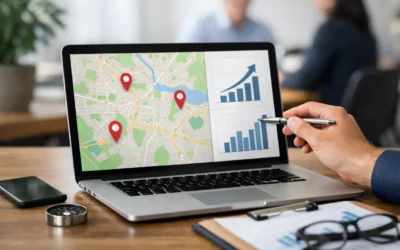

Most local businesses do not have a rankings problem first. They have a credibility problem in Google’s eyes.
If two companies offer the same service in the same city, the one with stronger local authority usually wins more visibility. That authority is shaped by many signals, but links still matter. Not random backlinks. Not cheap directory blasts. Relevant links that confirm your business belongs in a market, serves real customers, and deserves to show up ahead of competitors.
That is what makes link building for local businesses different from general SEO. The goal is not to pile up referring domains and call it progress. The goal is to earn signals that support local rankings, strengthen brand trust, and turn search visibility into qualified leads.
What link building for local businesses really means
For a local company, a good link is not just a vote of confidence. It is also a location signal, a reputation signal, and often a conversion assist.
A link from a Charleston business journal, a local chamber, an industry association, or a neighborhood nonprofit can do more for a regional company than a generic mention on a high-metric blog with no local relevance. Domain authority still matters, but context matters more than many businesses realize.
This is where bad campaigns go off track. Some agencies chase volume because it is easy to report. Twenty low-value links look productive in a dashboard. But if those links do not reinforce geography, service relevance, or real-world trust, they rarely move the metrics that count in dollars.
Why local links still influence rankings and revenue
Google does not rank local businesses based on one factor. It evaluates proximity, relevance, website quality, review signals, business profile strength, citations, and authority. Links support the authority side of that equation.
They also help search engines connect your business to a market. When trusted local and industry sources mention your company, those mentions create a stronger footprint around your brand. That can improve visibility not only in organic results but also in local pack performance over time.
The business impact goes beyond rankings. Good local links often send referral traffic from people already in-market. A placement on a regional publication, local event page, or partner site can bring visitors who are much closer to buying than a broad national mention. That is why the right link is both an SEO asset and a lead source.
The links that usually move the needle
Not every local business needs the same link profile. A law firm, HVAC company, franchise brand, and SaaS company with local offices should not run identical campaigns. But most strong local programs pull from the same core categories.
Local organizations and community sites
Chambers of commerce, business associations, downtown alliances, local sponsorship pages, school partnerships, and nonprofit supporters pages are often practical starting points. These links may not always look glamorous in SEO tools, but they are highly relevant and difficult to fake at scale.
They also make brand sense. If your business operates in a community, your digital footprint should reflect real participation in that community.
Industry-specific links
Trade associations, supplier directories, credentialing organizations, and niche publications often carry more weight than broad directories. These links reinforce topical relevance, which matters when Google is deciding whether your company is a trusted source for a given service.
For example, a roofing company benefits more from a respected construction association link than from another generic business listing no one visits.
Local media and digital PR mentions
This is one of the most underused channels in local SEO. Businesses sit on stories that could earn legitimate coverage but never pitch them. New locations, community initiatives, hiring milestones, proprietary data, seasonal insights, scholarship programs, and local partnerships can all become link-worthy assets if framed correctly.
The trade-off is that digital PR takes more effort than submitting a profile to a directory. But it also tends to create stronger authority and brand lift.
Partner and vendor links
Manufacturers, distributors, software partners, contractors, and complementary service providers can be excellent sources of relevant links. If you work together in the real world, there is often a legitimate reason to be connected online.
These opportunities are especially useful for service businesses with established referral networks. The key is to make the placement useful, not forced.
What to avoid in local link building
A lot of businesses waste budget here because bad links can look impressive on paper.
Mass directory submissions are the most common example. Foundational citations still matter, especially if your business information is inconsistent across the web. But once core listings are cleaned up, adding your business to dozens of low-quality directories usually delivers little value.
Paid guest posts on irrelevant blogs are another weak play. If a pest control company in South Carolina gets links from random lifestyle blogs with no local or industry connection, the campaign may increase backlink count without increasing trust.
Then there is the temptation to buy links in bulk. The pitch is always the same: fast authority, quick rankings, low cost. The reality is less attractive. Purchased links from networks can create short-term movement, but they also carry risk and often fail to support long-term local visibility. For most businesses, that is not an investment. It is debt.
A practical strategy for earning stronger local links
The best local link building campaigns start with business goals, not tactics.
If your priority is more leads in one metro area, your strategy should focus on the signals most likely to improve visibility there. If you are a multi-location brand, each location may need its own localized link plan rather than one centralized effort.
Start by identifying the pages that matter most. In many cases, these are city pages, service pages, or location pages tied to revenue. Then review the current link profile against competitors. The gap is usually clear. Competitors may have better local press, stronger association links, or deeper community mentions.
From there, build around assets your business already has. That could include partnerships, charitable work, customer success stories, internal data, events, memberships, certifications, or expert commentary. Link building works best when it is integrated with real business activity instead of manufactured as a standalone SEO task.
Anchor text also matters, but this is where nuance comes in. Over-optimized keyword anchors can look unnatural. A healthy local profile usually includes branded anchors, URL anchors, natural mentions, and some service-related language. Forced exact-match anchors are often a red flag.
How local content makes link building easier
If your site has nothing worth citing, link acquisition gets expensive fast.
Local content gives people a reason to mention your business. Service area guides, original market insights, local resource pages, neighborhood-specific service content, and well-built community pages can all support outreach. The content does not need to be flashy. It needs to be useful, credible, and specific.
For example, a home services company might publish a hurricane preparedness checklist for local homeowners. A law firm might create a clear guide on a state-specific legal issue. A healthcare brand might publish location-based patient resources. These assets can earn links because they help real people in a defined market.
This is also where strategy beats volume. One useful local resource that earns a handful of relevant links can outperform months of low-quality outreach.
Measuring success without getting distracted
If you measure link building only by how many links you gained, you will miss the point.
The better questions are whether rankings improved for revenue-driving local keywords, whether local pack visibility increased, whether referral traffic became more qualified, and whether lead volume or conversion quality changed. That is the difference between SEO theater and actual performance marketing.
It also helps to judge links by business relevance. A single mention from a trusted local publication may be more valuable than ten links from sites your customers will never see. Metrics from SEO tools are useful, but they are not the final scoreboard.
For businesses that want a clearer growth path, this is where a performance-focused partner matters. SearchX approaches link building as part of a broader authority and revenue strategy, not as a disconnected monthly deliverable. That distinction matters when your goal is more market share, not just more reports.
The real standard for a good local link
A good local link should pass three tests. It should make sense for your brand, strengthen your relevance in the market you serve, and support outcomes beyond vanity metrics.
If it helps rankings but sends no trust signal, it is limited. If it looks good in a report but would never exist without SEO manipulation, it is fragile. If it supports visibility, credibility, and real buyer pathways, it is worth pursuing.
Local SEO is getting more competitive, not less. AI-generated content has made it easier to publish pages, but not easier to earn trust. That is why link building for local businesses still matters. The companies that win are not the ones with the most links. They are the ones with the strongest proof that they belong at the top of their market.
The smart move is simple: build the kind of digital reputation your best customers would recognize as real.