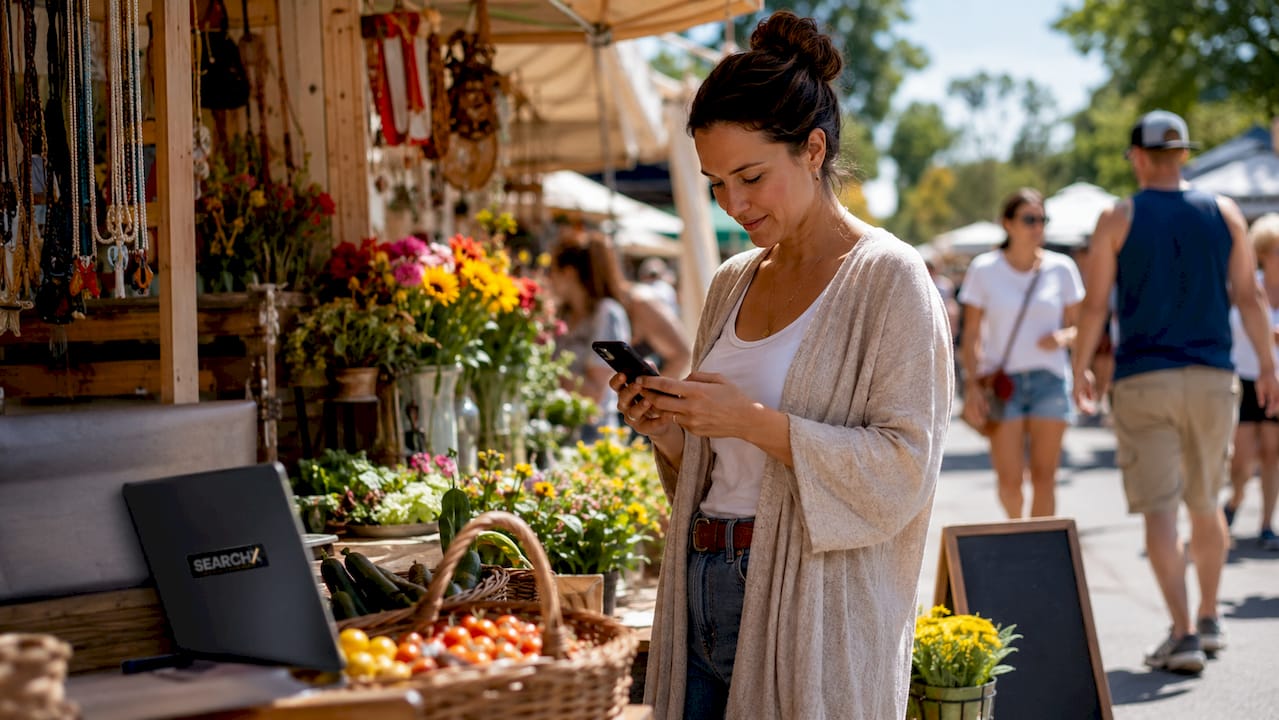
Increasing foot traffic using SEO means optimizing your online presence so that nearby searchers find your business first and walk through your door. Local SEO, the recognized industry term for this practice, connects your physical store to the digital searches happening within miles of it. According to Think with Google, 85% of in-store purchases start with online research, which means your store’s search visibility directly determines how many customers you see each day. Tools and data from BrightLocal, Shopify, and Google all point to the same conclusion: businesses that control their local search presence convert more searchers into visitors.
How to increase foot traffic using SEO: start with Google Business Profile
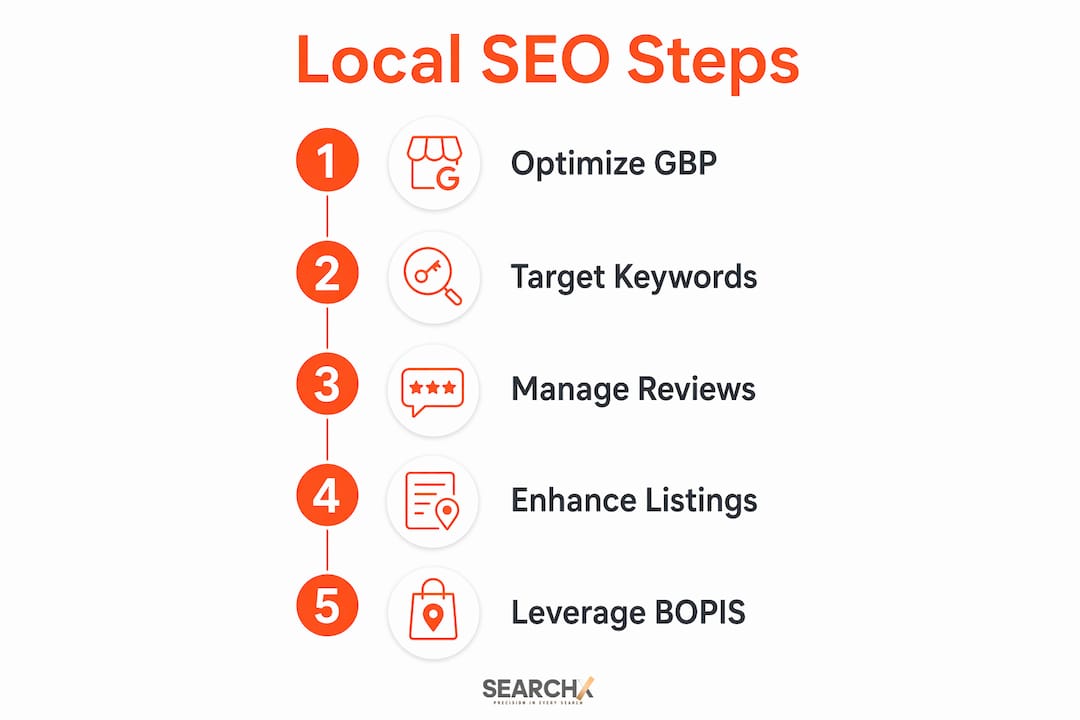
Your Google Business Profile (GBP) is the fastest path from a search result to a store visit. When someone searches “hardware store near me” on Google, your GBP listing appears before your website does. Optimizing GBP’s action path, specifically the directions and call buttons, yields faster foot traffic growth because many users convert directly from the listing without ever clicking to your website. That means a poorly maintained profile costs you customers before they even see your homepage.
Getting the basics right matters more than most owners realize. Your name, address, and phone number (NAP) must be identical across every platform. Your hours need to reflect holidays and seasonal changes. Photos of your storefront, interior, and products give searchers the visual confirmation they need to commit to a visit. Google also lets you add attributes like “wheelchair accessible,” “free parking,” or “women-led business,” and each one answers a question a potential customer might otherwise search elsewhere.
GBP’s built-in features go beyond static information. Posts let you announce sales, new arrivals, or events directly in search results. The Q&A section lets you pre-answer common questions about parking, returns, or product availability. Promotions tied to specific dates show up when local intent is highest. For a deeper walkthrough of every setting, SearchX’s guide on optimizing your GBP covers each feature with specific configuration steps.
Pro Tip: Set a recurring weekly calendar reminder to update at least one GBP element, whether it’s a new photo, a post, or a Q&A answer. Google’s algorithm rewards active profiles with higher local pack placement.
What local keywords actually drive customers into your store
Not all keywords send people to your website. The ones that drive customers with SEO into your store are built around purchase intent and proximity. Phrases like “open now near me,” “buy [product] in [city],” and “[service] same day [neighborhood]” signal that a searcher is ready to visit, not just browse. These are the terms your content and listings need to own.
Here is a practical process for finding visit-trigger keywords:
- Open Google Search Console and filter for queries containing your city name or neighborhood. These are already driving impressions and can be strengthened.
- Use Google’s autocomplete by typing your product or service followed by “near” and note every suggestion that appears.
- Check your GBP Insights tab for the search terms people used to find your listing. These are real, local, high-intent queries.
- Run your top competitors’ addresses through Google Maps and note which categories and keywords appear in their profiles.
- Build a dedicated landing page for each high-intent keyword cluster, including your hours, current inventory, directions, and a photo of the specific product or service.
The comparison below shows the difference between generic content and visit-trigger content for the same business type:
| Content type | Example page focus | Foot traffic impact |
|---|---|---|
| Generic brand page | “About our shoe store” | Low. No location or intent signals. |
| Visit-trigger page | “Women’s running shoes in stock in Austin, TX” | High. Matches purchase-ready search queries. |
| Inventory page | “New arrivals available today at our downtown location” | High. Addresses availability before visiting. |
SearchX’s local keyword research guide walks through each of these steps with real examples from retail and service businesses. For a broader framework on finding terms that map to physical visits, the local keyword research for small business guide is worth bookmarking.
How do online reviews affect in-store foot traffic?
Reviews are not just social proof. They are a direct SEO signal that determines whether your business appears in Google’s local pack at all. 97% of consumers read reviews for local businesses, and 47% will not visit a business with fewer than 20 reviews. That threshold is not arbitrary. It represents the minimum volume needed to pass a consumer’s trust filter before they commit to a visit.
The tactics that generate steady review volume are straightforward but require consistency:
- Send a review request via SMS or email within 24 hours of a purchase or appointment. Timing matters because the experience is still fresh.
- Train staff to verbally mention reviews at checkout. A simple “We’d really appreciate a Google review if you enjoyed your visit” converts at a surprisingly high rate.
- Add a QR code linking directly to your Google review page on receipts, packaging, and in-store signage.
- Respond to every review, positive or negative, within 48 hours. Google treats response activity as a signal of an engaged, trustworthy business.
- Distribute review requests across Google, Yelp, and Facebook rather than concentrating all volume on one platform.
Review recency and velocity are as important as total count. A business with 200 reviews but none in the past three months looks stagnant to both Google and potential customers. Stagnation in review generation leads directly to lost conversion intent. AI tools like Birdeye or Podium can automate review request sequences and draft responses, reducing the manual effort enough that most owners actually follow through.
Pro Tip: After a customer leaves a positive review, 54% visit the business website for more information. Make sure your website’s homepage and location pages are as polished as your GBP listing.
What other listings and content types boost in-store visits?
Google is not the only platform driving foot traffic. Combining local SEO with optimized listings across multiple directories increases store visitation by making your essential information accessible wherever customers search. Google Maps, Yelp, Apple Maps, and Facebook each serve different user segments, and inconsistent information across them creates friction that kills visits before they happen.
Content that directly addresses visit logistics outperforms generic brand content every time. Pages that answer questions like “Is there parking near your store?”, “What are your busiest hours?”, and “Do you carry specific product] in stock?” capture searchers at the exact moment they are deciding whether to visit. [Focusing SEO content on visit triggers including parking, in-stock inventory, and peak hours produces more effective foot traffic than brand-focused pages.
Paid channels complement organic local SEO without replacing it. Local inventory ads on Google Shopping show nearby searchers exactly which products you have in stock right now. According to Think with Google, local inventory ads combined with Shopping ads yielded a 21% increase in in-store visits and a 9% increase in online conversions for available products. That figure reflects the power of connecting real-time inventory data to local search intent.
Buy online, pick up in store (BOPIS) options also drive physical visits that pure SEO cannot always capture. When a customer orders online and picks up in person, they often browse additional products while in the store. Listing BOPIS availability on your GBP and website landing pages adds another visit-trigger that competitors without the option cannot match. For a broader look at how multichannel tactics amplify local SEO results, this multichannel SEO strategy guide covers the interplay between organic and paid local channels.
Key takeaways
Local SEO for foot traffic works when you align your Google Business Profile, local keywords, review volume, and visit-trigger content into a single, consistent presence that answers every question a nearby shopper has before they decide to walk in.
| Point | Details |
|---|---|
| GBP is your first priority | Optimize directions, hours, photos, and posts before any other SEO tactic. |
| Target purchase-intent keywords | Build landing pages around “in stock,” “open now,” and city-specific queries. |
| Hit the 20-review threshold | Fewer than 20 reviews stops most consumers from visiting, per BrightLocal 2026. |
| Maintain review velocity | Consistent new reviews matter as much as total count for local ranking and trust. |
| Expand beyond Google | Consistent listings on Yelp, Apple Maps, and Facebook capture additional visit-ready searchers. |
What I’ve learned about prioritizing local SEO for real foot traffic
Most local business owners I talk to spend their first SEO budget on website redesigns. That instinct is understandable but almost always wrong. Your GBP listing gets seen by more potential visitors than your homepage does, especially on mobile. Fixing your GBP takes a few hours. A website redesign takes months and thousands of dollars. Start where the searcher actually lands.
The second mistake I see constantly is treating reviews as a one-time project. A business will run a review campaign, collect 40 reviews in a month, and then stop. Six months later, the most recent review is from last spring, and the listing looks abandoned. Review velocity is a living signal. It needs to be part of your weekly operations, not a quarterly campaign.
The third thing most articles won’t tell you: the content that drives foot traffic is almost never the content that wins writing awards. “We have your size in stock at our Midtown location, open until 8 PM tonight” is not glamorous. It is, however, exactly what a purchase-ready customer needs to see. Write for the person who is already in their car, not the person who is casually browsing. That shift in perspective changes everything about how you create local content.
SearchX’s local SEO checklist is one of the most practical starting points I’ve seen for owners who want a structured order of operations rather than a list of tactics to sort through on their own.
— SEO
Ready to turn local searches into store visits with SearchX?
SearchX builds local SEO strategies specifically for businesses that measure success in customers through the door, not just clicks on a screen. The team starts with a local keyword research audit to identify the exact search terms your nearby customers use before they visit, then builds your GBP, content, and review strategy around those terms.
Every client gets a custom plan tied to their location, product mix, and competitive market. SearchX handles GBP optimization, visit-trigger content creation, and reputation management so you can focus on running your store. If you want to see what a tailored local SEO strategy looks like for your business, SearchX is the place to start.
FAQ
How long does local SEO take to increase foot traffic?
Most businesses see measurable improvements in local search visibility within 60 to 90 days of optimizing their Google Business Profile and building consistent citations. Review volume and content updates compound over time, so results continue to grow past the initial period.
How many Google reviews do I need to drive store visits?
BrightLocal’s 2026 data shows that 47% of consumers will not visit a business with fewer than 20 reviews. Hitting that threshold is the minimum requirement, and maintaining a steady flow of new reviews keeps your listing competitive.
What is the difference between local SEO and regular SEO?
Regular SEO targets broad keyword rankings across any geography. Local SEO for foot traffic targets location-specific queries, Google Maps placement, and GBP visibility to convert nearby searchers into physical visitors.
Do I need a website to use local SEO for foot traffic?
A website strengthens your local SEO, but your Google Business Profile alone can drive significant foot traffic. Many users convert directly from GBP actions like directions and calls without ever visiting your site, per Shopify’s 2026 guidance.
Which platforms besides Google should I optimize for foot traffic?
Yelp, Apple Maps, and Facebook each serve distinct user segments. Consistent NAP information and updated photos across all three, combined with your Google presence, maximizes the number of visit-ready searchers who find accurate information about your store.