
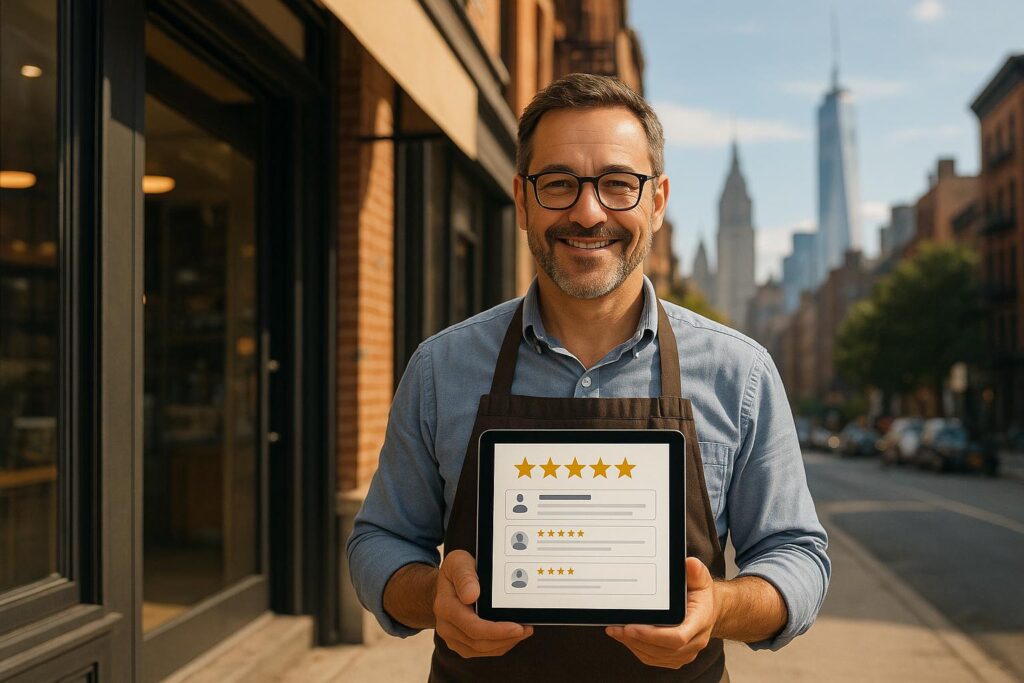
When it comes to local SEO in NYC, customer reviews are a game-changer. They do more than just influence buying decisions – they directly affect how businesses rank in local search results. Here’s what you need to know:
- Search engines prioritize reviews: Quantity, quality, and recency of reviews signal trust and activity, helping businesses rank higher.
- Reviews drive visibility: Star ratings and review snippets catch attention, leading to more clicks, calls, and visits.
- NYC-specific challenges: Dense competition, neighborhood-focused searches, and mobile-first habits make reviews even more critical.
- Negative reviews aren’t all bad: When handled well, they show responsiveness and build credibility.
In NYC’s crowded market, managing reviews effectively can set your business apart. From optimizing your Google Business Profile to responding thoughtfully to feedback, reviews are a powerful tool for improving your local presence and attracting more customers.
Advanced Local SEO: Turn Bad Reviews Into Ranking Power
How Customer Reviews Impact Search Rankings
Customer reviews don’t just influence purchasing decisions; they play a big role in shaping search rankings too. Search engines analyze review data to gauge a business’s credibility and relevance, which can directly impact local SEO – especially for businesses in NYC.
Key Ranking Factors Affected by Reviews
Reviews do more than add credibility – they also send important signals to search engines. For instance, consistent and frequent reviews suggest an active and engaged customer base. On the other hand, long gaps between reviews might not give off the same positive impression.
Here’s what matters most:
- Review Volume and Frequency: A steady stream of reviews keeps your business relevant in the eyes of search engines.
- Average Ratings: High ratings build trust, but a mix of glowing reviews and occasional constructive feedback feels more genuine. A perfect score might even seem suspicious to some.
- Diverse Platforms: Reviews on Google, Yelp, Facebook, and industry-specific sites strengthen your online presence and credibility.
- Natural Language: Customer reviews often include everyday language and local keywords, helping search engines better connect your business to relevant local searches.
These factors not only help boost rankings but also create a foundation of trust with potential customers.
Building Trust and Social Proof Through Reviews
Search features like star ratings and review counts make your business stand out in search results. They give potential customers a quick snapshot of your reputation, which can influence their decision to click.
Positive reviews also create a sense of social proof, encouraging others to check out your business. When customers mention local landmarks or neighborhood details in their reviews, it further reinforces your business as a trusted part of the community.
Responding thoughtfully to all reviews – positive or negative – shows that you’re engaged and care about your customers, which only strengthens trust.
How Negative Reviews Can Help SEO
Surprisingly, negative reviews can still work in your favor – if you handle them well. A mix of feedback often feels more authentic than a spotless record. When you respond to criticism politely and constructively, it demonstrates your commitment to customer satisfaction.
These responses don’t just address individual concerns; they also refresh your review content with updated, relevant information. Even critical feedback can highlight common customer needs or local insights, giving search engines more data to work with. By turning negative reviews into opportunities for improvement, you can showcase your dedication and grow stronger in the process.
How to Get and Manage Reviews
Gathering reviews in a way that respects your customers and adheres to platform rules is essential – especially in a bustling market like NYC, where competition is fierce, and customers have endless options.
Getting Customer Reviews the Right Way
The secret to collecting reviews lies in making the request feel natural. Timing is everything – ask for feedback when customers are most likely to be satisfied, such as right after a positive experience or the completion of a service.
Instead of sending out one-size-fits-all messages, tailor your requests to the specific service or interaction. A personalized approach helps customers focus on the details they want to highlight in their reviews.
Here are some effective methods to encourage reviews:
- Send automated follow-up emails 24–48 hours after the service. Include a direct link to leave a review and briefly explain why their feedback matters.
- Train your team to bring up reviews during in-person interactions. For example, they can say, "If you’re happy with the service today, we’d love it if you could share your experience online."
- Reach out to loyal customers and kindly ask them to share their positive experiences.
Once reviews start coming in, your next step is to craft thoughtful responses that maximize their impact.
How to Respond to Positive and Negative Reviews
Every review – whether glowing or critical – deserves a response. However, how you reply should depend on the type of feedback.
For positive reviews, keep your replies short and heartfelt. Address the customer by name when possible, reference something specific they mentioned, and invite them to return. Avoid generic, copy-paste responses, as they can come across as robotic.
Negative reviews require a bit more finesse. Research shows that 33% of customers may update their rating after receiving a thoughtful response. Aim to reply within 24 hours to show that you’re attentive and proactive.
When dealing with criticism:
- Address the specific issue mentioned in the review.
- Offer a genuine apology if necessary, and avoid being defensive.
- Suggest a solution or next steps to resolve the issue.
- Encourage the reviewer to continue the conversation offline by providing direct contact details. This shows you’re committed to resolving the problem without airing disputes publicly.
"Being quickly alerted to customer issues through ReviewTrackers, and routing the feedback to the person on our team best equipped to address the concern is a key part of our operations."
– Will Swales, SEO Program Manager, evo
For NYC businesses, adding a local touch can make your responses more relatable. For instance, if a review mentions traffic delays affecting their experience, acknowledge the unique challenges of navigating the city and explain how your business works to mitigate them.
Once you’ve mastered responding to reviews, it’s time to broaden your strategy by using multiple review platforms.
Using Review Platforms Beyond Google
While Google is a major player, diversifying your presence across other review platforms can significantly boost your reach. NYC consumers often check multiple platforms before making a decision, so appearing on various sites increases your chances of being discovered.
For example:
- Yelp is a go-to for restaurants, bars, and personal services like salons. It’s often the first place people look for dining options or local services.
- Facebook reviews can be valuable for businesses that engage with local community groups.
- Industry-specific platforms are also worth exploring. Real estate agents might focus on Zillow or Realtor.com, contractors on Angie’s List or HomeAdvisor, and lawyers or medical professionals on platforms like Avvo or Healthgrades.
To stay on top of your reviews, use reputation management tools that consolidate feedback from multiple platforms. Setting up alerts ensures you can respond promptly and never miss an opportunity to engage with your audience.
Keep in mind that 90% of consumers read online reviews before visiting a business, and customers are willing to spend up to 31% more on companies with stellar reviews. By maintaining a strong presence across relevant platforms, you’re not just improving your SEO – you’re also building trust and driving revenue.
Optimizing Google Business Profile for Better Review Impact
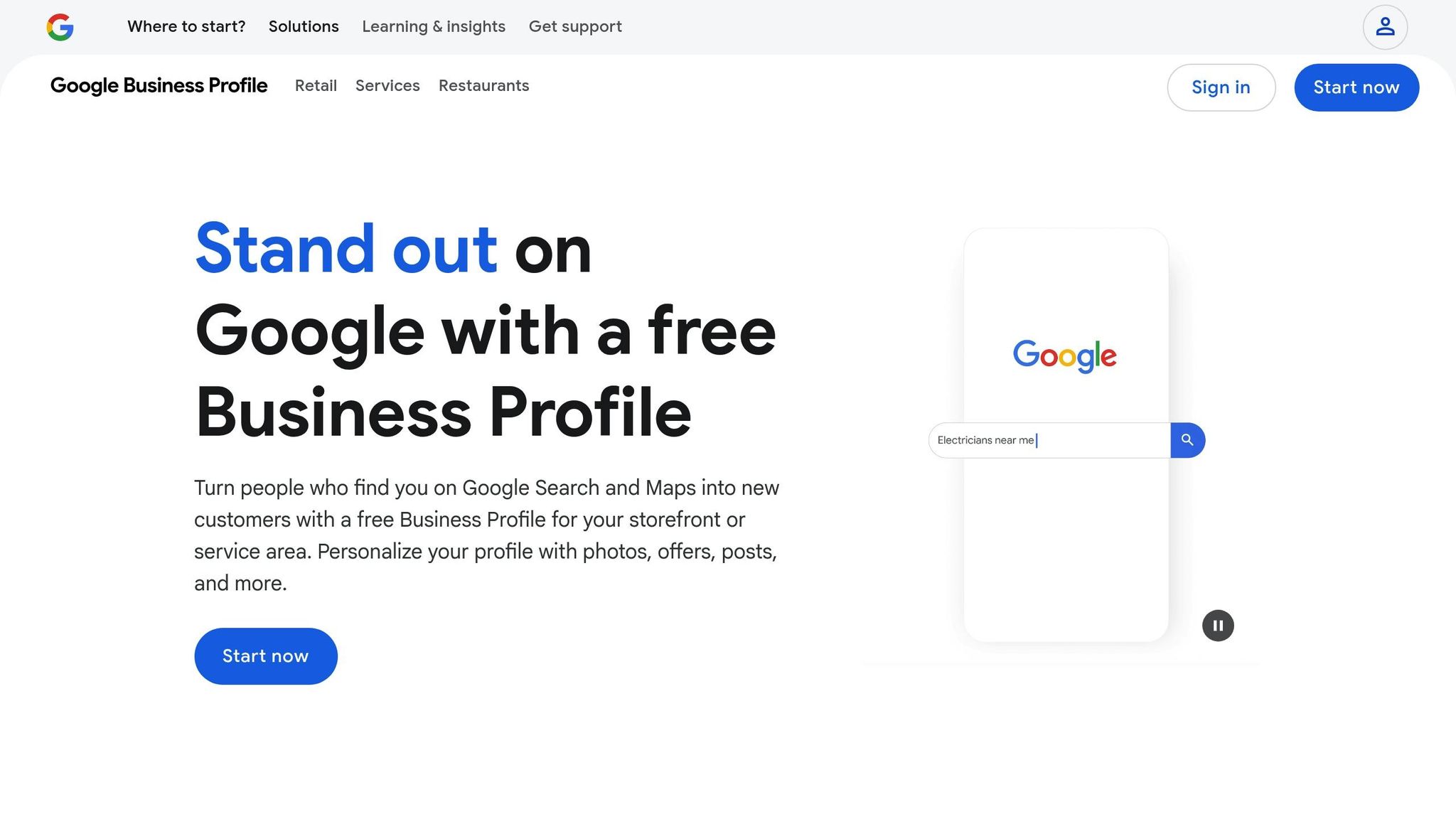
Your Google Business Profile plays a key role in how reviews influence local SEO. When optimized effectively, it transforms customer feedback into a powerful ranking factor, giving your business a competitive edge in NYC’s bustling market.
Setting Up Your Google Business Profile
After establishing a solid review collection and response process, refining your Google Business Profile can further boost your local SEO performance. A well-maintained profile not only enhances your visibility but also builds trust with potential customers.
Start by ensuring your business name, address, and phone number (NAP) are accurate and consistent across all platforms. Even small inconsistencies can negatively affect your rankings.
Craft a concise, keyword-focused description that highlights your NYC location and what makes your business stand out. Mentioning your neighborhood or specific area of expertise can help you connect with local customers.
Photos are another essential element. Upload high-quality images that showcase your products, services, team, and physical location. Including both interior and exterior shots gives potential customers a sense of familiarity, while photos of your work set clear expectations.
Keep your business hours up to date, especially in NYC, where schedules often change for holidays, events, or seasons. Accurate hours prevent customer frustration and ensure you’re found when people are searching.
Choose your categories wisely to help Google understand the nature of your business. Select a primary category that reflects your main service and add secondary categories as needed to capture additional search opportunities.
These foundational steps make it easier to manage and leverage reviews, creating a solid base for improved local SEO.
Managing Reviews on Your Google Business Profile
Reviews are a cornerstone of your Google Business Profile, making review management a critical part of your local SEO strategy. A steady stream of reviews signals active customer engagement and builds credibility.
Google automatically highlights your best reviews when your overall rating is strong. However, you can enhance your profile by engaging with reviews directly. Respond quickly and thoughtfully to both positive and negative feedback to show you’re actively involved and care about customer experiences.
Encourage more reviews by using features within your profile, such as messaging tools, or by including review requests in email signatures, receipts, or follow-up communications. Simplify the process by providing direct links to your review page, making it easy for customers to share their thoughts.
Pay attention to patterns in your reviews. If you notice recurring themes – whether they’re compliments or complaints – address them proactively. For example, if multiple reviews mention a specific issue, take action to resolve it and communicate updates to your customers.
Using Google Business Profile Data to Track Review Performance
Once your profile is optimized and your review management is on point, tracking performance data can help refine your approach. Google Business Profile offers valuable insights into how reviews impact your local search visibility.
Metrics such as search appearance data reveal how often your business shows up in local searches and how frequently users engage with your listing. Actions like clicks, requests for directions, and calls can indicate how improvements in your reviews translate into customer engagement.
Your response rate to reviews is another important metric. Prompt replies not only reflect strong reputation management but can also positively influence your local search ranking.
Photo engagement data can provide insights into which images resonate most with viewers, helping you fine-tune your visual content strategy. Additionally, keyword insights from your profile can reveal which search terms are driving traffic, allowing you to align your review content with those keywords for better results.
Finally, use Google’s competitive benchmarking tools to compare your review performance with similar businesses in your area. This can help you identify strengths, weaknesses, and opportunities to improve your strategy.
Advanced Review Strategies for NYC Businesses
Once you’ve optimized your profile and set up a solid review management system, these advanced strategies can help you take things to the next level. They’re designed to help NYC businesses make the most of customer feedback while giving their local SEO a serious boost.
Adding Reviews to Your Website Content
Why let valuable customer reviews live only on third-party platforms? By embedding them into your website, you can refresh your content and naturally include local keywords that improve your SEO performance.
For example, imagine you own a Brooklyn restaurant, and a customer writes, "authentic wood-fired pizza in Park Slope." That phrase is gold for local SEO. Adding it to your site not only makes your content more relevant but also helps you rank for those exact terms people are searching for.
You can take this a step further by creating testimonial sections on your service pages. Don’t just stick to star ratings – include detailed quotes that highlight specific benefits or experiences. This adds credibility and makes your site more engaging for visitors.
Using Review Data to Spot Trends
Customer reviews are more than just feedback – they’re a treasure trove of data. By applying analytics, you can uncover trends and patterns that help you improve your business and predict future outcomes. Here’s how you can leverage four types of analytics:
- Descriptive analytics: Summarize key review data, such as average ratings, monthly review volumes, and common themes.
- Diagnostic analytics: Use tools like time-series analysis to link sentiment changes to specific events or seasonal trends.
- Predictive analytics: Build simple models to forecast busy periods, spot potential service issues early, or identify which customers are most likely to leave positive reviews.
- Prescriptive analytics: Use insights to make data-driven decisions that improve customer satisfaction.
Even if you’re not a tech expert, tools like Python, R, SQL, and Tableau can help you dive into review data. Natural Language Processing (NLP) is especially useful for analyzing the text of reviews. With it, you can track sentiment shifts across locations, services, or time periods. This can reveal operational differences or even local preferences, giving you actionable insights to refine your approach.
Conclusion: Using Reviews to Improve Local SEO in NYC
Customer reviews play a key role in driving local SEO success in NYC. By boosting your Google Business Profile and enhancing your website content, reviews directly impact how local customers discover and choose your business. They influence everything from search rankings to overall visibility.
The most successful businesses in NYC know that managing reviews isn’t a one-and-done task – it’s an ongoing process. Encouraging happy customers to leave reviews, responding thoughtfully to all feedback (good or bad), and keeping a close eye on your online reputation across multiple platforms are essential steps. This steady effort builds the trust and credibility that search engines reward with better local rankings.
Both positive and negative reviews can work to your advantage when handled correctly. Positive reviews highlight your strengths and improve your visibility, while negative reviews offer a chance to show off your problem-solving skills and commitment to customer satisfaction. How you respond can leave a lasting impression on potential customers.
For those looking to go beyond the basics, advanced strategies can help you use review insights to stand out in NYC’s crowded marketplace. In a city where countless businesses compete for the same local audience, fine-tuning your approach to reviews can be the difference between appearing on page one or fading into obscurity.
Start applying these strategies today as part of a long-term plan to strengthen your online presence. Businesses that consistently focus on managing reviews will enjoy better local SEO results, attract more customers, and build a solid foundation for lasting success in NYC’s highly competitive market. Managing reviews effectively isn’t just helpful – it’s essential for thriving in local search.
FAQs
What are the best ways for NYC businesses to handle negative reviews and improve local SEO rankings?
Managing negative reviews the right way is a must for NYC businesses looking to improve their local SEO rankings. The first step? Handle customer concerns with professionalism and care. Respond directly to their feedback, acknowledge their experience, and, when appropriate, apologize. Offering a solution not only shows you value their input but can also turn an unhappy customer into a loyal one.
For reviews that violate content policies – like fake or inappropriate ones – you can report them and request their removal. That said, your main focus should always be on addressing genuine complaints and maintaining a strong online presence. Regularly engaging with all reviews, whether glowing or critical, helps build trust with your audience and boosts your visibility in local search results.
What advanced strategies can NYC businesses use to boost their local SEO with customer reviews?
NYC businesses can boost their local SEO by making the most of customer reviews. Start by encouraging happy customers to share their experiences on platforms like Google and Yelp. These reviews play a direct role in improving search rankings and attracting new customers.
Equally important is taking the time to respond to every review, whether it’s glowing praise or constructive criticism. Engaging with feedback shows you care about your customers and their experiences. Handling negative reviews with professionalism can even turn a bad situation into an opportunity to win over potential clients.
Lastly, make it a habit to keep an eye on your reviews. Regularly monitoring them helps you spot patterns, address recurring concerns, and fine-tune your approach. In a competitive market like NYC, staying on top of customer feedback is key to building a solid online reputation and standing out in search results.
How do reviews on sites like Yelp and Facebook affect local SEO for NYC businesses?
Reviews on platforms like Yelp and Facebook are more than just customer feedback – they’re a key factor in boosting your local SEO. Search engines use these reviews to gauge your business’s credibility and relevance, which can have a direct impact on how visible you are in local search results.
To make the most of this, encourage happy customers to share their experiences on these platforms. Take the time to respond to reviews, whether they’re glowing or critical. Managing your online reputation by staying engaged with customer feedback not only builds trust with potential clients but also shows search engines that your business is active and dependable.