

Local SEO is a powerful tool for Austin startups looking to stand out in a crowded market. By targeting local customers actively searching for services, you can drive traffic, increase sales, and establish trust in the community. Here’s what you need to know:
- Google Business Profile: Claim, verify, and optimize your profile with accurate Name, Address, and Phone number (NAP) details. Add high-quality photos, manage reviews, and keep your information updated.
- Local Keywords: Focus on Austin-specific terms like "South Congress coffee shop" or "SXSW marketing services." Use tools like Google Keyword Planner to find the right phrases and integrate them naturally into your website and content.
- Content Strategy: Create Austin-focused content, such as neighborhood guides, event-based posts, and seasonal tips. This connects your business with local audiences and improves search rankings.
- Citations and Backlinks: Ensure NAP consistency across directories like Yelp Austin and the Austin Chamber of Commerce. Build partnerships with local influencers and businesses to earn backlinks.
- Technical SEO: Optimize your website for mobile users, improve site speed, and implement LocalBusiness schema markup to enhance visibility in search results.
- Track Results: Use tools like Google Analytics and Search Console to monitor local traffic, rankings, and conversions. Adjust your strategy based on data insights.
10 Local SEO Strategies That Actually Work in the AI Era
Set Up Your Google Business Profile for Local Search
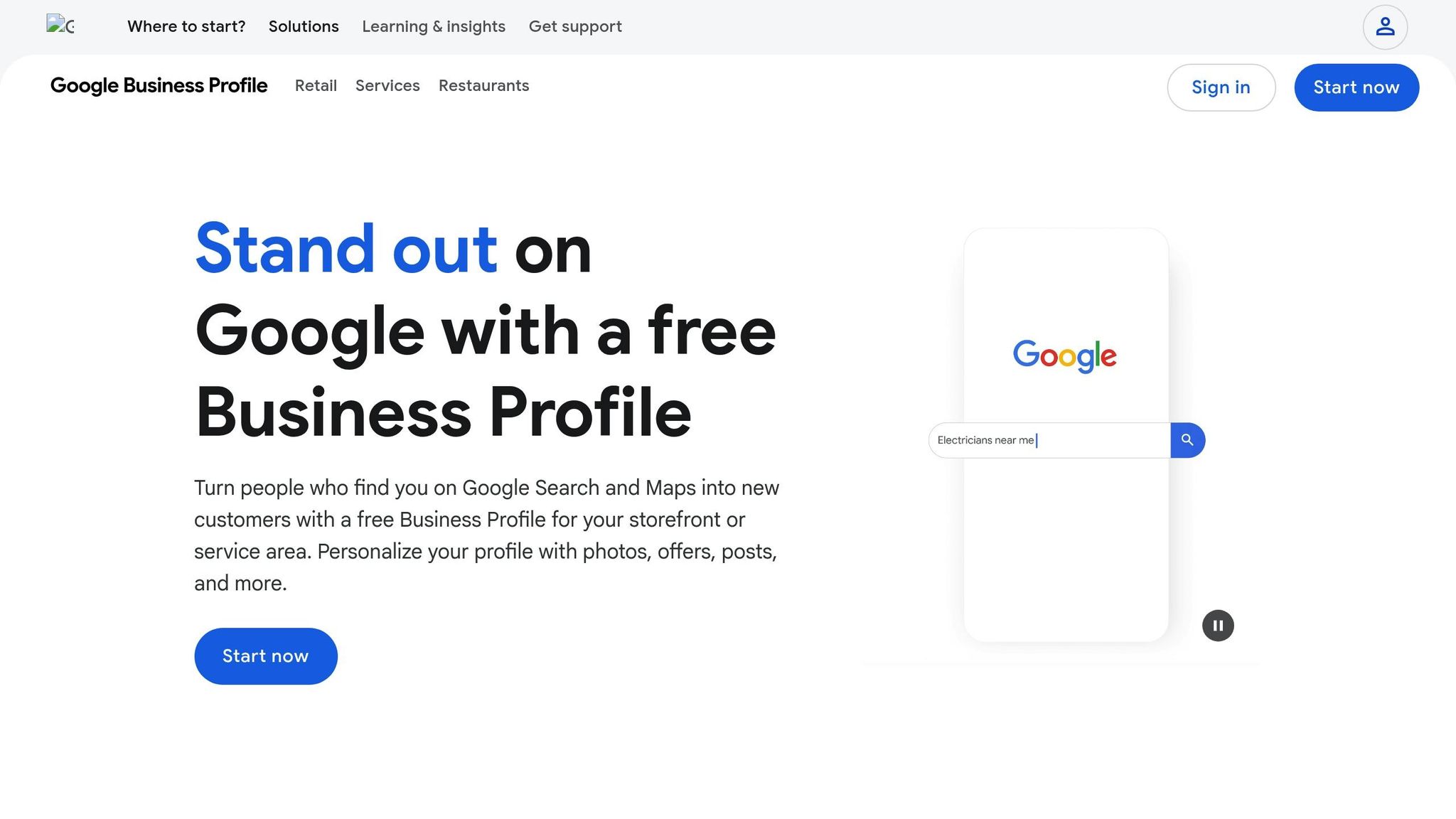
Your Google Business Profile (GBP) acts as your online storefront, especially for Austin customers searching through Google and Google Maps. With nearly half of all Google searches – 46% to be exact – focused on local business information, having a well-maintained profile can make or break whether potential customers find you. Here’s how to ensure your profile works effectively for local searches.
Claim, Verify, and Update Your Profile
To get started, Austin startups need to follow three key steps. First, head over to the Google Business Profile website and search for your business name. If your business is already listed, claim it. If not, create a new one.
Next comes verification. Typically, Google will send a postcard with a verification code to your business address. This process can take 1–2 weeks, so make sure your address is accurate and capable of receiving mail. While some businesses may qualify for instant verification via phone or email, the postcard method is still the most common.
Once verified, consistency is key. Ensure your NAP (Name, Address, Phone number) details match across all online platforms. Even minor inconsistencies, like using "Street" in one place and "St." in another, can confuse search engines and hurt your rankings. Take Austin Tech Hub as an example – after optimizing their profile in March 2023, they secured the top spot for "co-working spaces Austin."
Your profile should also reflect local flavor. Write a description that resonates with the Austin community and upload high-quality images of your business. Include exterior and interior shots, as well as pictures of your team and products or services in action. Once your profile is polished, the next step is to gather and manage customer reviews to build trust.
Get and Manage Customer Reviews
An optimized profile sets the stage, but customer reviews are what cement your local presence in Austin. Reviews not only influence search rankings but also build trust – 93% of consumers say online reviews affect their purchasing decisions. For Austin startups, authentic feedback from local customers can be a game-changer.
Ask for reviews right after a positive interaction. A follow-up text or email within 24–48 hours, including a direct link to leave a review, makes the process easy for customers.
For instance, Austin Eats saw their reviews jump from 50 to 200 in just three months, leading to increased traffic and sales. Don’t forget to respond to reviews – thank customers for positive feedback with personalized comments, and address negative reviews professionally. Offering to resolve issues offline shows you care about customer satisfaction.
"Encouraging reviews is not just about numbers; it’s about building a community and trust with your customers." – Sarah Johnson, Local SEO Expert, Austin Marketing Agency
Use Tools to Audit and Fix Profile Issues
Keeping your profile updated is an ongoing task, especially in Austin’s dynamic market. Regular audits can help you identify and fix issues that may be limiting your visibility in local searches. Common problems include outdated business hours, missing photos, incomplete information, or inconsistent NAP details across platforms.
Tools like SearchX‘s free GMB Audit Tool can streamline this process. For example, in March 2025, a local Austin restaurant discovered NAP inconsistencies using this tool. After making corrections, they saw a 30% increase in foot traffic over the next two months (Source: Fair Marketing, 2025).
Beyond audit tools, review your GBP insights regularly. These insights reveal how customers interact with your listing – whether they’re calling, requesting directions, or visiting your website. Use this data to fine-tune your profile further. Also, activate notifications so you’re immediately alerted to new reviews or customer questions. Responding promptly not only maintains your reputation but also shows Austin customers that you’re engaged and professional.
"A well-optimized Google Business Profile serves as a digital storefront, allowing potential customers to discover your business when searching for relevant services or products in the area." – Fair Marketing
Create Austin-Focused Content and Target Local Keywords
Crafting content that resonates with Austin’s vibe can significantly improve your local search visibility. By blending targeted keywords with topics unique to Austin, you can connect with potential customers actively seeking businesses like yours in the area. Start by identifying the right keywords, then weave them into your overall content strategy.
Find Local Keywords for Austin
Effective local SEO begins with understanding the keywords Austin residents use when searching for services. Instead of competing for broad terms like "marketing agency", aim for location-specific phrases such as "Austin digital marketing services" or "South Congress branding consultants."
Begin by listing your core services and pairing them with Austin-specific terms. Incorporate neighborhoods like South Congress, East Austin, Zilker, or landmarks such as Lady Bird Lake and Rainey Street. Major events like SXSW, Austin City Limits, and Formula 1 also generate significant local search traffic, making them perfect for keyword inspiration. Use these names to craft search-friendly headlines and content that resonates with locals.
For instance, a tech startup targeting "Austin digital marketing services" saw website traffic jump by 45% in six months by focusing on these specific phrases. Tools like Google Keyword Planner, Ahrefs, or Ubersuggest can help you analyze search volume and competition for your chosen keywords. Many of these tools offer free versions, while premium options typically cost around $99/month. Look for keywords with solid search volume but lower competition to boost your chances of ranking quickly.
Keep an eye on your competitors to see which Austin-specific keywords they prioritize. This research can reveal untapped opportunities. For example, if competitors focus on "Austin web design", you might target "East Austin startup web design" or "SXSW website development Austin" instead.
Add Keywords to Your Website and Profiles
Once you’ve zeroed in on your keywords, integrate them naturally across your website and online profiles. Optimize service pages, blog posts, meta descriptions, and your Google Business Profile with these terms.
In March 2023, a local Austin restaurant optimized its website with keywords like "best brunch in South Congress", leading to a 60% increase in reservations over three months. Their strategy included updating their Google Business Profile and creating blog content about local events.
Make sure your primary keywords appear at the beginning of title tags and include location-based terms in meta descriptions. For example, instead of "Digital Marketing Services", use "Austin Digital Marketing Services | South Congress Agency." Write compelling meta descriptions, such as: "Transform your Austin startup with digital marketing strategies tailored to South Congress, East Austin, and beyond."
Your Google Business Profile description is another crucial spot for local keywords. Write naturally about your services while mentioning specific Austin areas. For example: "We help Austin startups grow with marketing strategies tailored to businesses from Downtown to The Domain." Avoid overloading your text with keywords – focus on creating genuine, engaging descriptions.
Service pages should target specific local keyword combinations. Creating separate pages for different neighborhoods or services can help you rank for a broader range of terms, making your business more visible to Austin customers.
"Incorporating Austin-specific keywords into your content not only improves your search rankings but also connects your business with the local community." – Local SEO Expert, Fair Marketing
Write Content About Austin Topics
Beyond keyword integration, creating content centered on Austin events and neighborhoods strengthens your local presence. Blog posts about local happenings, neighborhood guides, and business tips help position you as a trusted resource while naturally using your target keywords.
Event-based content works particularly well in Austin. Write about topics like SXSW preparation tips, Austin City Limits business opportunities, or Formula 1 weekend strategies. For example, a local restaurant published a blog titled "Best SXSW Eats in Downtown Austin", which led to a 30% increase in foot traffic during the festival.
Neighborhood guides are another excellent way to engage your audience. Consider writing pieces like "Starting a Business in East Austin: A Complete Guide" or "Why South Congress is Perfect for Creative Startups." These not only incorporate location-specific keywords but also provide meaningful insights.
Local partnership stories are a great way to highlight your community involvement while building backlinks. Share stories about collaborations with other Austin businesses, feature local customers, or showcase your participation in startup events.
Seasonal content keeps your site relevant throughout the year. Topics like "Preparing Your Austin Business for Summer Festival Season" or "Holiday Marketing Tips for Austin Retailers" can drive timely traffic and connect with local audiences.
Keep in mind that 76% of people who search for something nearby visit a related business within 24 hours, and 28% of those searches result in a purchase. By focusing on Austin-specific content that addresses local interests and needs, you can attract high-intent traffic and turn searchers into loyal customers.
Build Local Citations and Backlinks in Austin
For startups in Austin, building local citations and backlinks is a critical step in climbing search engine rankings. Just as an optimized Google Business Profile establishes your local footprint, consistent citations and quality backlinks strengthen your credibility. These digital signals tell search engines that your business is legitimate and deeply rooted in the Austin community. When done right, they can significantly improve your local search rankings and bring more targeted traffic to your site.
Why Citations and NAP Consistency Matter
Local citations refer to mentions of your business’s Name, Address, and Phone Number (NAP) on online platforms. Think of them as digital breadcrumbs that help search engines confirm your business operates in Austin. Whether it’s a directory listing, a review site, or a local blog mention, each appearance reinforces your local SEO.
But here’s the catch: NAP consistency is non-negotiable. Search engines cross-check your business information across various platforms to verify its accuracy. Even small inconsistencies, like a typo in your address or a missing suite number, can hurt your credibility and lower your rankings.
The stakes are high. 80% of consumers lose trust in businesses with incorrect or inconsistent details online, which directly affects your ability to turn searchers into customers. For Austin startups, where competition is fierce, keeping your listings accurate is a must.
Take Austin Eats, for example. In 2025, this local restaurant saw a 30% boost in visibility after fixing inconsistencies in their NAP details across platforms like Yelp and Google Business Profile. Using BrightLocal to audit their listings, they identified and corrected errors, which led to more foot traffic and online orders.
Regular checks are essential to ensure citation accuracy. Tools like Moz Local or BrightLocal can help you monitor your listings and flag any inconsistencies before they hurt your rankings. Make it a habit to review your core listings monthly, especially if your business details change.
"For local businesses in Austin, consistent listings across platforms like Yelp and Citysearch are crucial for building credibility and improving your search rankings." – Fair Marketing
Use Austin Directories and Local Partnerships
Austin is brimming with opportunities for startups to create high-quality citations and earn strong backlinks. The key is leveraging directories and organizations that are trusted by both search engines and local audiences.
Start with the Austin Chamber of Commerce, which offers member businesses a directory listing that includes a backlink. Joining not only boosts your SEO but also connects you with other local business owners for potential partnerships and referrals.
Yelp Austin remains a powerhouse for local businesses. Beyond setting up a basic listing, stay active by responding to reviews and keeping your details up-to-date. 85% of consumers prioritize accurate contact information and hours when researching businesses, so don’t overlook the importance of maintaining your Yelp profile.
Local media outlets like Do512, Eater Austin, and Austin360 are excellent for earning backlinks. These platforms often feature local businesses and startup stories, giving you both exposure and SEO benefits. Pitch unique angles about your business – whether it’s your connection to Austin’s culture or your role in the local economy.
Another powerful platform is Nextdoor, especially for businesses targeting residential areas. By creating a profile and engaging in neighborhood discussions, you can build trust and earn citations organically.
| Directory/Organization | Purpose | Example Action |
|---|---|---|
| Austin Chamber of Commerce | Gain credibility and backlinks | Join and get listed in member directory |
| Yelp Austin | Build citations and gather reviews | Create and optimize your business listing |
| Do512 | Earn backlinks and increase visibility | Pitch event coverage or business features |
In early 2025, Austin Tech Hub revamped their Google My Business profile and partnered with local tech blogs, leading to a 45% jump in website traffic within three months. They published blog posts about "Austin Startup Resources" and earned features in community magazines, which drove both online engagement and foot traffic.
Beyond directories, forming strategic partnerships can further enhance your local SEO.
Partner With Local Influencers and Startups
Austin’s collaborative startup scene is a goldmine for building backlinks through partnerships and cross-promotions. The city’s "Keep Austin Weird" ethos fosters a spirit of cooperation, making it easier to connect with like-minded businesses.
Local influencer collaborations are a great way to expand your reach and earn backlinks. Seek out bloggers or social media personalities who focus on Austin’s business, tech, or lifestyle scenes. Work with them on content that naturally links back to your site, such as startup spotlights or local business roundups.
Cross-promotional partnerships with complementary businesses can also yield mutual benefits. For instance, a marketing agency might team up with a web development firm to create joint content about building successful Austin businesses. Each partner links to the other’s site, boosting SEO for both.
Event sponsorships are another effective way to earn backlinks in Austin’s event-heavy culture. By sponsoring meetups, pitch competitions, or community festivals, you can secure backlinks from event websites and promotional materials. Austin Code Monkey has noted that sponsoring local events often guarantees a backlink on the event’s site and other online content.
Consider participating in signature Austin events like Austin Startup Week, Capital Factory gatherings, or neighborhood festivals. These sponsorships often include website mentions and backlinks as part of the deal.
Guest posting is yet another strategy. Reach out to local business blogs or publications and offer to write about topics such as "Scaling a Startup in Austin" or "Navigating Austin’s Business Scene." These posts should provide genuine value while naturally linking back to your site.
The secret to successful partnerships lies in authenticity. Austin’s business community values real relationships over transactional exchanges. Focus on creating meaningful collaborations that benefit both your partners and their audiences, rather than simply chasing backlinks.
Building local citations and backlinks takes consistent effort, but for Austin startups, the rewards – improved search visibility and stronger customer trust – are well worth it.
Technical Local SEO Setup for Austin Startups
Building citations and backlinks can establish your presence in Austin’s business scene, but the backbone of your website – its technical setup – determines how well search engines can crawl, index, and rank your content. For startups focused on growth, tackling technical SEO might feel overwhelming, but getting these basics right can significantly boost your local search performance. With Austin’s tech-savvy audience demanding fast, secure, and mobile-friendly experiences, a solid technical foundation is critical to standing out in the local market.
Make Your Site Mobile-Friendly for Austin Users
Austin’s mobile-first culture makes having a responsive website an absolute must. With Google’s mobile-first indexing, the search engine evaluates your mobile site first when determining rankings. If your site doesn’t perform well on smartphones or tablets, you risk losing visibility with the majority of local searchers.
The first step is adopting responsive design so your site adjusts seamlessly to different screen sizes. Test your site on various devices, from iPhones to tablets, to ensure it works well across the board.
Optimize images by using modern formats like WebP, which can reduce file sizes by up to 30% without compromising quality. Adding lazy loading ensures images only load as users scroll, speeding up initial page loads.
Consider using Accelerated Mobile Pages (AMP) for your blog content. AMP pages load almost instantly on mobile devices and can appear in special search features, increasing your visibility in local search results.
Another way to improve performance is through a Content Delivery Network (CDN). Services like Cloudflare or Amazon CloudFront ensure your content is delivered from servers closer to Austin users, reducing load times.
In March 2023, an Austin-based coffee shop revamped its website with responsive design and faster load times, resulting in a 40% jump in mobile traffic and a 25% boost in online orders within two months.
Use tools like Google Analytics and Google Search Console to monitor mobile usability. Keep an eye on metrics like bounce rate and time on site to understand how well your mobile experience meets the needs of Austin users.
Improve Site Speed and Security
A fast-loading website isn’t just nice to have – it’s essential for ranking well in local search. Google’s Speed Update from 2018 made it clear: slow-loading sites rank lower. In Austin’s competitive startup scene, you can’t afford to be left behind due to sluggish performance.
Aim for a load time under four seconds, as slower sites see higher bounce rates and lower rankings.
Caching tools like WP Rocket can drastically cut load times by storing static versions of your pages, so they load almost instantly instead of being generated from scratch each visit.
Invest in speed-optimized hosting with providers like WP Engine or Kinsta. While these may cost more than budget options, the improved performance can directly enhance both rankings and user experience.
Don’t overlook HTTPS security. Beyond being a ranking factor, it builds trust with privacy-conscious users. An SSL certificate not only protects user data but also displays the reassuring padlock icon in browsers.
In April 2023, an Austin startup reduced its page load time from 8 seconds to 3.5 seconds by optimizing images and using caching tools. This effort led to a 25% increase in user engagement and a 15% rise in conversion rates. Their web development team’s focus on site speed proved how impactful these improvements can be for local SEO.
"Seamless browsing creates a positive customer experience. Customers prefer sites to load quickly and navigation to be easy." – Justin Staples, Owner of JS Interactive
Regularly use tools like Google PageSpeed Insights to identify performance issues. Focus on Core Web Vitals, which Google uses to gauge user experience and factor into rankings. Meeting these benchmarks ensures your site delivers the fast, reliable experience Austin users expect.
"Fast-loading websites are critical for user experience and support your SEO efforts by ensuring your site performs well for Austin-based visitors." – Fair Marketing
Add LocalBusiness Schema Markup
Once your site is fast and secure, structured data can further boost your local visibility. LocalBusiness schema helps search engines understand key details about your business, such as your name, address, phone number, website, and hours. The more complete and accurate this information is, the better search engines can match your business to relevant local searches.
Use JSON-LD format for easy maintenance. You can add this code directly to your site’s header or use plugins that handle it for you.
Adding review schema can enhance your listing with star ratings and review counts, making your business stand out in search results. For service-based startups, service and area served schema clarify what you offer and where you operate, which is especially useful for businesses targeting specific neighborhoods or the broader Austin metro area.
Start with basic LocalBusiness schema, then layer on review and service-specific details. Use Google’s Rich Results Test to ensure everything is set up correctly and displays properly in search results.
In August 2025, Local Falcon reported that businesses using LocalBusiness schema saw a notable boost in local search visibility. For example, a bakery in Austin implemented schema markup and saw a 30% increase in foot traffic within three months.
"Implementing schema for local SEO gives your business a strategic edge in visibility and clarity for search engines." – Local Falcon
Keep your schema updated as your business evolves. Changes in hours, services, or contact details should be reflected both on your site and in your structured data. Regularly validate your markup using Google’s testing tools to avoid errors that could prevent rich results from appearing. For step-by-step guidance, check out SearchX’s local business schema markup guide.
Track and Improve Your Local SEO Results
After fine-tuning your technical setup, the next step is tracking your progress. Why? Because understanding performance is key to growing your local presence in Austin. Local SEO thrives on consistent monitoring and data-driven tweaks. Consider this: 76% of nearby searches lead to visits within 24 hours. If you’re not tracking, you’re missing out on valuable insights.
Monitor Key Local SEO Metrics
To measure success, you need to focus on the right metrics. Start by keeping an eye on local search rankings for Austin-specific terms like "startup consulting Austin." These rankings can help you anticipate changes in traffic and conversions. Dive into Google Analytics to segment traffic by location and search terms – especially visits from Austin zip codes. This will show you how well your content connects with local audiences.
Click-through rates (CTR) from local search results are another important indicator. A low CTR might mean it’s time to refresh your business descriptions, update your hours, or add better images to your listings.
Conversion tracking is where your SEO efforts translate into real-world results. Use Google Analytics to set goals and track actions like phone calls, form submissions, or even walk-ins.
Don’t overlook Google Business Profile insights. These provide valuable data on how customers find and interact with your business. Metrics like search views, website clicks, and requests for directions can give you a clear picture of local interest.
Here’s an example: In March 2023, an Austin restaurant revamped its Google Business Profile and focused on managing reviews. The result? A 60% boost in reservations over three months. And remember, businesses in the top three spots of Google’s local pack grab 44% of total clicks.
Use SEO Tools for Tracking and Reports
The right tools can turn overwhelming data into actionable insights. Start with free options like Google Analytics and Google Search Console. These are great for tracking local search traffic and user behavior. If you need more advanced features, tools like SearchX can help you monitor Austin-specific keywords and track ranking changes over time.
To save effort, set up automated weekly or monthly reports. Tools that monitor reviews are also a smart investment – they help you maintain a strong online reputation. Use these insights to refine your approach and keep improving your local SEO.
Update Your Strategy Based on Data
Tracking data is only valuable if it leads to action. Regular SEO audits are essential for reviewing keyword rankings, organic traffic, and conversion rates. Look for patterns in the data – seasonal trends or standout neighborhoods that consistently bring in high-quality traffic. If certain areas perform well, consider creating content tailored specifically to those audiences.
Adjust your content strategy based on performance. For example, if a blog post about "Austin startup funding resources" generates strong local traffic, expand on the topic with related content like "Austin accelerator programs" or "entrepreneur networking events."
Underperforming pages are opportunities in disguise. Analyze user behavior to find issues. High bounce rates could mean the content doesn’t match search intent, while low conversion rates might point to poorly placed calls-to-action or unclear messaging.
Stay flexible as algorithms evolve. Watch for ranking shifts and adjust your tactics accordingly.
"In 2025, local SEO is less about ‘gaming’ the system and more about creating real digital relevance for your brand." – Brightter
Experiment with new approaches. The rise of AI and voice search is changing local SEO, putting more emphasis on intent-driven content. Try incorporating conversational keywords and FAQ-style content that mimics how people talk to voice assistants.
Finally, keep an eye on your competitors. Their activities can offer valuable lessons. Track what’s working for them and use it to refine your own strategy. Documenting your changes ensures you can link adjustments to results, making your future decisions even sharper.
Conclusion: Scale Faster With Local SEO in Austin
Local SEO provides a straightforward path for Austin startups looking to thrive in a crowded market. It’s not just a marketing tool – it’s a growth engine that helps connect your business with potential customers who are already searching for what you offer.
Start with the basics: an optimized Google Business Profile and locally focused content to attract high-intent traffic. From there, build your authority through local citations, quality backlinks, and technical tweaks that improve your visibility in search results.
The key to success lies in consistent tracking and making adjustments based on data. Your local SEO efforts should guide your decisions, allowing you to refine what works and improve what doesn’t. Keep in mind, local SEO isn’t a one-and-done task – it’s an ongoing effort that evolves with your business and market trends.
Every piece of the puzzle – whether it’s your Google Business Profile or performance metrics – works together to create a strong, competitive local presence. For startups aiming to grow, SearchX offers tailored SEO solutions, including local SEO services that let you focus on your core business while boosting your visibility.
Austin’s vibrant market rewards businesses that understand local search habits and consistently deliver value to their community. By applying these strategies, you can establish a strong local presence and propel your startup’s growth in this dynamic environment.
FAQs
What are the best ways for Austin startups to optimize their Google Business Profile for local SEO?
To get the most out of your Google Business Profile (GBP) and strengthen local SEO, Austin startups should begin by claiming and verifying their profile. Double-check that your business name, address, and phone number (NAP) are accurate and match across all platforms – consistency is key. Include high-quality photos that highlight your products, services, or location, and craft a detailed business description filled with relevant local keywords to help potential customers find you.
Encourage satisfied customers to leave glowing reviews – these can play a big role in boosting your visibility in local search results. Keep your profile fresh by regularly adding updates like posts, special offers, or upcoming events. By following these steps, your business can carve out a presence in Austin’s competitive market and draw in more local customers.
What are the best ways for Austin startups to build local citations and backlinks to boost their visibility?
To boost your startup’s visibility in Austin, concentrate on strengthening your local citations and backlinks through these steps:
- Add your business to reputable local directories such as Yelp, Yellow Pages, and Austin-focused niche directories.
- Partner with local bloggers, influencers, or community websites to showcase your business and gain exposure.
- Get involved with groups like the Austin Chamber of Commerce or attend local events to build connections and earn valuable backlinks.
These tactics not only enhance your presence in the Austin market but also improve your local search rankings.
How can Austin-based startups benefit from using local content and keywords in their SEO strategy?
Using content and keywords tailored specifically to Austin helps startups connect more effectively with the local community. By addressing the unique needs and preferences of Austin residents, businesses can create a stronger connection and make their services more relevant. This approach also boosts the chances of appearing higher in local search results, making it easier for potential customers in the area to discover your business.
Focusing on localized SEO doesn’t just bring in more relevant traffic – it also builds trust with the local audience. In a competitive market like Austin, these strategies can help your business stand out, attract loyal customers, and establish a solid foothold in the community.