
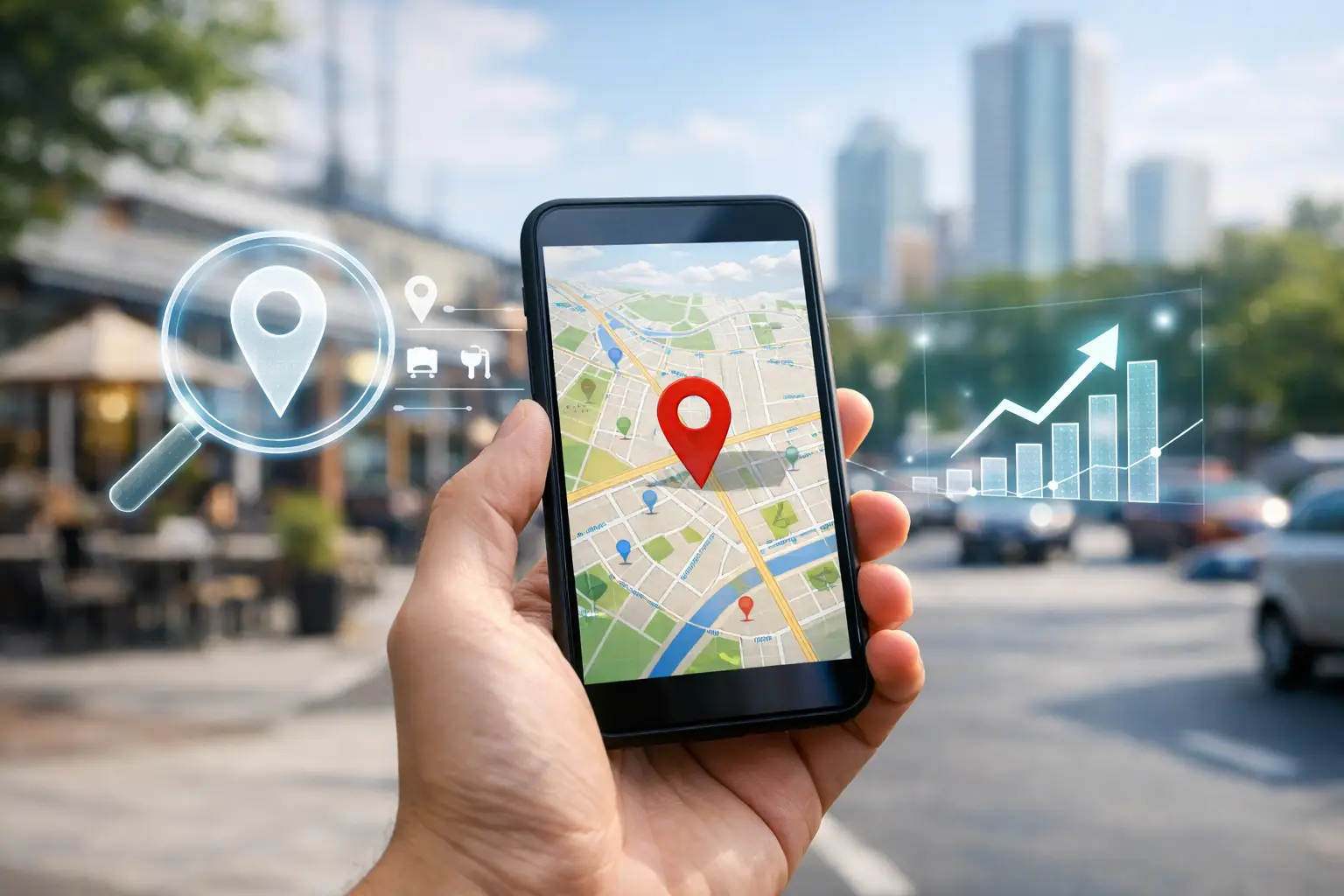
A local search lead used to be won with a decent Google Business Profile, a stack of citations, and a page built around city keywords. That playbook still matters, but it is no longer enough. The future of local SEO will be defined by who earns trust fastest, answers intent most clearly, and turns visibility into action.
For business owners and marketing teams, that shift matters because local search is getting less forgiving. Google is surfacing fewer simple blue-link choices in some cases and more maps, AI-generated answers, reviews, service details, and comparison signals before a user ever reaches your site. If your business is not structured to win inside that environment, rankings alone will not save you.
The future of local SEO is not just about rankings
A lot of local SEO reporting still centers on where a business ranks for a few keywords. That view is too narrow for where search is going. A #1 local position means less if users see stronger reviews, more relevant services, clearer calls, or richer profile information from a competitor before they click.
The future of local SEO is really about total search presence. That includes your Google Business Profile, your website’s local landing pages, your reviews, your brand mentions, your service clarity, your conversion path, and increasingly, your visibility in AI-assisted search experiences. Search engines are trying to reduce friction for users. Businesses that reduce friction first will have an advantage.
That does not mean traditional SEO is dead. It means traditional SEO now has to support business outcomes more directly. Results are counted in calls, form fills, booked appointments, and revenue – not just impressions.
Google Business Profile will keep gaining strategic weight
For many local businesses, the Google Business Profile is already the first impression that matters most. That importance is likely to grow, not shrink. Users want immediate answers: hours, services, photos, reviews, service areas, appointment options, and proof that the business is active and legitimate.
An incomplete or neglected profile sends the wrong signal. A well-managed profile does more than improve visibility. It improves conversion rate from search itself. That distinction matters. Two businesses can show up in the same map pack, but the one with sharper categories, stronger review language, better imagery, and more complete service information often wins the lead.
There is also a trade-off here. Some businesses focus so heavily on the profile that they ignore the site behind it. That is a mistake. Google still uses your website to validate relevance, authority, and geographic alignment. The profile may capture demand, but the site still supports trust and depth.
Reviews will become even more influential
Reviews are not new, but the way search engines interpret them is evolving. It is no longer just about volume and star ratings. Review content itself helps platforms understand what a business is actually known for.
If customers repeatedly mention emergency response time, staff professionalism, same-day appointments, or a specific service line, those phrases can reinforce relevance. In practical terms, that means review strategy should be operational, not passive. Businesses need a repeatable process for generating high-quality reviews tied to real service experiences.
Not every company needs hundreds of reviews overnight. A niche B2B service provider and a high-volume home services brand play different games. But both need review velocity, authenticity, and language that reflects what buyers care about.
Local SEO will lean harder on real-world trust signals
Search engines have one big problem to solve: deciding which local businesses are credible enough to recommend. That is why trust signals will play a bigger role in the future of local SEO.
Consistency across business information still matters, but trust now goes further. Search engines can compare your stated services to your page content, your reviews, your business categories, and your broader web presence. If those signals line up, confidence increases. If they do not, your visibility can plateau.
This is where many businesses underperform. They publish vague location pages, generic service copy, and thin bios, then wonder why local competitors keep outranking them. Specificity wins. Clear service descriptions, market-specific pages, strong proof points, real photos, and transparent business details all help reduce ambiguity.
For multi-location brands, this gets even more important. Template-driven pages can scale operationally, but if every page says nearly the same thing, relevance becomes diluted. Businesses with multiple locations need local differentiation without sacrificing brand consistency.
AI will change local discovery, but not in one simple way
AI is already affecting how people search. Some users still type straightforward queries like “roofing company near me.” Others ask longer, more detailed questions about price, speed, reputation, or service fit. AI-powered interfaces encourage that behavior by making search feel more conversational.
That changes local SEO in two ways. First, your content needs to answer deeper intent, not just match short keywords. Second, your brand needs enough structured and unstructured signals across the web to be cited, summarized, or surfaced in AI-driven results.
Businesses should not overreact and rewrite everything for bots. The better move is to make information easier to understand. That means clean service architecture, clear FAQs where useful, strong entity signals, accurate location data, and content that reflects real customer questions.
There is an important caveat: AI visibility is still uneven across platforms and industries. Some local categories will see major disruption sooner than others. High-consideration services, healthcare, legal, home services, and professional services are especially likely to feel the shift because users ask more nuanced questions before choosing.
Local content needs to sound like it comes from a real business
Thin location pages built around awkward keyword repetition are already weak. As search systems get better at evaluating quality and context, those pages will become even less effective.
The businesses that win will publish content that reflects actual local expertise. That could mean pages tailored to city-specific service needs, explanations of local regulations or seasonality, or content built around common buyer questions in a given market. The point is not to produce more pages. The point is to produce more useful pages.
For example, a Charleston HVAC company should not publish the same copy used for a Dallas or Denver market. Climate, urgency, and customer expectations differ. Local relevance is stronger when the content proves the business understands the environment it serves.
Conversion signals will matter more because search is getting more competitive
More businesses understand the basics of local SEO now. That raises the floor. When competitors all have decent profiles, local pages, and reviews, the edge often comes from conversion performance.
Search engines want to show results users trust and engage with. While no one outside the platforms sees every signal involved, businesses should assume that user behavior matters. If people click, stay, call, book, and leave satisfied feedback, that is healthier than visibility that goes nowhere.
That is why local SEO can no longer sit in a silo. The page experience, mobile speed, service clarity, quote process, and call handling all affect whether traffic turns into revenue. A business can generate more local visibility and still lose if the website is slow or the intake process breaks.
For operators, this is actually good news. It means the future of local SEO rewards businesses that execute well, not just those that play ranking games.
Attribution will become a bigger competitive advantage
The next wave of local SEO winners will not just be better optimizers. They will be better measurers. If you cannot tie local search activity to leads and sales, it is hard to know what deserves more investment.
Too many businesses still judge local SEO on surface metrics alone. Traffic up. Rankings up. Impressions up. That may sound good in a monthly report, but it does not answer the question that matters: did qualified demand increase?
As local search fragments across maps, organic listings, AI answers, and zero-click behaviors, attribution gets messier. But messy does not mean impossible. Businesses need call tracking, CRM alignment, conversion-focused reporting, and location-level visibility into performance. That is how local SEO becomes a growth channel instead of a marketing line item.
What businesses should do now
The smartest move is not chasing every new feature. It is building a local search foundation that can hold up as search changes. That means tightening your Google Business Profile, strengthening your local pages, improving review generation, aligning your website content with actual service intent, and tracking outcomes that matter.
It also means dropping the idea that local SEO is a one-time setup. It is an operating discipline. Markets shift. Competitors improve. Platforms change layouts. Customer behavior evolves. Businesses that treat local visibility as an active revenue system will keep gaining ground.
At SearchX, that is the lens that matters most: local SEO should create measurable business growth, not just prettier ranking reports. The future belongs to businesses that are easier to trust, easier to understand, and easier to choose.
If you want to be competitive in local search two years from now, start by making your business the clearest answer to the customer’s question today.