
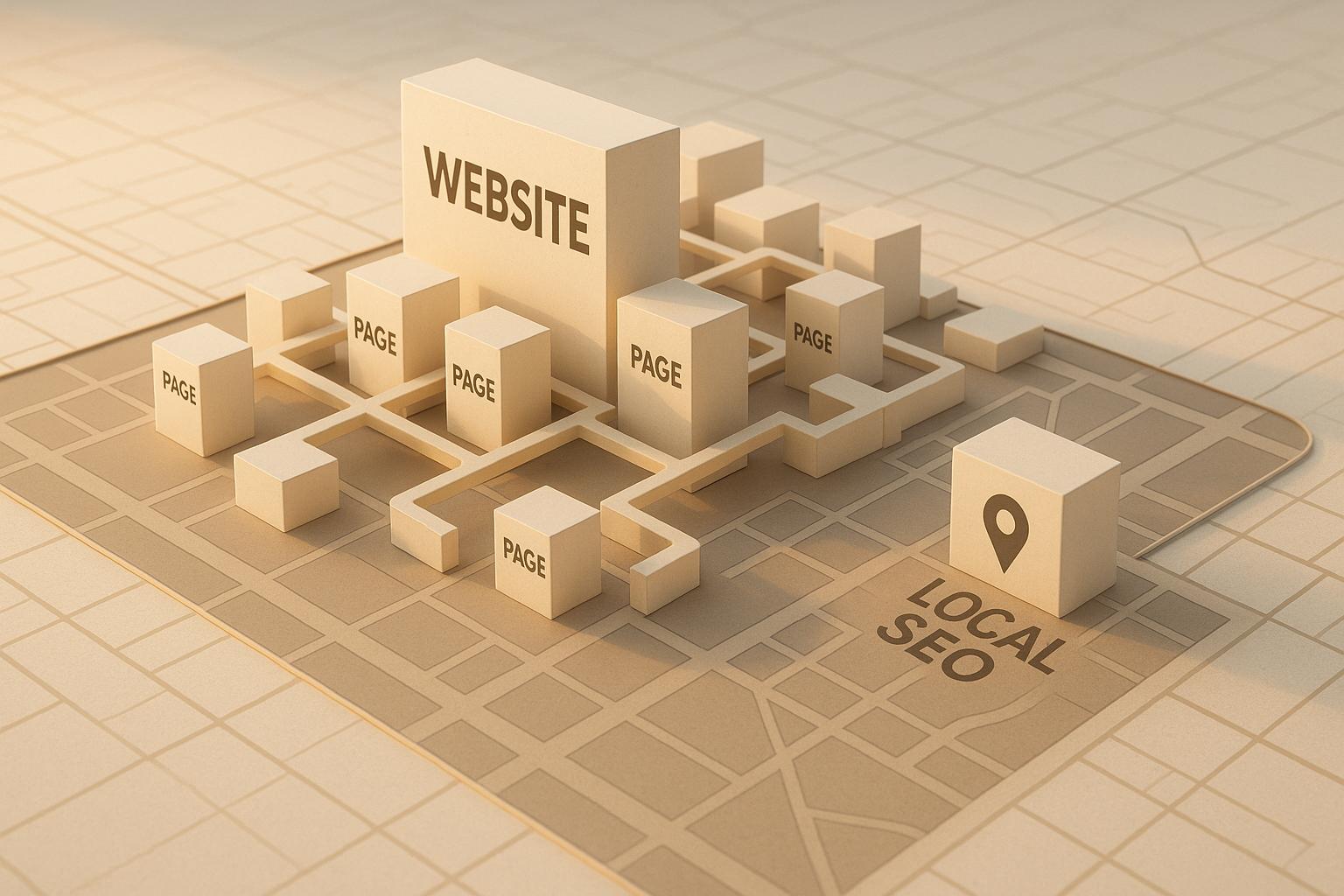
Local businesses aiming to dominate their digital landscape need to understand the power of technical SEO. It’s the backbone of your website’s ability to rank well in local search results, directly impacting visibility to potential customers in your area. While technical SEO can seem intimidating, breaking it into actionable steps ensures that your website is optimized and ready to compete. In this article, we’ll explore the essential elements of technical SEO discussed in the video, providing you with a clear roadmap to improve your local rankings.
What Is Technical SEO and Why Does It Matter?
Technical SEO encompasses the behind-the-scenes elements of your website that influence how search engines crawl, index, and rank your pages. Unlike content or backlinks, technical SEO focuses on the website’s structure, speed, and functionality. For local businesses, mastering technical SEO can mean the difference between being found by local customers or being buried by competitors.
The video emphasizes that technical SEO is not a one-size-fits-all solution. Your market size, competition level, and industry type play critical roles in determining how much effort you’ll need to invest. For highly competitive industries like law, dentistry, or e-commerce, technical SEO forms the foundation before advanced strategies like link building come into play.
Prioritizing the Core Elements of Technical SEO
When diving into technical SEO, it’s important to focus on the most impactful elements first. According to the video, these components are weighted based on their influence on your rankings. The following sections break down the key areas, offering actionable insights for each.
1. Crawlability and Indexation (25-30% Importance)
Crawlability refers to how easily search engines, like Google, can navigate and understand your site. If your site isn’t crawlable, it can’t be indexed, meaning it won’t appear in search results. Here’s how to ensure your website is optimized:
- Update Your Sitemap: Create and regularly update your XML sitemap to list all your relevant pages.
- Check Your Robots.txt File: This file instructs search engines on which pages or resources to crawl. Ensure it isn’t blocking important content.
- Fix Unindexed Pages: Identify pages that aren’t being indexed and either delete or redirect them appropriately. Be cautious – randomly deleting pages can disrupt internal links, negatively impacting your SEO.
2. Site Structure and Hierarchy (15-20% Importance)
A well-structured site enhances both Google’s understanding of your content and user experience. Use the following strategies:
- Organize with Purpose: Structure your site logically based on your top services or products. For example, a local construction company might prioritize categories like "Roofing", "Deck Building", and "Home Renovation."
- Siloing or Tree Structures: Choose a site architecture (e.g., silo or tree) that best supports your business goals. E-commerce platforms often use hierarchical categories (e.g., Men’s → Shoes → Sneakers) to streamline navigation.
- Reflect the 80/20 Rule: Focus your structure around the 20% of services driving 80% of your business. This ensures you’re prioritizing what matters most.
3. Mobile Friendliness (15-20% Importance)
With the majority of searches happening on mobile devices, having a mobile-friendly site is non-negotiable:
- Optimize for Mobile Speed: Use plugins or page builders that enhance mobile performance. For example, reduce image sizes and minimize heavy scripts.
- Tailor for Mobile Use Cases: Think about user intent. A pizza shop should make ordering seamless on mobile, while an architect might prioritize detailed portfolio displays optimized for desktop.
- Test Responsiveness: Ensure your site adapts to various screen sizes and offers a user-friendly experience on all devices.
4. Page Speed and Core Web Vitals (15-20% Importance)
Page speed directly affects your rankings and user satisfaction. If your site takes too long to load, visitors will leave, and Google will notice:
- Streamline Visual Elements: Use lightweight images, and delay loading non-critical elements like background videos until after the main content loads.
- Evaluate Hosting: If your site has grown or contains heavy elements, consider upgrading your hosting package to support faster load times.
- Use Tools: Tools like Google PageSpeed Insights can help identify and resolve speed-related issues.
5. Site Security (5-10% Importance)
A secure site builds trust with users and search engines alike:
- Switch to HTTPS: Ensure your website is encrypted with an SSL certificate. Almost all hosting providers offer this option, and it’s now a baseline requirement for ranking.
6. Structured Data and Schema Markup (5-10% Importance)
Structured data provides additional information to search engines about your site’s content, improving your chances of appearing in rich snippets and local packs:
- Use Schema.org: Leverage this resource to implement structured data relevant to your business type, such as "Local Business" or "Medical Practice."
- Expert Tip: For advanced schema work, look into experts like Terry Samuels, who offers resources and courses on this topic.
7. Duplicate Content (2-5% Importance)
Duplicate content can dilute your SEO efforts, but its impact is relatively minor compared to other factors:
- Audit Your Site: Use tools like Siteliner to identify duplicate pages. However, don’t panic if repeating industry-specific terms (e.g., "roofing" for a roofer) gets flagged as duplicate – it’s natural.
- Address Problematic Pages: Rewrite or consolidate pages flagged as genuinely duplicate.
8. Clean URL Structure (2-5% Importance)
URLs should be concise and descriptive, making it easier for users and search engines to understand your site:
- Simplify URLs: Avoid unnecessary parameters or excessive folder nesting. For example, use "yourwebsite.com/services/roofing" instead of "yourwebsite.com/category/services/roof-installation."
- Use Keywords: Incorporate relevant keywords, such as the service and city you’re targeting.
Supporting Tools for Technical SEO
Several tools can simplify the process of auditing and optimizing your site. Here are some that stand out:
- Google Search Console: Monitor crawl errors, indexation issues, and page speed for mobile and desktop versions.
- Siteliner: Identify duplicate content and broken links.
- SEO Suites: Platforms like SEMrush and Ahrefs offer comprehensive tools to improve everything from site structure to URL health.
Key Takeaways
- Prioritize Crawlability: Ensure your site is easy for search engines to navigate and index.
- Organize Your Site Effectively: Use logical structures to guide users and search engines through your content.
- Optimize for Mobile: Cater to mobile users with fast-loading, responsive designs.
- Prioritize Speed and Security: Enhance page load times and secure your site with HTTPS encryption.
- Implement Schema Markup: Leverage structured data to improve your visibility in search results.
- Audit for Duplicate Content: Identify and address duplicate content issues, but don’t overreact to minor repetitions.
- Streamline URL Structure: Keep URLs short, clean, and keyword-rich for better SEO performance.
Conclusion
Technical SEO is the foundation of a strong local search presence. By focusing on the key areas outlined above, you can improve your website’s performance, enhance user experience, and boost local rankings. While some aspects, like crawlability and page speed, carry more weight than others, addressing all these elements holistically will set your business up for long-term success in the digital space.
Begin by auditing your site for the most critical issues, gradually implementing fixes, and leveraging available tools to track progress. With patience and consistency, your local SEO strategy will yield measurable results, helping your business thrive in today’s competitive marketplace.
Source: "On Page Optimization Technical SEO Deep Dive – 238" – Local SEO Tactics, YouTube, Aug 29, 2025 – https://www.youtube.com/watch?v=LfCPMlrsbWY
Related Blog Posts
- How to Optimize Content for Mobile SEO
- Voice Search and Local SEO: Key Ranking Factors
- How to Optimize Property Listings for Mobile SEO
- Crawlability and Indexability: Technical SEO Guide
Local technical SEO begins with a truthful market model
Local rankings are influenced by more than a city phrase in a title tag. The site needs a clear relationship between the organization, its services, its actual locations or service areas, and the customers it is equipped to help. That relationship should be consistent in visible copy, navigation, structured data, and public business profiles. A local strategy becomes fragile when the page implies an office, address, or coverage area that the business cannot substantiate.
For a multi-city agency, keep the market roles separate. A city-service page can own local service intent. A global industry page can explain how the service applies to a sector across markets. An article can answer a practical question. The pages can support one another through contextual links without creating a city-industry-service matrix that repeats the same claims.
A local crawl and indexation review
Start with the city hub and each canonical city-service page. Confirm that the pages are linked from an accessible pathway, return a successful response, use the intended canonical, and appear in the correct sitemap family. Then inspect retired URLs and redirects. A redirect is useful when it consolidates a genuine legacy path, but a chain of redirects can hide a broken information architecture and slow the user’s path.
Check whether location pages differ for a meaningful reason. A useful local page includes truthful market context, relevant service choices, approved proof, clear contact information, and a next step. It should not simply swap the city name in a paragraph copied from another market. SearchX’s location model keeps approved city data separate from global industry data so the page can be specific without becoming a doorway page.
Local business information and trust
Name, address, phone, hours, and service-area information should be maintained wherever the business presents them. When details differ by location, explain why. When an address is private, do not publish it merely to create a local signal. Link to an official profile only when it benefits the visitor’s journey and the destination is controlled or verified.
Trust also includes the language used around reviews, awards, partners, and client work. Label client-reported outcomes, public client profiles, independent editorial coverage, and SearchX-owned claims differently. Do not use a review badge or an award phrase if the source does not support the exact claim. Local SEO is not strengthened by a detail that a visitor later finds to be inaccurate.
Mobile local intent and conversion paths
Local visitors often need an answer quickly. The service, market, phone or form path, proof boundary, and next step should remain easy to find on a small screen. Test the page with the header collapsed, the sticky audit CTA active, and the chat control present. A conversion element should assist the user, not cover the primary content or make the page feel like an obstacle course.
Make the action match the intent. Someone comparing service options may need an overview. Someone with an urgent home-service question may need a call path. Someone evaluating a healthcare provider may need careful expectations and access information. The local page should help the visitor choose the next action without promising that every visitor has the same need.
Measuring local technical improvements
Use first-party sources whenever they are available. Search Console can show queries, pages, devices, clicks, impressions, click-through rate, and average position for a verified property. Analytics can show configured events and landing-page behavior. Lead records can show source paths and submitted context. These signals answer different questions, so do not combine them into one number without documenting the method.
If local performance data is not available, record that limitation and use a structural baseline instead: indexation, valid links, page speed, form completion, phone link behavior, and visible local information. Once the data source is available, compare complete periods and separate visibility from qualified demand.
Local implementation checklist
- Use one canonical city hub and one page per approved city service.
- Link city services to global industry hubs only when the industry context is genuinely relevant.
- Keep office, phone, profile, and service-area details accurate and consistent.
- Test the mobile call, form, audit, chat, and navigation path together.
- Label estimates, client-reported outcomes, and independent sources clearly.
“Your success is our success; we work with you and not just for you, to achieve it.” — Lorenz Esposito, Founder & CEO of SearchX
Local page content should reduce uncertainty
A local visitor usually wants more than a city name. They want to know whether the business understands the problem, whether the service is available in their situation, what happens next, and how to contact the team. A useful local page answers those questions with accurate information instead of adding a paragraph of generic geography. The local detail should change the decision, not simply decorate the page.
For a service agency, that may include market priorities, the type of businesses served, approved local proof, the services available in the market, and the way the engagement begins. For a home-service company, it may include service availability, response expectations, and the difference between emergency and planned work. For healthcare, it may include access, provider context, privacy, and clear limitations. The specific content depends on the business and the evidence it can maintain.
Google Business Profile and the website should agree
A public profile and a website serve different purposes, but their essential business information should not contradict one another. Review the business name, category, address or service area, phone, hours, website destination, and description. When a change is made, record which source is authoritative and when it was checked. Do not add a second location or profile solely to create more local coverage.
The website should make the official profile useful to a visitor. Link to it when the visitor may need directions, reviews, photos, or profile details. Keep the link labeled clearly, and do not present a third-party page as if it were a SearchX-owned page. Accuracy and user value matter more than the number of citations or profile links on a page.
Local proof requires clear labels
Proof helps a local visitor make a decision, but the label determines how the proof is understood. Client-reported results should be labeled as client-reported. A public profile should be described as a public profile. Independent coverage should identify the publisher. A review should link to its source. A project in development should not be presented as a completed operating location or as a performance result.
Use the same discipline in schema. If a page visibly includes a case-study disclosure, the structured data should not silently turn it into a generic rating. If a business serves a market but has no public office there, use service-area language that reflects reality. If a city page is part of a staged expansion, publish it only when the page has a distinct job and enough maintained information to help a visitor.
Multi-city growth without a doorway-page matrix
A multi-city site needs repeatable templates, but repeatability should not mean copying every page. Start with one market that has a real business reason to be served. Build the city hub and the approved city-service pages. Connect them to global industry pages when the sector context is genuinely useful. Add supporting articles only when they answer a distinct local question and lead to a relevant next step.
Before adding another city, review whether the first city’s pages are accurate, linked, usable, and measurable. Look for form submissions, calls, qualified conversations, engagement, and search data when available. A city template should be proven as a system before it is multiplied. That is more sustainable than publishing dozens of nearly identical pages and hoping a location phrase creates demand.
Local rankings and service quality
Local visibility can create demand, but the business still needs capacity, a clear offer, a response process, and a useful customer experience. A technical review should therefore include the path after the click. Does the form route correctly? Does the phone link work? Is the message clear outside business hours? Does the visitor know which service to request? Marketing cannot repair an unclear operating process by itself.
A good local report connects the page to the business without pretending that the page caused every outcome. Explain which changes were made, what the data shows, what remains uncertain, and which customer action is being watched. If the data is not available, use structural checks and say that performance conclusions are pending rather than manufacturing a result.
Local expansion decision questions
- Is there a real customer and service reason to support this market?
- Does the business have accurate public information and a maintained conversion path?
- Can the page offer distinct local context instead of city-name substitutions?
- Which global industry pages and service pages are genuinely relevant?
- What proof is approved, source-labeled, and current?
- What data will determine whether this city should be expanded, revised, or paused?
A local launch brief for the next market
Before publishing a new market page, write a short launch brief that names the market, the service role, the evidence available, the intended visitor, the conversion path, and the source that will be reviewed later. If the answer to one of those questions is unclear, the page may need more preparation before it deserves a permanent URL.
The brief should also state what the page will not claim. It should not imply an office that is not public, invent a local result, or copy a neighboring market’s proof. Clear boundaries make the expansion easier to manage and make later performance reviews more honest. A controlled rollout can always expand; an inaccurate page can create trust and redirect debt that takes longer to repair.
Local search is a service promise as much as a visibility tactic. The organization must be able to answer the phone, route the form, describe the service, and follow through on the expectation created by the page. Technical checks and operating checks belong in the same launch conversation.
References
- Google Search Central: Local Business structured data
- Google Business Profile: Manage your business information
- Google Search Console Performance report
- W3C Web Content Accessibility Guidelines (WCAG) 2.2
- SearchX Charleston SEO services
Frequently Asked Questions about technical SEO and local rankings plan
These answers clarify the planning decisions covered in this guide. They are not a substitute for a site-specific audit or professional advice.
Do I need a separate page for every nearby city?
Only when the business has a real, distinct service or market reason to support that page. Thin location pages that only swap the city name can create duplication and a poor visitor experience.
What is the difference between a city-service page and an industry page?
The city-service page owns local channel intent, such as Charleston SEO services. The global industry page explains how a service applies to a sector across markets. They should link contextually without becoming one repeated URL matrix.
Can structured data guarantee local-pack visibility?
No. Structured data can help describe a business and its page, but it does not guarantee rankings or a local-pack result. Accuracy, relevance, prominence, and the overall user experience still matter.
Ready to apply this to your technical SEO and local rankings plan?
Start with the existing SearchX Charleston SEO services path, review the free SEO audit, or talk with SearchX about the constraint you need to solve first. You can also return to the SearchX homepage or learn more about Lorenz Esposito and the SearchX approach.