
When it comes to tracking competitor keywords, using the right tools can give you a clear edge in SEO. Here’s a quick rundown of the 7 most effective tools for monitoring competitor strategies:
- Search Atlas: Basic competitor tracking but lacks transparency in features and pricing.
- Ahrefs: Extensive keyword and backlink database, ideal for in-depth competitor research.
- Semrush: Offers daily updates, keyword gap analysis, and a broad range of SEO tools.
- SpyFu: Combines organic and paid keyword insights with historical data at a budget-friendly price.
- Similarweb: Provides keyword tracking alongside broader traffic and market insights.
- Moz: Simplifies keyword gap analysis, focusing on actionable opportunities.
- Serpstat: Affordable option with strong keyword tracking and local insights.
Quick Comparison
| Tool | Starting Price (USD/month) | Key Features | Best For |
|---|---|---|---|
| Search Atlas | Not disclosed | Basic tracking, limited transparency | Agencies needing clarity |
| Ahrefs | $99 | Backlink analysis, daily updates | Advanced SEO research |
| Semrush | $139.95 | All-in-one SEO toolkit, keyword gaps | Comprehensive SEO strategies |
| SpyFu | $39 | PPC and SEO insights, historical data | Budget-conscious marketers |
| Similarweb | ~$125 | Market intelligence, traffic insights | Broader competitive analysis |
| Moz | $99 | Simple keyword gap analysis | Beginners and small businesses |
| Serpstat | $69 | Local tracking, affordable plans | Freelancers and growing teams |
These tools cater to different needs, from basic tracking to advanced SEO analytics. Free trials or limited plans are available for most, so you can test before committing. Choose based on your budget, business size, and specific goals to refine your SEO strategy.
How To Check Competitor Keywords (Using Ahrefs & Semrush)
1. Search Atlas
When it comes to competitor tracking, public information about Search Atlas is limited. While the platform positions itself as an all-in-one SEO tool that includes competitor analysis, specifics about its tracking capabilities – such as comparing multiple competitors or identifying keyword gaps – haven’t been fully disclosed.
Competitor Tracking Features
Search Atlas appears to offer basic competitor monitoring over time, but details about more advanced features remain vague. Without clear documentation, it’s hard to assess whether it supports deeper insights like multi-competitor comparisons or keyword gap analysis, which are often essential for SEO strategies.
Data Accuracy in the US Market
For businesses operating in the competitive US market, data accuracy and frequent updates are essential. However, Search Atlas hasn’t shared how often its US keyword database is refreshed or how comprehensive it is. By comparison, many established tools in this space update their data daily, providing users with up-to-date insights.
Pricing Information
Pricing for Search Atlas is not publicly available, so you’ll need to reach out to the provider for specifics. For context, similar tools in the market typically charge between $99 and $139 per month, giving you a ballpark estimate of what to expect.
Potential Limitations
As a newer platform, Search Atlas comes with some uncertainties. It lacks extensive documentation, user reviews, and case studies, making it harder to evaluate its reliability. Businesses interested in the tool should contact the provider directly to confirm whether it aligns with their tracking requirements and budget.
2. Ahrefs
Ahrefs is a powerful tool for tracking competitors, boasting a database of over 7.2 trillion search results and 13.1 billion keywords globally. With monitoring capabilities for 152 million websites, it’s particularly useful for US-based businesses aiming to better understand their competition.
Site Explorer and Competitor Analysis
Ahrefs’ Site Explorer is a standout feature for digging into competitor keyword strategies. By entering a competitor’s domain, you can uncover their organic rankings, top-performing pages, and traffic insights. This helps pinpoint what’s driving their visibility online.
The tool also allows you to analyze your competitors’ best-performing content and keyword themes. This insight can help you identify gaps in your own strategy and find opportunities to create content that resonates with your audience.
Keyword Gap Analysis
Ahrefs’ keyword gap analysis compares your website’s performance to that of your competitors. It highlights keywords they rank for that you don’t, offering a clear roadmap to expand your reach. For US marketers, this feature can uncover hundreds of potential keywords to target, giving you a chance to act before competitors fully optimize for them.
Data Freshness and US Market Focus
Ahrefs updates keyword rankings daily, offering near real-time insights into your competitive landscape. This is especially valuable in the fast-paced US market, where search rankings can shift quickly due to algorithm updates or competitor actions.
With its extensive data coverage across the United States, Ahrefs ensures you won’t miss opportunities, no matter your niche. You can even track how competitors perform in different regions, helping you tailor strategies to specific markets.
Pricing Details
Ahrefs provides a free account with limited features, allowing you to explore the platform before committing to a paid plan. Paid plans start at $99 per month for the Standard plan, with annual subscriptions offering a 20% discount. This pricing makes it accessible for solo entrepreneurs and small businesses while also catering to larger organizations.
| Plan Type | Monthly Price | Annual Savings | Best For |
|---|---|---|---|
| Free Account | $0 | – | Testing features |
| Standard Plan | $99/month | 20% with annual | Small businesses |
| Advanced Plans | Contact sales | 20% with annual | Agencies & enterprises |
Advanced Features for Tracking
Ahrefs’ Rank Tracker provides detailed keyword performance data and historical trends, helping you understand long-term patterns and the impact of optimizations. This historical view is invaluable for planning strategies and staying ahead in competitive markets.
Another key feature is the integration of backlink analysis with keyword tracking. This allows you to see not only which keywords competitors rank for but also how their link-building efforts contribute to their rankings. This combined view offers deeper insights into their overall strategy.
Who Should Use Ahrefs?
Ahrefs is well-suited for agencies managing multiple clients, thanks to its ability to handle large datasets and provide daily ranking updates. Its robust reporting tools make it easier to showcase progress and competitive insights to clients.
That said, beginners might find the platform a bit challenging due to its extensive features. While there’s a strong user community and plenty of resources available, it may take some time for new users to fully grasp all its capabilities.
Next, we’ll dive into how Ahrefs’ reporting features cater to different user needs.
3. Semrush
Semrush is a powerhouse in the world of SEO, offering a comprehensive suite of tools for competitor keyword tracking. With data on more than 25 billion keywords spanning over 140 countries, it’s a go-to platform for US businesses looking to gain a competitive edge in search engine rankings.
Keyword Gap Analysis and Organic Research
Semrush’s Organic Research and Keyword Gap tools are designed to uncover opportunities by analyzing competitor performance. The Keyword Gap tool, in particular, allows you to compare your domain against up to four competitors at once. It highlights missing keywords, shared rankings, and unique opportunities that can shape your content strategy. For instance, a US-based agency leveraged this tool to identify 150 high-potential keywords, resulting in a 35% increase in organic traffic within six months.
Daily Updates and Visibility Tracking
Semrush provides daily ranking updates, a feature that’s critical in the fast-paced US market where rankings can shift overnight. The platform’s visibility scoring system offers immediate insights into changes in your competitors’ overall search presence, helping you stay ahead.
The Position Tracker, built on over 17 years of expertise, delivers detailed monitoring capabilities. It offers customizable dashboards to track SERP features, local rankings, and mobile versus desktop performance – all in one place. These updates make it easy to adapt your strategy based on real-time data.
Tailored for the US Market
Semrush’s extensive US keyword database ensures businesses targeting American audiences won’t miss any opportunities. From broad commercial terms to specific long-tail keywords, the platform provides the granular data needed to craft effective strategies for both national and local markets.
More Than Just Keyword Tracking
Semrush isn’t just about tracking keywords. With over 55 integrated marketing tools, it offers insights into backlink profiles, paid advertising strategies, and content performance. This all-in-one approach gives users a complete view of the competitive landscape.
Pricing Options for Every Business
Semrush offers flexible pricing to suit various business needs. The Position Tracker starts at $139.95 per month, with annual plans offering a 35% discount. While it may seem like a higher investment compared to some alternatives, the range of features makes it worthwhile for businesses serious about SEO and competitive analysis.
| Plan Feature | Monthly Cost | Annual Savings | Best For |
|---|---|---|---|
| Basic Tracking | $139.95/month | 35% discount | Small businesses |
| Advanced Features | Contact sales | 35% discount | Agencies & enterprises |
| Free Trial | 14 days | – | Testing the platform |
On-the-Go Access
Semrush’s mobile apps ensure you can monitor competitor movements anytime, anywhere. This mobility is especially beneficial for marketers who need to react quickly to changes or share insights during client meetings.
Support and Learning Resources
While Semrush’s extensive features might feel overwhelming at first, the platform offers excellent support to help users get the most out of it. Resources include live chat, an in-depth knowledge base, webinars, and certification courses. These tools make the learning curve more manageable for beginners while empowering teams of all sizes to maximize their efforts.
The Keyword Magic Tool further enhances the workflow by generating targeted keyword suggestions, bridging the gap between competitive research and content creation.
Next, we’ll dive into how SpyFu approaches competitor keyword intelligence.
4. SpyFu
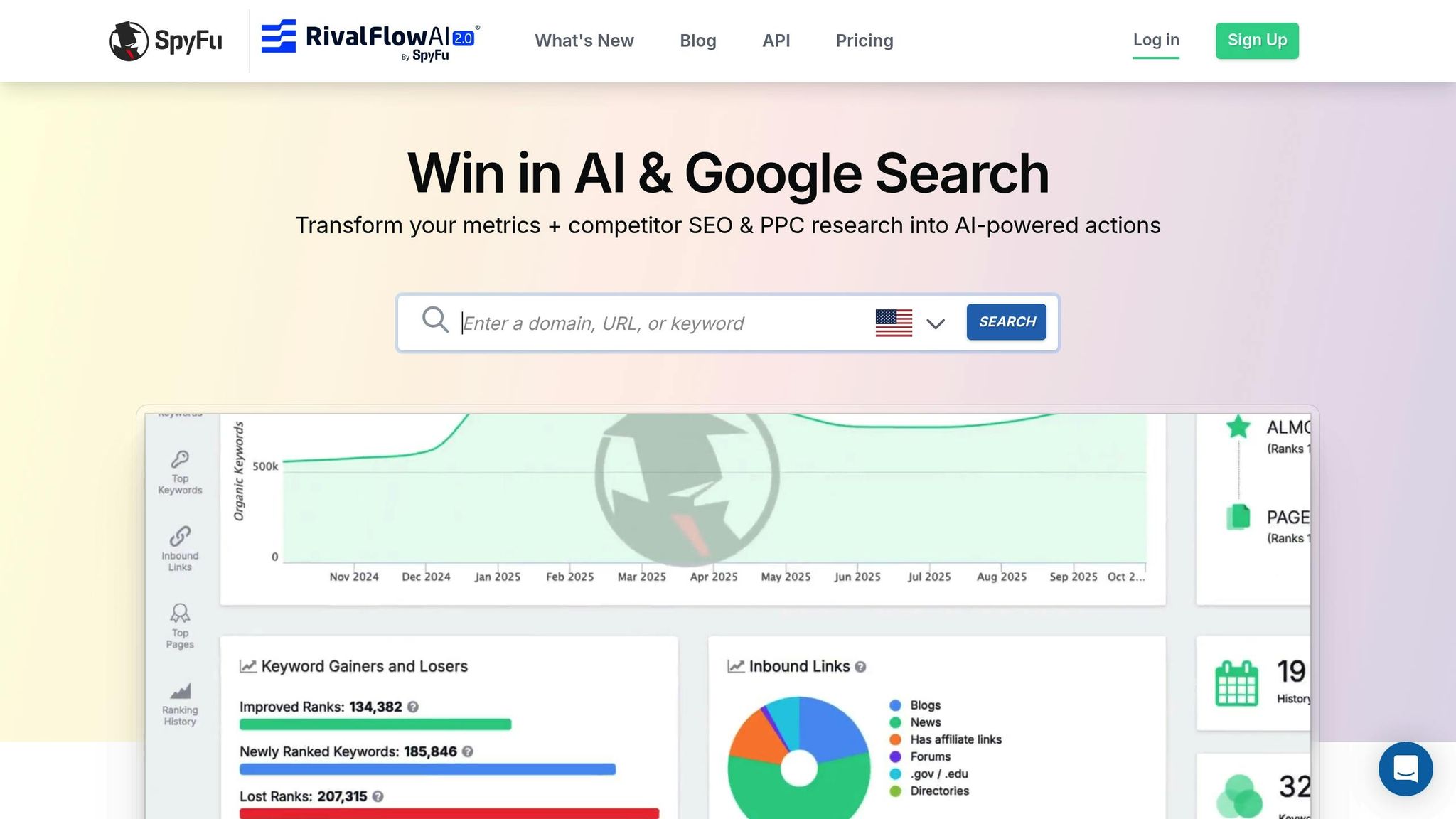
SpyFu brings together SEO and PPC intelligence, making it a go-to tool for businesses aiming to keep tabs on their competition. With a database of 13.1 billion keywords and over 18 years of historical data, it’s particularly well-suited for U.S. companies looking to sharpen their organic and paid search strategies.
A Dual Approach to Competitive Insights
What makes SpyFu stand out is its ability to monitor both organic search rankings and paid ad campaigns side by side. It offers essential metrics like search volumes, estimated ad spending, and historical ranking data for SEO and PPC keywords. One of its standout features, the Multi-Competitor Keyword Tool, quickly identifies keywords your competitors are ranking for – but you aren’t. This makes it easier to spot keyword gaps, especially for businesses running Google Ads campaigns. By combining organic and paid insights, SpyFu provides a well-rounded view of your competitors’ strategies.
Combining Historical Data with Real-Time Updates
SpyFu doesn’t just offer a snapshot of the present; it delivers 18 years’ worth of ranking history. Plus, with updates every 15 seconds, users can quickly adapt to changes triggered by algorithm updates or site tweaks. The platform’s massive index – 7.2 trillion search results and tracking for 152 million websites – ensures robust coverage of the U.S. market.
Affordable Plans for Every Budget
SpyFu is known for its accessible pricing, making it a practical choice for businesses of all sizes. There’s even a free plan for those just getting started, offering limited access to keyword data. Paid plans start at $39 per month, catering to both solo marketers and larger agencies. Here’s a closer look:
| Plan Type | Monthly Cost | Best For | Key Features |
|---|---|---|---|
| Free | $0 | Small businesses, testing | Limited keyword data access |
| Basic | $39/month | Individual marketers | Full keyword tracking, gap analysis |
| Professional | Contact Sales | Agencies, enterprises | Advanced features, higher limits |
This tiered pricing ensures flexibility, allowing businesses to pick the plan that best matches their needs and budgets.
Real-World Benefits for U.S. Marketers
SpyFu is a favorite among U.S. agencies for uncovering high-value keywords and refining both content and ad strategies. Its mix of historical and real-time data helps marketers stay ahead of the competition.
Easy-to-Use Interface for Quick Insights
SpyFu’s intuitive design makes it simple to perform keyword gap analysis, highlighting opportunities where competitors are succeeding, but you’re not.
Up next, see how Similarweb takes competitive intelligence to the next level.
5. Similarweb
Similarweb provides a market intelligence approach to competitor keyword tracking, offering insights that go well beyond standard SEO metrics. With its visually appealing and easy-to-navigate interface, it has become a go-to tool for digital marketers aiming to get a comprehensive view of their competitive landscape.
Visual Keyword Gap Analysis Made Easy
One of Similarweb’s standout features is its Keyword Gap tool, which allows you to compare your site with up to four competitors at once. It visually maps keyword overlaps, clearly showing where competitors excel and where untapped opportunities lie. This visual approach is particularly helpful for businesses in the U.S., as Similarweb delivers detailed insights into regional search trends and competitive positioning.
More Than Just Keywords: Traffic Insights That Matter
Similarweb doesn’t stop at tracking organic keyword rankings. It also provides data on paid search, user engagement, and traffic sources. With additional insights into SERP features and keyword difficulty, it helps you identify which opportunities are worth pursuing. This well-rounded data helps businesses make informed, strategic decisions.
Pricing Options for Various Business Sizes
Similarweb offers flexible pricing plans to cater to different business needs. The Essentials plan starts at around $125 per month, while enterprise-level solutions are available for larger organizations with custom pricing. Here’s a quick breakdown:
| Plan Type | Monthly Cost | Best For | Key Features |
|---|---|---|---|
| Free | $0 | Testing, basic insights | Limited keyword data |
| Essentials | ~$125/month | Small to medium businesses | Full keyword gap analysis and comparison of up to 4 competitors |
| Enterprise | Custom pricing | Large agencies, corporations | Advanced features and higher data limits |
While the pricing may be higher compared to some niche SEO tools, the range of features makes it a worthwhile investment for businesses looking for comprehensive market intelligence.
Strong Focus on the U.S. Market
Similarweb excels in providing detailed, U.S.-specific data. From regional search behavior to device usage trends, it offers granular insights that are crucial for companies targeting American audiences. This localized data gives businesses a sharper edge in understanding their market.
Simple Interface for Quick Insights
The platform’s user-friendly interface makes it easy to identify high-value keyword opportunities without wading through complicated data tables. Its visual features are especially useful for SEO professionals and digital marketing teams who need quick, actionable insights.
In comparison, tools like Moz take a different approach, focusing heavily on metrics like domain authority to guide strategy.
6. Moz
Moz zeroes in on domain authority, helping you uncover and rank competitive gaps based on your site’s strengths.
Keyword Explorer and Gap Analysis: Targeting the Right Opportunities
Moz’s Keyword Explorer provides a wealth of information, including search volume, ranking difficulty, and competition levels. Its gap analysis tool compares your site’s rankings against competitors, identifying valuable keywords you’re missing. This makes it easier to focus on keywords that offer the best chances for success.
Comprehensive US Market Insights
For businesses targeting the US market, Moz provides detailed data on search volume trends, seasonal shifts, and local SERP features. This information is key for tailoring your strategy to align with user behavior and market demands.
Easy-to-Use Interface for All Experience Levels
One of Moz’s standout features is its user-friendly design. Whether you’re new to SEO or a seasoned expert, the platform simplifies complex data, making it accessible and actionable. This is especially helpful for small to mid-sized businesses and agencies that need clear insights without diving into overly technical details.
Pricing Plans to Fit Different Needs
Moz Pro offers flexible pricing starting at $99 per month, with a free trial available to explore its features before committing.
| Plan Feature | Details | Best For |
|---|---|---|
| Free Trial | Access all features | Testing the platform |
| Moz Pro | From $99/month | Small to medium businesses |
| Advanced Features | Tools like Keyword Explorer | Agencies and growing companies |
A Practical Approach to Competitive Analysis
While Moz’s keyword database may not be the largest, its gap analysis and prioritization tools make it a great choice for focusing on opportunities that align with your site’s strengths. This targeted approach ensures you can make the most of your SEO efforts. The comparison chart below further illustrates how Moz measures up against other major tools.
7. Serpstat
Serpstat stands out as a cost-effective tool for tracking competitor keywords, offering all the essential features you’d expect. Like other tools we’ve discussed, it focuses on identifying competitive keyword gaps that businesses can act on.
Keyword Gap Analysis That Highlights Missed Opportunities
With Serpstat’s keyword gap analysis, you can compare your domain against up to four competitors at once. This feature identifies keywords your competitors rank for that you don’t, as well as shared keywords and areas where strategies overlap. For instance, if a competitor ranks for "best running shoes 2025" and your site doesn’t, Serpstat flags this as a keyword to target through new content or optimization efforts.
A real-world example: A US-based e-commerce retailer used this tool to pinpoint high-traffic keywords their competitor ranked for but they didn’t. By creating new landing pages and optimizing existing content around these terms, they boosted their organic traffic by 30% within six months.
Detailed US Market Insights
For businesses targeting American consumers, Serpstat offers extensive data covering over 230 Google regions, with a focus on detailed US market insights. It also supports local keyword tracking, enabling businesses to monitor rankings and competitor performance in specific cities or regions. This is particularly useful for companies with a local or multi-location presence.
Easy-to-Use Interface with Advanced Features
Serpstat is designed to be user-friendly, making it accessible even for those new to competitor tracking. Its interface supports batch analysis and historical tracking, helping you monitor long-term trends in competitor performance. This simplicity complements the deep insights it provides, making it a practical choice for businesses of all sizes.
Pricing Options for Every Budget
Serpstat offers flexible pricing plans starting at less than $70 per month, making it accessible for freelancers, small businesses, and larger organizations alike.
| Plan Type | Monthly Cost | Best For |
|---|---|---|
| Lite | $69 | Freelancers and small businesses |
| Standard | $149 | Growing teams |
| Advanced | $299 | Agencies and larger organizations |
| Enterprise | $499 | Large-scale operations |
Pros and Things to Keep in Mind
With a user rating of 4.6/5 from over 600 reviews, Serpstat is often praised for its affordability, ease of use, and robust competitor tracking capabilities. Its database includes over 6 billion keywords and tracks more than 100 million domains, giving users access to a wealth of competitive insights.
That said, some users have noted that its backlink analysis and reporting features are less advanced compared to higher-end tools. However, if your primary focus is on keyword competition and gap analysis, Serpstat offers fantastic value without unnecessary complications.
Additionally, the platform provides excellent support through a knowledge base, video tutorials, and live chat. Higher-tier plans even include dedicated account management to help you get the most out of your competitor tracking efforts. These features make Serpstat a strong contender in the keyword tracking space.
Tool Comparison Chart
Picking the right competitor keyword tracking tool can be a daunting task with so many choices out there. To simplify things, the chart below highlights the key features, pricing, and US market focus of some of the most popular tools, helping you find one that fits your needs.
| Tool | Starting Price (USD/month) | Key Strengths | US Data Coverage | Best For |
|---|---|---|---|---|
| Search Atlas | Pricing not disclosed | Advanced keyword tracking and detailed reporting | Extensive | Agencies needing in-depth competitor insights |
| Ahrefs | $99 | Backlink analysis, keyword gap discovery, and site exploration | Extensive | Businesses focused on link building and competitor research |
| Semrush | $139.95 | All-in-one SEO platform with a 25+ billion keyword database | Extensive | Teams looking for comprehensive SEO and competitor tracking |
| SpyFu | $39 | Historical ranking data and PPC campaign insights | Strong | Budget-conscious marketers tracking both paid and organic search |
| Similarweb | ~$125 | Web traffic insights and market intelligence | Strong | Companies needing a broad view of industry competition |
| Moz | $99 | Simple keyword prioritization and long-tail opportunities | Strong | Small businesses and SEO beginners |
| Serpstat | ~$69 | Affordable all-in-one solution for website optimization | Strong | Freelancers and growing teams on tight budgets |
When it comes to pricing, the tools vary widely. SpyFu, at $39 per month, is the most budget-friendly option, making it ideal for small businesses or solo marketers. On the other end, Semrush costs $139.95 per month, offering a vast keyword database and a full suite of features for competitor analysis and content optimization – justifying its premium price.
Each tool also differs in database size and update frequency. For example, Semrush provides extensive global coverage, while Ahrefs refreshes its data daily. In terms of local keyword tracking for the US market, Semrush, Ahrefs, and SpyFu are standout choices. SpyFu, in particular, excels at indexing billions of US search results and delivering live insights for both SEO and PPC campaigns. Moz and Serpstat, while offering smaller databases, still provide solid US-focused data.
Ease of use is another important factor. Moz and Serpstat are known for their intuitive dashboards, making them great for beginners. On the flip side, Semrush and Ahrefs offer more advanced features but come with a steeper learning curve. If you’re new to competitor tracking, starting with a simpler tool might save you time and help you see results faster.
Most of these tools provide free trials or limited plans, which are invaluable for testing how well their data aligns with your competitive landscape and business goals. Taking advantage of these trial periods can help you make an informed decision before committing to a subscription.
Conclusion
This guide explored tools designed to analyze competitor strategies and uncover keyword opportunities, essential for achieving SEO success in the U.S. market. These tools help identify strategy gaps and track ranking changes that could influence your market position. Each of the seven tools highlighted brings its own strengths, from extensive keyword databases to budget-conscious options.
When selecting the right tool, consider your budget and business size. For small businesses, SpyFu’s $39/month plan is a practical choice, while larger teams might lean toward Semrush’s comprehensive $139.95/month suite. Tools like Moz and Serpstat, with their user-friendly dashboards and clear keyword prioritization, are ideal for smaller operations. On the other hand, growing companies could benefit from SpyFu’s historical ranking data and PPC insights, while enterprises often prefer platforms like Semrush or Ahrefs for their advanced analytics and integration features.
Accuracy is another critical factor. Tools such as Semrush, Ahrefs, and SpyFu provide detailed, U.S.-focused keyword indexes and timely updates. Semrush, in particular, offers broad global coverage, with a strong emphasis on the American market.
Take advantage of free trials to ensure the tool aligns with your competitive landscape and business goals without upfront costs. By evaluating these factors, you can refine your SEO strategy and seek expert guidance when necessary.
Ultimately, choose the tool that aligns with your specific needs. Whether you’re a freelancer tracking a handful of competitors or an agency managing campaigns for multiple clients, focusing on features that directly impact your SEO performance can lead to better rankings, increased organic traffic, and stronger market positioning.
If you’re looking for additional support, agencies like SearchX specialize in crafting customized SEO strategies to give you a competitive edge.
FAQs
What should I consider when choosing a competitor keyword tracking tool for my business?
When choosing a competitor keyword tracking tool, the first step is to clarify your objectives. Do you want to track keyword rankings, uncover new opportunities, or dive deep into your competitors’ strategies? Pinpointing your goals will make it easier to narrow down the best options.
Next, think about the features that matter most to you. Ease of use, data accuracy, and customization options are all key factors. It’s also important to find a tool that delivers insights you can act on and fits the specific needs of your business. For example, if you run a local business, a tool with strong local SEO capabilities will be essential.
Finally, take your budget into account and make sure the tool offers solid value for the price. Many tools provide free trials, so you can test their features before making a decision. By focusing on these aspects, you’ll be better equipped to pick a tool that matches your needs and keeps you ahead of the competition.
How do budget-friendly keyword tracking tools compare to more comprehensive options?
Budget-friendly tools like SpyFu are a great choice for small businesses or individuals who need basic competitor keyword tracking without breaking the bank. These tools usually offer features like keyword rankings, competitor analysis, and straightforward reporting. That said, they might not include more advanced features or deep-dive analytics.
On the other hand, if you’re looking for a more advanced solution, tools provided by specialized agencies might be the way to go. These often come packed with features like detailed keyword research, technical SEO audits, content optimization, and customizable reporting that aligns with specific business goals. While these tools come with a higher price tag, they are well-suited for companies aiming to step up their online visibility and improve overall performance.
Why is it important to consider data freshness and update frequency when choosing a keyword tracking tool?
Keeping your data current is essential for effective keyword tracking. Why? Because the more accurate and up-to-date your information, the better equipped you are to respond to changes – especially in industries where rankings can shift quickly. Tools that refresh their data frequently let you keep a close eye on competitor strategies and tweak your approach as needed.
With dependable updates, you can spot new opportunities, monitor performance trends, and make smarter decisions to stay ahead in search rankings. Choosing tools that consistently provide timely updates isn’t just a good idea – it’s how you maintain your competitive edge.