
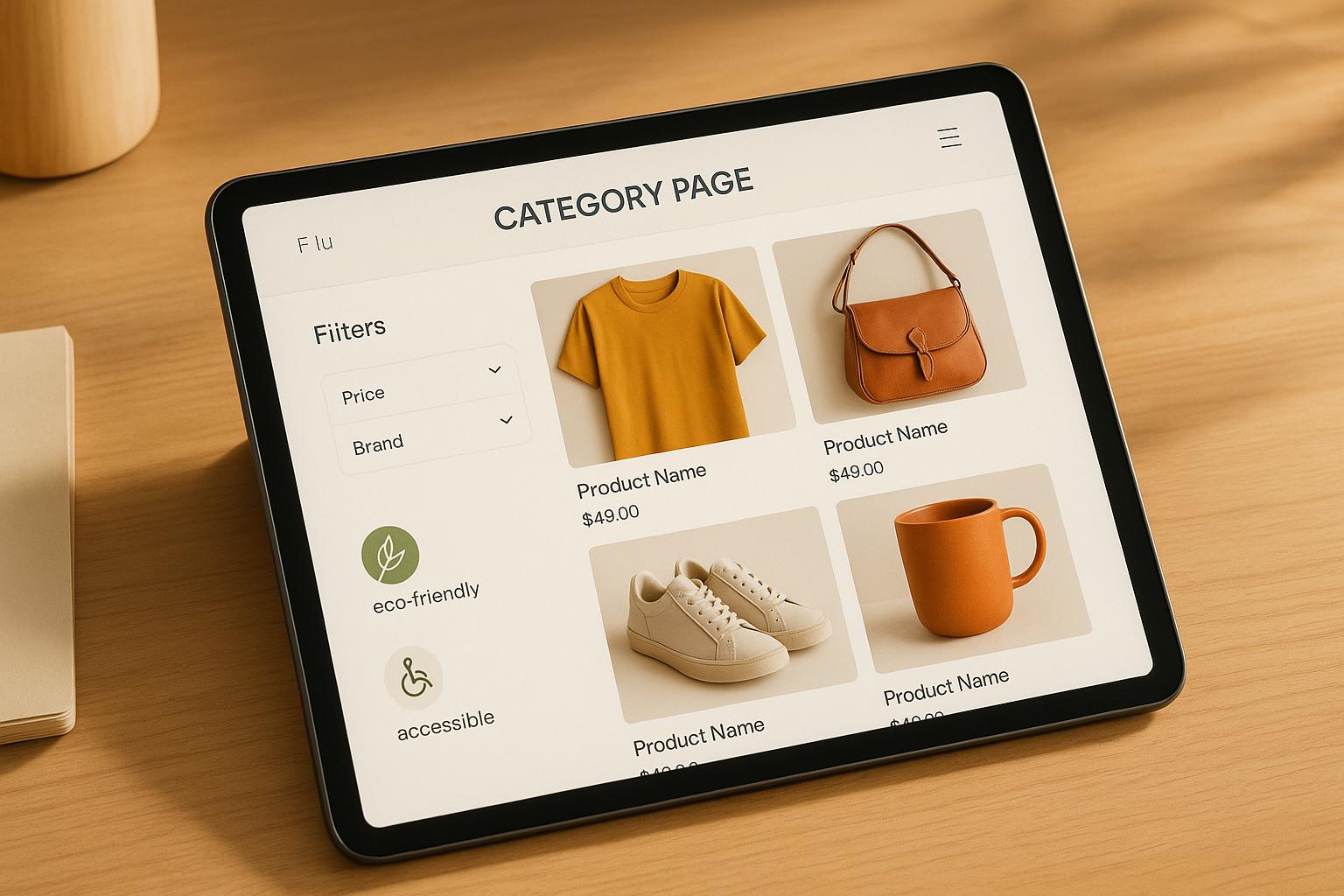
Category pages are critical for both SEO and user experience, especially in 2025. These pages often rank higher than individual product pages for competitive, mid-funnel keywords like “men’s running shoes.” To succeed, focus on fast load times, mobile usability, and clear navigation. Prioritize filters, visible pricing, and easy browsing to keep users engaged.
Key takeaways:
- SEO Structure: Use clear H1s, keyword-rich metadata, breadcrumbs, and internal links.
- User-Friendly Design: Mobile-first layouts, intuitive filters, and trust signals like reviews and stock info.
- Multimedia: High-quality images, short videos, and optional interactive tools like comparison features.
- AI Personalization: Tailor content to user behavior while maintaining SEO integrity.
- E-A-T: Add concise guides, FAQs, and expert-backed content to build authority.
- Accessibility & Sustainability: Ensure ADA compliance and highlight eco-friendly options.
Want Your Ecommerce Category Pages To Rank On Google? Do This…
Core Components of Effective Category Pages
Effective category pages are more than just SEO tools – they’re also designed to create smooth, user-friendly shopping experiences. The most successful ones in 2025 strike a balance: they rank well in search engines while meeting the needs of shoppers. Here’s a closer look at what makes a category page excel.
Content Structure for SEO
Start with a clear hierarchy. Use a natural, keyword-focused H1 like "Women’s Running Shoes" or "Small Business Checking Accounts" to make it immediately obvious to search engines what the page is about.
From there, organize content with H2 and H3 subheadings for sections such as "Top Picks", "New Arrivals", or "Buying Guides." Keep these subheadings short, so products appear quickly without unnecessary scrolling.
Pay attention to your title tags and meta descriptions. Include the primary keyword and a clear value proposition – like free shipping or competitive pricing. For example, if the page highlights a unique feature or benefit, mention it. Avoid stuffing keywords; instead, focus on what users are actually searching for and what they expect to find.
Use breadcrumb navigation. A simple path like "Home > Clothing > Women’s Jackets" helps search engines understand your site’s structure and makes it easier for users – especially on mobile – to navigate without constantly hitting the back button.
Internal linking is another key strategy. Naturally link to subcategories, related product collections, or useful guides. For instance, a "Men’s Winter Jackets" page might link to resources like "How to Choose the Right Jacket for Cold Weather" or "Waterproof vs. Water-Resistant: What’s the Difference?" These links enhance site structure and keep users engaged.
Once the structure and metadata are optimized, focus on design and navigation to ensure a seamless user experience.
Design and Navigation for Users
Category pages need to be mobile-friendly. U.S. shoppers expect easy-to-use filters, large touch targets, and clearly labeled buttons. Sticky filters, collapsible menus, and straightforward "Add to Cart" or "View Details" buttons make browsing and buying effortless.
Stick to familiar layouts. For desktop users, filters on the left and product grids in the center are standard. On mobile, collapsible filter menus work best. Shoppers shouldn’t have to figure out how to use your site – intuitive design keeps them engaged and more likely to convert.
Filters and sorting options should match how people shop in your category. For shoes, size and width are crucial. For electronics, filters like price, brand, and customer ratings are more relevant. Set smart defaults, such as sorting by "Best Selling" or "Top Rated", and make it easy for users to reset filters or start fresh without losing their place.
Build trust early. Display review snippets with star ratings, show stock availability, and provide estimated shipping times. Address common questions with short FAQs near the top of the page. Shoppers want to feel confident about their purchase, so make key details easily accessible.
Once the layout is solid, visuals and interactive elements can further enhance the shopping experience.
Images, Videos, and Interactive Elements
High-quality visuals are essential, especially for mobile users. Use consistent product thumbnails with neutral backgrounds and the same aspect ratio. Compress images to maintain fast load times and use modern formats like WebP to balance speed and quality. Add descriptive file names and alt text to improve accessibility and provide an extra SEO boost.
Short product videos can make a big difference. A quick clip showing how a jacket fits, how a tool operates, or how furniture looks in a real setting can reduce hesitation and returns. Place these videos prominently but ensure they don’t autoplay or disrupt the browsing experience. Hover videos on product cards can also work well, as long as they’re muted by default and lightweight.
Interactive tools like "Help Me Choose" wizards, size guides, and comparison features empower shoppers to make decisions. For example, a comparison tool that lines up three products by price, features, and ratings helps users without requiring multiple open tabs. These tools should be optional, quick to use, and integrated into the page layout – not hidden behind pop-ups or separate workflows.
The goal with multimedia elements is to enhance the experience, not slow it down. Everything – from videos to interactive tools – should address real shopper needs. Monitor metrics like engagement and conversion rates to ensure these features are pulling their weight. If they aren’t, consider reallocating that space for more impactful elements like trust signals or product listings.
Managing a large catalog with dozens or hundreds of category pages can be overwhelming. This is where an SEO partner like SearchX can streamline the process. With expertise in platforms like Shopify and Amazon, as well as technical SEO and structured data, they help ecommerce businesses scale optimization efforts. This allows your team to focus on merchandising and operations while still driving organic traffic and boosting revenue. Together, these elements create category pages that perform well in search rankings and deliver a seamless shopping experience.
New Trends in Category Page Optimization for 2025
The way businesses approach category pages in 2025 is evolving, moving far beyond basic grids and keyword placement. To stay competitive, U.S. businesses are focusing on three key areas: AI-driven personalization, stronger E-A-T signals, and features that enhance both accessibility and sustainability. These trends are reshaping rankings, user engagement, and conversion rates.
AI-Powered Content Personalization
AI is transforming category pages by tailoring content to individual users based on behavior, location, device, and purchase history. Instead of presenting everyone with the same static layout, AI dynamically adjusts product sorting, pre-selects filters, highlights relevant collections, and even displays personalized messaging – all while keeping SEO elements intact.
For instance, a returning shopper who recently browsed winter coats might see a "Recently Viewed" section, filters preset to their size, and a banner showcasing "Best winter coats under $150." Meanwhile, a first-time visitor is greeted with a default layout featuring top-rated products and general messaging. Core elements like the H1, meta description, and foundational copy remain unchanged to maintain SEO performance.
Segmentation is key. You can categorize users – for example, new vs. returning visitors, mobile vs. desktop users, or high-value vs. budget-conscious shoppers. A high-value customer might see premium products highlighted, while budget shoppers are shown discounts and free shipping options.
Using built-in AI tools or recommendation engines makes this level of personalization manageable. This kind of tailored experience not only improves engagement but also sets the stage for building trust through expert validation.
Building E-A-T Signals for SEO
Establishing expertise, authority, and trustworthiness (E-A-T) on category pages is essential for both users and search engines. Adding concise buying guides, FAQs, and selection tips directly to category pages can make a big difference. For example, a "Men’s Running Shoes" page might include a short guide on choosing the right shoe for different running styles, foot shapes, or terrains. When possible, cite experts and link to their profiles for added credibility.
Customer reviews, trust badges, and clearly visible FAQs can further boost trust. Highlight credentials like years in business, BBB accreditation, or partnerships with well-known clients. Make essential details – like shipping costs, return policies, and stock availability – easy to find, and link to authoritative resources like guides or case studies.
On the technical side, use structured data with schema markup (e.g., ItemList, Product, Breadcrumb, Review) to help search engines better understand your content and enhance how it appears in search results. High-quality backlinks from reputable sites also strengthen your authority, signaling to search engines that your site is a reliable resource.
These efforts not only improve SEO but also create a seamless and trustworthy experience for users.
Accessibility and Sustainability Features
Accessibility isn’t just about compliance – it’s about making sure that everyone, regardless of ability, can navigate your site effectively. In 2025, U.S. businesses are expected to meet ADA guidelines, especially on high-traffic pages like category pages.
To ensure compliance, use clear headings, descriptive alt text, and accessible controls. Interactive elements like filters, sort options, and "Add to Cart" buttons should be easy to navigate with a keyboard and compatible with assistive technologies. Regular testing is crucial. Automated tools can catch common issues, but manual checks – like navigating the page using only a keyboard – are equally important to ensure all elements function smoothly for users relying on screen readers.
Sustainability is also becoming a priority, especially for younger shoppers. Highlight eco-friendly features like organic materials, recycled packaging, or carbon-neutral shipping. You can even add filter options such as "Organic cotton" or "Lower-impact production" and include a brief explainer near the product grid. For example, a clothing category might display a badge next to eco-friendly products that links to a page detailing your sustainability practices.
Both accessibility and sustainability features should feel integrated into the overall design. When done well, they enhance the user experience and resonate with modern consumer values. Tracking metrics like engagement with sustainability filters, accessibility error rates, and navigation-related support tickets can provide actionable insights for ongoing improvements.
For businesses managing complex catalogs or multiple category pages, partnering with specialists like SearchX can simplify the process. They can help implement segmentation logic, conduct A/B testing for personalized modules, build quality backlinks, and track metrics such as click-through rates, add-to-cart rates, and revenue per session to identify what’s working best.
Practical Steps to Improve Category Page Performance
To translate strategy into results, focusing on key areas like keyword research, internal linking, and performance tracking can make a big difference. These steps offer a clear path for U.S. businesses to boost rankings, engage users, and drive revenue.
How to Research and Use Keywords
Start by identifying keywords that align with buyer intent. Instead of going after high search volumes alone, prioritize terms that bring in qualified traffic. Tools like SearchX’s Keyword Research Service can help you analyze search volume, competition, and ranking opportunities.
Long-tail keywords are especially valuable. For instance, instead of a broad term like "running shoes", go for more specific phrases such as "best running shoes for flat feet" or "trail running shoes under $100." These phrases often face less competition and attract shoppers ready to make a purchase. Competitor analysis can also reveal keyword gaps where your page can compete.
Another smart move is focusing on "striking distance" keywords – terms where your page ranks just outside the top ten. A little optimization could push these terms into higher visibility. Organize your keywords by category and prioritize your efforts based on traffic potential.
Once you’ve identified your keywords, integrate them naturally into your content. Use them in title tags, H1 headers, subheaders, body text, alt text, and anchor text. Avoid keyword stuffing – your content should read smoothly for users while signaling relevance to search engines.
As SEO evolves with tools like generative AI, keep your content clear and well-structured to answer user questions effectively. One SearchX client saw their:
traffic has already doubled
after adopting their 2025 SEO strategy, highlighting the value of a results-driven approach.
With your keyword strategy in place, the next step is to strengthen your site’s structure using internal linking.
Setting Up Internal Links
Internal linking is a game-changer for category page performance. It helps establish topical authority, improves site navigation, and keeps users engaged, which can lead to more conversions.
Start by linking parent category pages to relevant subcategories. For example, an "Electronics" main page should link to subcategories like "Laptops", "Smartphones", and "Accessories." This creates a clear hierarchy and distributes link authority effectively.
Within your category page content, add contextual links to related high-intent pages or products. For instance, if your page mentions "choosing the right laptop for remote work", link that phrase to a detailed buying guide or blog post. You can also use features like "related products" or "get the look" carousels to add internal links naturally without cluttering the page.
To enhance navigation further, implement breadcrumb schema markup (BreadcrumbList). Use descriptive, keyword-rich anchor text for your links – specific phrases like "women’s winter coats" or "organic cotton t-shirts" help users and search engines understand the content of the linked page.
For large catalogs with hundreds of category pages, a strategic internal linking setup can be challenging. SearchX’s Link Building Services can help streamline this process, ensuring efficient crawling and optimal link distribution.
With a solid linking strategy in place, it’s time to measure how these efforts are paying off.
Tracking Performance Metrics
To improve, you need to measure. Tracking the right metrics ensures you know what’s working, where to adjust, and how to prove the ROI of your efforts. Regular monitoring validates your keyword and linking strategies while identifying areas for improvement.
Start by tracking organic traffic trends. Use tools like Google Analytics to break down traffic by device (mobile vs. desktop) and user type (new vs. returning).
Conversion rate is another crucial metric – it shows the percentage of visitors completing actions like purchases, sign-ups, or quote requests. If traffic increases but conversions don’t, this could signal a mismatch between your content and user intent or point to usability issues.
Pay attention to engagement metrics and keyword rankings to assess visibility and user interaction. A high bounce rate might mean visitors aren’t finding what they expected, while longer session durations suggest users are exploring your content.
For businesses focused on revenue, track metrics like revenue per session or leads captured. As SearchX puts it:
When it comes to SEO, numbers don’t lie. We focus on tangible, revenue-boosting outcomes rather than vanity metrics
. This approach goes beyond surface-level data to show how category page optimizations impact your bottom line.
Set up regular reporting – monthly or quarterly – to compare performance before and after changes. For deeper insights, check out resources like How to Measure SEO ROI from Organic Traffic Growth and 12 SEO Metrics to Track Performance.
If you’re unsure how to implement these strategies or analyze the data, SearchX’s SEO Solutions can help. Their approach focuses on delivering qualified traffic and measurable results, ensuring:
We don’t just promise clicks; we deliver qualified buyers to your site, turning traffic into revenue
.
Conclusion
In 2025, the best category pages will thrive where SEO meets user experience, blending smart search optimization with intuitive, user-friendly design.
The most successful category pages go beyond being mere product listings – they serve as strategic hubs for their topics. They feature concise, intent-driven copy above the fold, paired with supporting elements that enhance the user journey without overwhelming the content. This approach not only aligns with Google’s emphasis on helpful content but also keeps your conversion funnel clear and easy to navigate.
The technical basics are non-negotiable. Features like self-referencing canonical tags, crawlable pagination, consistent URL structures, and accurate schema markup form the backbone of a high-performing category page. Add to that personalization, accessibility, and mobile-first design, and you’ll have pages that cater equally well to search engines and real-life shoppers. With these essentials in place, scaling your strategy becomes a realistic goal.
Using systematic, template-driven updates allows you to roll out improvements across hundreds – or even thousands – of category pages efficiently, rather than optimizing them individually. Regular audits of key metrics like rankings, click-through rates, conversions, and user behavior will help you identify what’s working and where to refine further. Treating category pages as evolving assets rather than “set it and forget it” elements ensures they stay relevant and effective.
For large catalogs, having specialized expertise is critical. SearchX delivers this with a focus on driving qualified traffic and measurable results. As one client shared:
"SearchX are great. Worked with Lorenz and team to launch our SEO strategy for 2025 and our traffic has already doubled (hence the review) – literally never met someone so knowledgeable about SEO. Highly recommended."
- Samuel Hall
The takeaway? Long-term success comes from a mix of strategic keyword planning, clear site architecture, scalable templates, and user-friendly design. When you layer in advanced personalization and accessibility, these elements work together to boost engagement and conversions. By balancing search visibility with a seamless shopping experience, you’ll create category pages that not only rank well but also convert effectively and keep customers coming back for more.
FAQs
How does AI-driven personalization boost user engagement on category pages in 2025?
AI-powered personalization has the potential to transform how users interact with category pages, making the shopping or browsing experience feel tailor-made. By analyzing factors like user behavior, past purchases, and real-time interactions, AI can adjust what’s displayed – showing products, services, or content that match each visitor’s unique interests.
The advantages are clear: smoother navigation, better conversion rates, and an overall more enjoyable experience. For example, AI can suggest items based on what someone has browsed before or spotlight trending products that align with their preferences or even their location. As we move further into 2025, using AI to personalize category pages will be a game-changer for creating more engaging and impactful user experiences.
What is E-A-T, and how does it improve SEO for category pages?
E-A-T stands for Expertise, Authoritativeness, and Trustworthiness – three essential factors search engines like Google use to gauge the quality and relevance of content. When it comes to category pages, applying E-A-T ensures the content is not just accurate and helpful but also credible and aligned with what users are looking for.
Here’s how to strengthen E-A-T for your category pages:
- Expertise: Offer well-researched, accurate information that speaks directly to your audience’s needs.
- Authoritativeness: Build your brand’s credibility by highlighting credentials, customer reviews, or testimonials that show you’re a reliable source.
- Trustworthiness: Keep your site secure (e.g., use HTTPS), maintain transparency, and avoid any misleading or deceptive content.
Incorporating these principles can help your category pages rank better, draw more visitors, and keep users engaged – leading to stronger results for your website.
Why are accessibility and sustainability essential for category pages, and how can businesses incorporate them effectively?
Focusing on accessibility and sustainability in category pages isn’t just about ticking boxes – it’s about creating a better experience for everyone while staying aligned with modern values. Accessible pages make sure that all users, including those with disabilities, can interact with your content without frustration. Meanwhile, sustainability shows a commitment to reducing environmental impact, which can appeal to eco-conscious shoppers.
To make this happen, businesses can start by following web accessibility standards. This includes using proper alt text for images, enabling keyboard navigation, and selecting fonts that are easy to read. On the sustainability side, optimizing images and streamlining code helps cut down page load times and energy consumption. Hosting your site with eco-friendly providers is another step toward reducing your digital carbon footprint. Combining these efforts ensures your site is both inclusive and environmentally responsible.