

Global success isn’t just about translation – it’s about reshaping content to resonate with specific markets. Brands like Coca-Cola, Netflix, and Spotify have mastered this by tailoring their strategies to connect with local audiences. Here’s how:
- Coca-Cola: Uses region-specific campaigns like "Share a Coke", customizing labels, websites, and messaging to reflect local names, festivals, and values. This approach boosted sales and social engagement worldwide.
- Netflix: Goes beyond subtitles by creating original shows in local languages (e.g., "Squid Game" in Korean) and customizing user interfaces to match viewing habits. Over 80% of new subscribers now come from international markets.
- Spotify: Leverages AI to deliver playlists and recommendations based on local trends, events, and artists. This scalable approach reduces costs while increasing engagement.
Key takeaway: Localization involves language, compliance, and user experience. Brands that prioritize these elements see measurable gains in loyalty, conversions, and market share.
Quick Comparison
| Brand | Focus | Results |
|---|---|---|
| Coca-Cola | Regional campaigns, names | 2% U.S. sales boost, global engagement |
| Netflix | Original local content | 25% growth in non-English subscribers |
| Spotify | AI-driven personalization | 30% cost reduction, 15% engagement rise |
Localization isn’t optional – it’s a must for global growth.
Localization for Real-World Use-Cases: Key Learnings from Onboarding Global Brands – Simeon Griggs
Key Components of Successful Content Localization
To truly connect with global audiences, localization requires more than just translation. It involves a thoughtful approach that adapts content to resonate with local cultures while meeting regional standards and enhancing user experiences. Here, we’ll dive into the three key elements that elevate localization efforts: language adaptation, regulatory compliance, and user experience customization. Together, these elements enable businesses to build authentic relationships with local audiences and drive measurable success.
Language and Local Adaptation
Localization begins with language but goes far beyond translating words. To truly engage audiences, brands must adapt their messaging to reflect local idioms, cultural nuances, and communication styles that feel natural to each market.
Take McDonald’s, for example. They tailor their menus to align with local tastes and dietary preferences, showcasing a deep understanding of their diverse customer base. Similarly, Netflix doesn’t just stop at providing subtitles and dubbing. They go a step further by customizing content recommendations and tweaking their interface to match regional viewing habits and cultural interests. This approach ensures their platform feels both familiar and relevant to users in different markets.
This type of creative adaptation, often referred to as transcreation, ensures the original message retains its impact while feeling culturally authentic.
Local Compliance and Regional Standards
Adhering to local regulations and standards is non-negotiable for earning trust and avoiding legal pitfalls. Compliance involves more than just language – it’s about ensuring every aspect of your content aligns with regional rules and norms.
This includes using the correct formats for currency, dates, times, and measurements, as well as meeting specific regulations like ADA and FTC guidelines. For instance, in 2022, Lionbridge partnered with a global lifestyle apparel retailer to streamline compliance across 35 new markets. By implementing centralized localization management and conducting quarterly language quality checks, they cut localization costs by 25% while ensuring all content met local standards.
Compliance also extends to payment methods, privacy policies, and even seasonal content. Brands that prioritize these frameworks from the outset avoid costly mistakes and lay the groundwork for sustainable growth. Once compliance is in place, the focus can shift to creating a user experience that feels tailored and personal.
User Experience Customization
The final piece of the localization puzzle is crafting a user experience that aligns with local preferences and behaviors. This goes beyond language and compliance – it’s about creating an experience that feels intuitive and familiar to each audience.
Samsung exemplifies this with their regional social media strategies. Their TikTok account in Brazil boasts nearly double the followers of their global account, thanks to highly localized content designed specifically for Brazilian users. This isn’t just translated material – it’s a fully customized experience that reflects local culture and interests.
User experience customization involves adjusting website layouts, navigation, visuals, and even the customer journey to meet regional expectations. It also includes offering local payment options, recognizing holidays and events, and ensuring customer support operates within local business hours and norms. A great example is British fashion brand John Smedley. After partnering with BLEND to localize their French eCommerce experience, they saw a 230% increase in conversion rates in 2023. This success came from integrating workflows and collaborating with local linguists to ensure every detail felt authentically French.
When language adaptation, compliance, and user experience customization come together, they transform content into something that feels genuinely local. This comprehensive approach is what sets successful global brands apart from those merely translating their content.
Case Study 1: Coca-Cola – Regional Websites for Global Reach
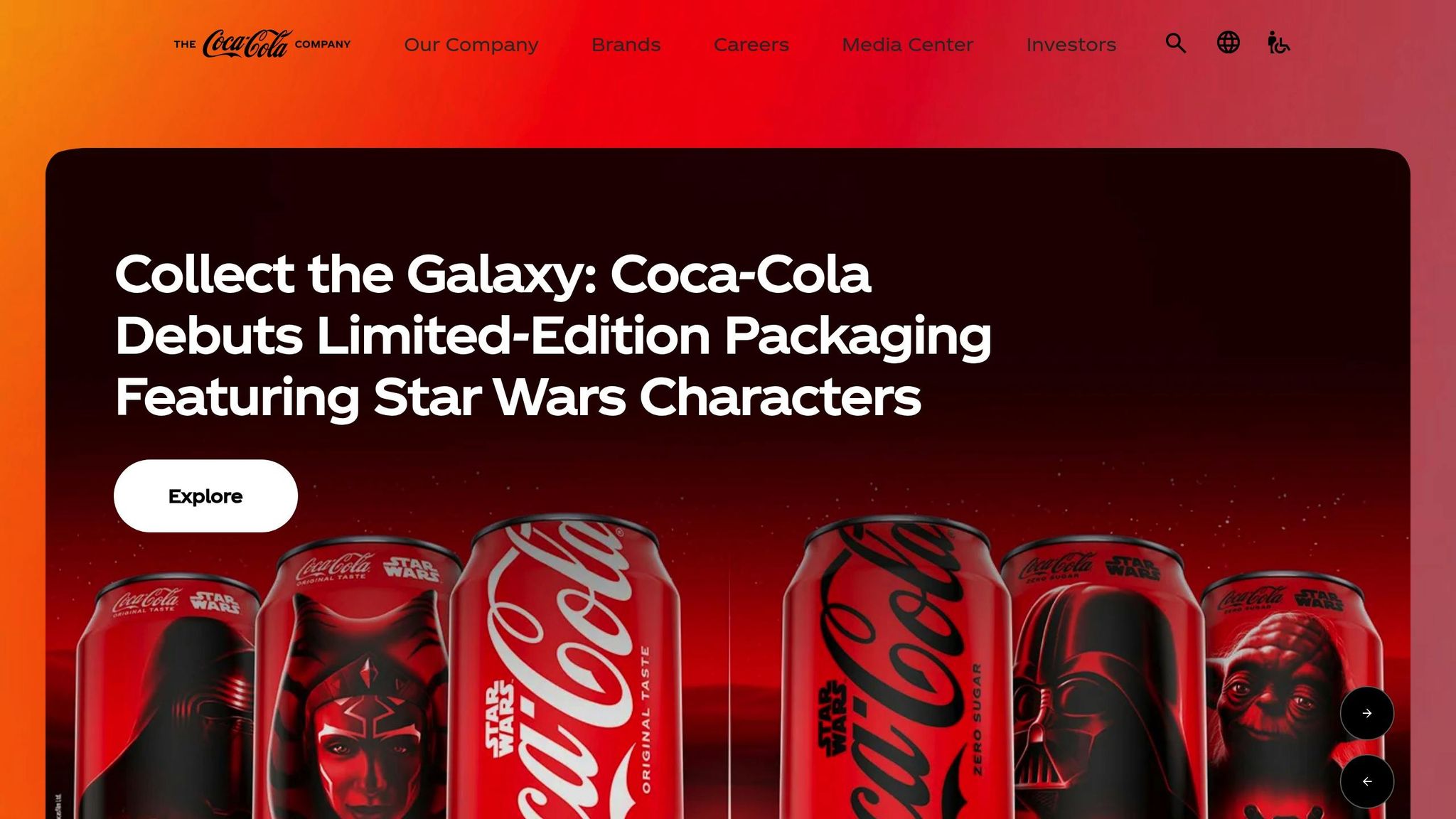
Coca-Cola is a prime example of how to master global content localization. Instead of opting for a generic approach, the company has crafted region-specific websites and marketing campaigns that resonate deeply with local audiences by speaking their language – both literally and culturally.
Localization Strategy
Coca-Cola tailors its digital presence to each region, offering Spanish and Portuguese content in Latin America that celebrates local festivals, while rolling out campaigns in Asia that reflect regional traditions and values. Before stepping into a new market, Coca-Cola conducts extensive research into local consumer habits and cultural preferences. By working closely with regional marketing teams and local agencies, the brand ensures its messaging feels authentic and relevant.
One standout example is the "Share a Coke" campaign, which was customized for more than 80 countries. In China, it featured popular nicknames, while in Australia, it highlighted the most common first names. This thoughtful localization created a personal connection with consumers in each market.
Coca-Cola’s decentralized strategy allows local teams to quickly adapt to market trends, holidays, and cultural events. At the same time, the company ensures adherence to local advertising guidelines and privacy laws. This balance between local flexibility and corporate oversight has been a cornerstone of Coca-Cola’s success.
Results and Impact
These tailored campaigns have led to stronger user engagement, higher brand loyalty, and increased market share. The "Share a Coke" campaign alone sparked a surge in social media activity and boosted sales across more than 80 markets. Meanwhile, region-specific websites have seen significant growth in traffic, conversions, and overall user engagement. Coca-Cola continuously monitors metrics like website visits, engagement rates, and sales performance to fine-tune its strategy and achieve measurable results.
Coca-Cola’s achievements highlight the importance of localization as a key driver for global growth and meaningful customer relationships. By aligning language, compliance, and user experience, the company has set a benchmark for others to follow.
For U.S.-based companies looking to replicate this success, agencies like SearchX can provide customized SEO and localization strategies to improve online visibility and achieve measurable growth in international markets.
Case Study 2: Netflix – Adapting Content for a Global Audience

Netflix, much like Coca-Cola, has mastered the art of connecting with diverse audiences through tailored strategies. But Netflix takes it a step further by redefining what localization means. Instead of just translating content, the streaming giant adapts both its shows and user experience to align with the cultural preferences of viewers worldwide. This approach has made Netflix a leader in global expansion.
How Netflix Localizes Content
Netflix’s localization strategy is far more intricate than simple language translation. The platform customizes nearly every aspect of the user experience, from home screens and navigation menus to personalized content recommendations, ensuring they reflect the cultural tastes and viewing habits of local audiences.
One standout feature of Netflix’s approach is its investment in creating original content in local languages. Rather than relying solely on translated versions of existing shows, the company produces region-specific series and movies that feel authentic to local viewers. For instance:
- In India, Netflix creates original series and films in Hindi and other regional languages.
- In South Korea, it focuses on K-dramas and variety shows.
- In Latin America, it crafts Spanish-language originals tailored to regional preferences.
To ensure the quality of its adaptations, Netflix employs techniques like pseudo-localization to test content in different markets. It also collaborates with local studios and native translators, allowing the company to scale its efforts while maintaining cultural sensitivity.
The Impact of Localization
Netflix’s commitment to localization has paid off, both in terms of audience engagement and financial growth. By 2023, more than 80% of the platform’s new subscribers came from international markets, a clear sign of the success of its tailored content. In fact, non-English programming made up over half of all viewing hours on the platform in 2022, showing the strong demand for locally relevant shows and films.
The financial results are just as impressive. Between 2018 and 2022, Netflix’s international revenue jumped from $8.6 billion to over $15 billion. Some standout examples of Netflix’s global hits include:
- "Squid Game": This Korean series became Netflix’s most-watched show globally in 2021, reaching 111 million accounts within its first 28 days. The show’s success was bolstered by subtitles and dubs in over 30 languages.
- "La Casa de Papel" (Money Heist): This Spanish-language original captivated over 65 million households within the first month of its fourth season.
Today, Netflix operates in more than 190 countries and offers content in over 30 languages, setting a high standard for culturally adapted content in the streaming industry.
For U.S. businesses aiming for similar global success, partnering with agencies like SearchX can help craft tailored localization and SEO strategies to drive growth in international markets. Netflix’s story shows that understanding and respecting local cultures isn’t just good practice – it’s good business.
Case Study 3: Spotify – Scalable Localization with Technology
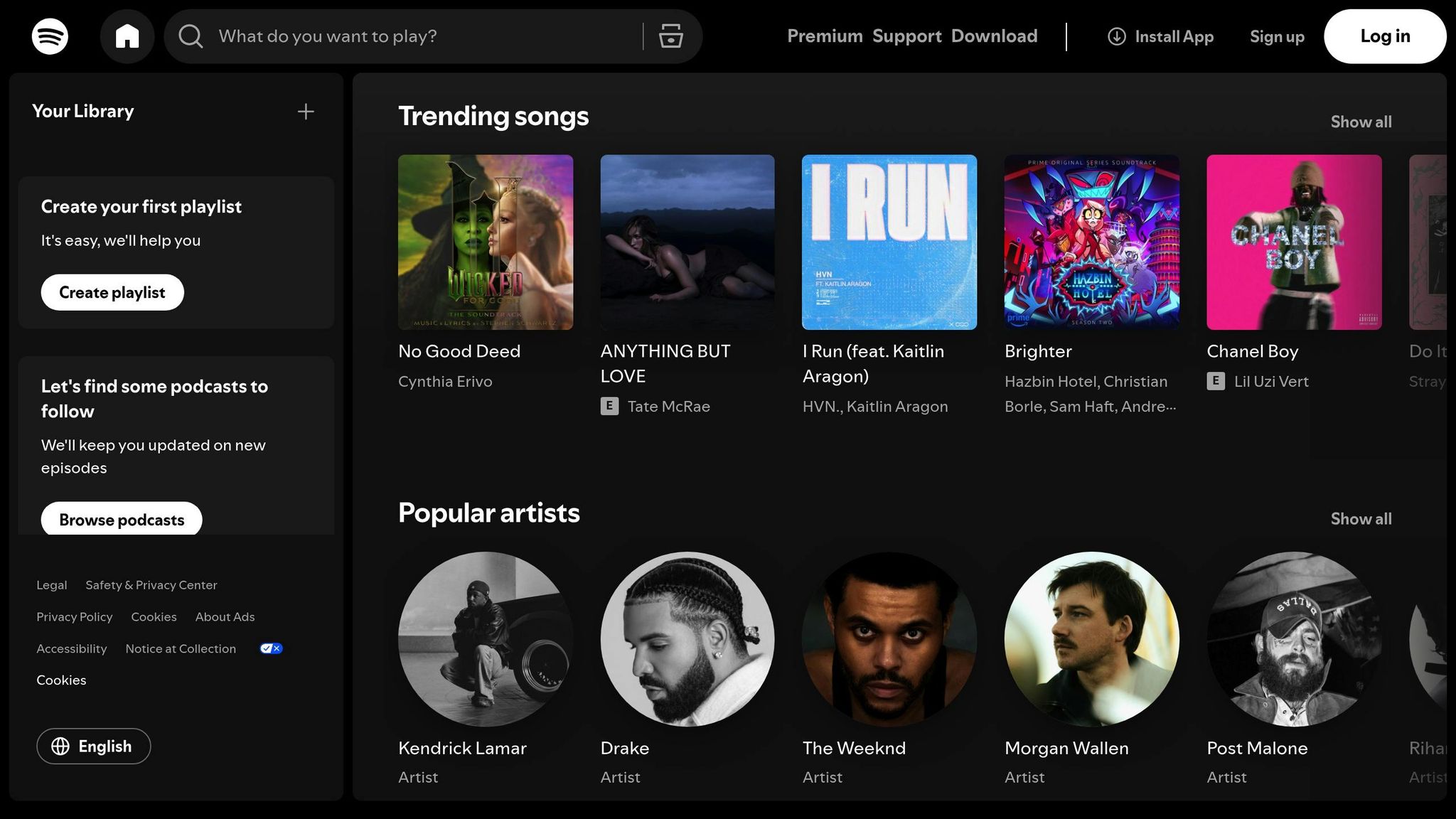
Spotify has redefined how global localization can be achieved by combining AI-driven translation tools with automated workflows. Through a centralized content management system, the company tailors its digital experience to match the unique needs of diverse markets. By using machine learning, Spotify ensures translations are not only accurate but also contextually relevant, incorporating local idioms and cultural nuances. Additionally, the platform relies on real-time data to adjust content recommendations and interface elements, aligning them with regional trends and preferences. This seamless integration of technology allows Spotify to stay agile and responsive to local demands.
To maintain cultural relevance, Spotify employs real-time data to deliver hyper-localized content. For instance, in India, the platform curates playlists celebrating local festivals and collaborates with regional artists to resonate with the audience. In Latin America, Spotify focuses on Spanish-language podcasts and works with local influencers to strengthen its connection with users. This localized approach not only enriches the user experience but also drives higher engagement by offering content that feels personal and relevant.
Spotify’s ability to scale its localization efforts through technology provides a blueprint for U.S. businesses aiming for international growth. Operating in over 180 markets and serving more than 500 million active users globally – over 60% of whom are outside the United States – Spotify demonstrates how a tech-driven strategy can fuel global expansion. By coordinating effectively between internal teams and external partners, Spotify minimizes costs while maintaining high-quality localized content.
For U.S. companies planning to expand internationally, Spotify’s strategy highlights the importance of investing in AI-powered localization tools from the outset. Combining automation with insights from local experts can help businesses quickly enter new markets while delivering a personalized experience that resonates with diverse audiences.
Comparison of the 3 Brands
Drawing from the case studies, let’s examine how Coca-Cola, Netflix, and Spotify approach localization. Each company employs strategies tailored to its business model and audience. Coca-Cola leans into regional marketing, Netflix focuses on adapting content and user interfaces, and Spotify uses technology to scale its localization efforts.
Comparison Table
| Brand | Languages Supported | Primary Localization Focus | Key Technologies | Notable Results |
|---|---|---|---|---|
| Coca-Cola | 100+ | Regional websites and culturally tailored marketing | Regional teams, local agencies, AI tools | 2% increase in U.S. sales with "Share a Coke" |
| Netflix | 30+ | Content adaptation (subtitles, dubbing, region-specific UI) | Advanced language processing, automation | 25% subscriber growth in non-English markets |
| Spotify | 30+ | Data-driven playlist curation and personalized content | Machine learning, automated translation | 30% reduction in translation costs, 15% boost in user engagement |
Key Localization Approaches
Each brand’s localization strategy reflects its priorities and industry demands:
- Coca-Cola: Focuses on cultural authenticity through regional teams and local agencies. Campaigns like "Share a Coke" use local names and culturally meaningful messaging to connect with audiences.
- Netflix: Adapts its offerings with subtitles, dubbing, and region-specific user interfaces. It also invests in local productions and content recommendations tailored to regional preferences.
- Spotify: Combines machine learning and real-time data to curate playlists that resonate locally. This includes promoting local artists and creating playlists for regional events and holidays.
Results of Localization Efforts
The impact of these tailored strategies is clear:
- Coca-Cola’s regional campaigns have boosted engagement, including a 2% sales increase in the U.S.
- Netflix’s comprehensive localization has driven a 25% growth in subscribers from non-English-speaking markets.
- Spotify’s tech-driven approach has cut translation costs by 30% while increasing user engagement by 15%.
These examples demonstrate how different approaches to localization can yield meaningful outcomes, proving that aligning strategies with market needs is key to success.
Conclusion: Lessons from Leading Brands
Coca-Cola, Netflix, and Spotify demonstrate that localization goes far beyond translation – it’s about reshaping strategies to resonate with diverse global audiences.
Key Success Factors
These case studies highlight three core elements that consistently drive successful localization efforts.
Cultural adaptation takes center stage. Coca-Cola’s campaigns, for example, weave local names and cultural elements into their messaging. Netflix goes a step further by adapting not just subtitles and dubbing but also tailoring user interfaces to match regional tastes. Spotify, meanwhile, celebrates local culture by curating playlists featuring regional artists and events.
Scalability through technology is another critical component. Each of these brands relies on cutting-edge tools to streamline localization across global markets. Netflix uses AI to handle subtitling and dubbing, while Spotify employs machine learning to study listening habits and create region-specific content. These technologies ensure quality and allow for rapid expansion into new regions.
Finally, audience experience is a top priority. These companies continuously gather user feedback and refine their localization strategies based on real-world behavior and preferences. This approach underscores that localization isn’t a one-time task – it’s an evolving process aimed at meeting audience needs.
Final Thoughts for U.S. Businesses
The evidence is clear: businesses that prioritize localization see measurable benefits. For instance, John Smedley’s localization efforts led to a 230% boost in conversions in the French market. Similarly, Lionbridge helped a global apparel brand distribute localized content to 35 markets while cutting costs by 25%.
For U.S. brands aiming to expand internationally, the blueprint is straightforward: embrace cultural adaptation, invest in scalable technologies, and focus on delivering an exceptional user experience. Start with in-depth market research to understand local preferences, then build multilingual content and implement scalable localization tools to support growth.
If international visibility is the goal, agencies like SearchX can provide specialized SEO strategies, keyword research, and content optimization tailored for local search engines, helping businesses connect with global audiences effectively.
The takeaway is simple: localization isn’t just an expense – it’s a strategic investment. Brands that commit to this approach are better positioned to seize global opportunities and foster meaningful connections with customers worldwide.
FAQs
How do companies like Coca-Cola, Netflix, and Spotify create content that connects with local audiences instead of just translating it?
Brands such as Coca-Cola, Netflix, and Spotify excel at reaching global audiences by focusing on cultural relevance rather than simply translating content. They fine-tune their messaging, visuals, and even products to resonate with local traditions, preferences, and values, making their content feel genuinely connected to each audience.
Take Coca-Cola, for instance – it customizes its marketing campaigns to celebrate regional holidays and traditions. Netflix takes it a step further by creating original shows and movies in multiple languages, catering directly to the tastes of specific markets. Meanwhile, Spotify taps into regional music trends by curating localized playlists and offering personalized recommendations. These thoughtful strategies allow these brands to forge deeper connections with audiences across the globe.
How does Spotify use technology to enhance its content localization strategy, and how is this different from traditional methods?
Spotify uses cutting-edge technology like data analytics and machine learning to customize content for its global audience. By diving into user preferences, listening habits, and regional trends, Spotify creates playlists, recommendations, and even marketing campaigns that align with specific cultural and linguistic nuances.
Instead of relying on outdated methods like manual translations or one-size-fits-all strategies, Spotify’s tech-driven approach allows for a more dynamic and personalized experience. This not only helps users in different regions feel more connected to the platform but also boosts engagement and loyalty.
Why should global brands ensure their localization strategies comply with local regulations and standards?
Complying with local regulations and standards is a critical step for global brands aiming to build trust, sidestep legal troubles, and genuinely connect with their audience. Every country operates under its own set of laws and has distinct expectations shaped by its culture. Ignoring these can lead to fines, damage to your reputation, or even being barred from entering specific markets.
When brands make compliance a priority, they not only safeguard their operations but also ensure their content aligns with the values and norms of local audiences. This approach helps maintain credibility and supports sustainable success in international markets.