

Getting hreflang right is one of the most error-prone tasks in international SEO. Most “auto-hreflang” plugins only work inside a single CMS, which leaves multi-location sites with hidden gaps the moment they step outside WordPress or Shopify. Here are the 10 best options for implementing and managing hreflang tags across multi-location websites, from full-service AI-driven agencies to lean manual methods.
1. SearchX (Our Top Pick) — Scalable hreflang deployment for multi-location sites
SearchX is a performance-driven SEO agency that handles end-to-end hreflang implementation for multi-location operators, e-commerce brands, and service businesses. Unlike CMS plugins that stop at WordPress or Shopify, SearchX works across any platform or tech stack.

The team uses AI-driven hreflang automation to generate tags, confirm reciprocal return links, and validate every URL cluster before it goes live. That matters because the most common failure point is a missing return link: if page A declares page B as its French variant, page B must also declare page A as its English variant, or Google discards both annotations. SearchX audits for exactly this during its technical SEO review.
For multi-location sites, SearchX also handles the ongoing monitoring work that most tools skip. URL changes, site migrations, and new locale rollouts all break hreflang silently. SearchX tracks these changes in real-time dashboards so your German or Spanish traffic doesn’t quietly slide while you’re focused elsewhere. The team pairs hreflang work with broader multilingual SEO auditing to catch canonical conflicts, wrong ISO codes, and x-default gaps in one pass.
The only limitation worth noting: because SearchX delivers ongoing optimization rather than a one-time plugin install, it’s best suited for businesses that treat international search as a growth channel, not a checkbox.
2. ConveyThis — Automation of hreflang tags across multi-platform sites
ConveyThis is a website translation platform that automatically generates hreflang tags on every translated page. When you add a new language, ConveyThis inserts the correct <link rel=”alternate” hreflang=”…”> tags, including self-referencing tags, return tags, and x-default, without manual intervention.
This matters because the self-referencing tag is the part most guides skip. Every page must include a hreflang tag pointing to itself, or Google treats the references as one-directional and may discard them. ConveyThis handles this automatically, which removes the most common setup error from the equation.
ConveyThis works across multiple CMS platforms, not just WordPress, which gives it an edge over single-platform plugins. It’s a usable fit for marketing teams that need multilingual sites running fast without a developer writing hreflang markup by hand.
One caveat: pricing rises with word count and the number of languages. For large catalogs with dozens of locale variants, costs can scale quickly. Evaluate the pricing tier against your page volume before committing.
3. Weglot — Automatic hreflang generation for multilingual sites
Weglot is a translation and localization platform where hreflang generation is automatic once you configure your target languages. The platform crawls your content, detects new pages, and inserts the correct hreflang annotations on every translated version.
For teams running WordPress or Shopify, Weglot is a fast path to compliant hreflang without touching code. It handles the x-default tag, which tells search engines which page to show when no language variant matches the user’s region. Without x-default, Google makes its own choice, which is often not what you want.
Weglot also covers a usable edge case: regional variations of the same language. If you serve en-GB and en-US audiences with different content, Weglot can declare each variant separately using the correct ISO 639-1 language code paired with the ISO 3166-1 Alpha 2 region code. Getting this pairing right is critical because Google ignores invalid codes silently , the tag exists in your HTML but does nothing.
The main limitation is cost. Weglot’s pricing scales with word count and the number of languages, so large sites with many locale variants can find the bill growing faster than expected. It’s best suited for small to mid-size multilingual sites rather than enterprise catalogs with hundreds of thousands of pages. Pairing Weglot with proper structured data for multilingual SEO gives search engines even clearer signals about your regional content.
4. Standalone hreflang tool — Generates and validates hreflang markup across platforms
This standalone tool works on any site regardless of CMS. You input your URLs and language‑region pairs, and it outputs the correct hreflang markup ready to paste into your
section or XML sitemap.
It also validates existing implementations. Paste in a URL and the tool checks for missing return links, wrong ISO codes, and canonical conflicts. Hreflang annotations must be bidirectional; every language version must reference every other language version, including itself. One broken link in the chain breaks the entire cluster for that page set.
A concrete example: suppose you run an e‑commerce site with product pages in English, Italian, and Spanish. Each of those three URLs must carry a complete, reciprocal set of hreflang annotations. Drop even one tag on one page, and Google silently discards the entire annotation cluster for that product. The tool catches exactly this kind of systematic error before it reaches production.
It’s platform‑agnostic, which makes it a good fit for headless CMS setups, custom‑built sites, or any stack where WordPress plugins don’t apply. Validation is available via Google Search Console and the tool’s own checker. The main gap: it doesn’t monitor your site on an ongoing basis, so you’ll need to re‑run audits after URL changes or new locale rollouts.
5. Hreflang Manager Lite — WordPress hreflang management
Hreflang Manager Lite is a free WordPress plugin from DAEXT that gives you a dedicated interface for building and managing hreflang connections between posts and pages. You add connections from the post editor using the Hreflang Manager panel, which works in both the Block Editor and Classic Editor.
The free version includes a Tag Inspector that lets logged-in users see the hreflang output directly on the front end of the site. This is a usable debugging tool: you can visit any page and confirm the tags are present and pointing to the right URLs without opening the page source.
The Pro version adds XML sitemap support, a built-in hreflang checker for detecting implementation issues, and synchronization of hreflang data across all sites in a WordPress multisite network. For multi-location operators running separate WordPress installs per region, that sync feature is the key differentiator. Several users in the plugin’s review section specifically called out the cross-domain sync as the reason they chose it over other options.
The limitation is clear: this is WordPress-only. If any part of your multi-location setup runs outside WordPress, Hreflang Manager Lite doesn’t reach it. For a fully cross-platform hreflang strategy, you’d need to pair it with a platform-agnostic solution like SearchX or Hreflang Generator for non-WordPress properties.
6. Yoast SEO — WordPress hreflang support with validation
Yoast SEO is one of the most widely installed WordPress SEO plugins, and it includes hreflang support as part of its multilingual setup. For a typical WordPress blog or content site, Yoast handles hreflang output automatically once you configure your language settings and connect translated versions of each page.

Validation runs through Google Search Console and Hreflang Generator. Yoast also integrates with WPML, which is a common pairing for sites that need both translation management and hreflang output in one workflow.
The caveat is architectural. Yoast can struggle with non-standard configurations , custom post types, headless setups, or sites where the URL structure doesn’t follow a clean subdirectory or subdomain pattern. If your multi-location site has a complex architecture, you may hit edge cases where Yoast’s hreflang output is incomplete or requires manual overrides.
For straightforward WordPress setups serving two to five language variants, Yoast is a low-friction starting point. For anything more complex, treat it as a foundation that may need supplemental auditing rather than a complete solution on its own. Understanding how hreflang interacts with canonical tags is also important here , a French page with a canonical pointing to the English original will have its hreflang relationship silently ignored by Google, so fixing duplicate content with canonical tags is a necessary companion task.
7. WPML — Large-scale multilingual WordPress hreflang management
WPML (WordPress Multilingual Plugin) is built for WordPress sites that need serious multilingual scale. It handles hreflang automatically across translated content, supports custom post types, and integrates with most major page builders and e-commerce plugins.
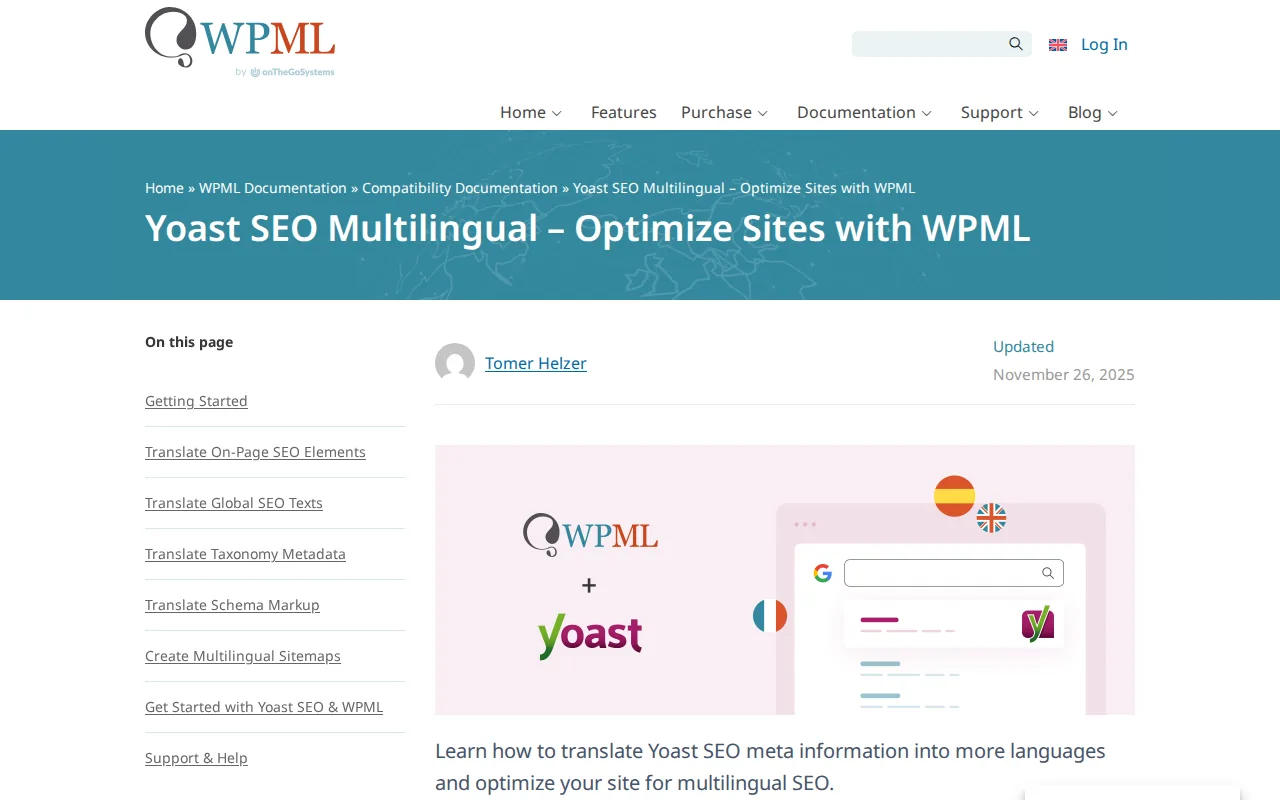
For multi-location operators running large WordPress catalogs, WPML’s strength is that it manages the translation relationship between pages and generates the correct hreflang output from that relationship. You don’t maintain hreflang tags manually. When you add a translated version of a page, WPML updates the hreflang annotations across the cluster.
Validation runs through Google Search Console and Hreflang Generator. WPML also supports the XML sitemap method for hreflang, which keeps your HTML lean and makes the hreflang logic easier to audit. For sites with five or more language variants, the sitemap approach is generally preferred because adding every language’s tag to every page’s <head> section becomes unwieldy fast.
The downside is cost and complexity. WPML is one of the more expensive WordPress plugins, and it adds meaningful configuration overhead. For simpler sites with two or three languages, it may be more than you need. It’s best suited for large multilingual WordPress sites where the translation management features justify the investment.
8. Polylang — Simple WordPress multilingual hreflang handling
Polylang is a free WordPress plugin that handles hreflang automatically for simpler multilingual setups. Once you define your languages and link translated versions of posts and pages, Polylang inserts the correct hreflang tags without additional configuration.
It’s a good fit for WordPress sites that don’t need the full feature set of WPML. The free version covers the core hreflang use case: declaring language variants, including self-referencing tags, and outputting the x-default tag. Validation runs through Google Search Console and Hreflang Generator.
Polylang works well for simpler setups. If your site has a straightforward URL structure and a limited number of language variants, it does the job cleanly. Where it starts to show limits is with complex architectures, WooCommerce stores with large product catalogs, or sites that need fine-grained control over regional variants like en-GB versus en-US. For those cases, WPML or a platform-agnostic solution is a better fit.
One thing to watch: Polylang’s hreflang output depends on properly linked translations. If a translated page isn’t connected to its source in Polylang’s settings, the hreflang tags for that page won’t be generated. Regular audits with Google Search Console catch these gaps before they affect rankings.
9. HTML link elements — Manual hreflang entries for small catalogs
The HTML link element method means adding <link rel=”alternate” hreflang=”…”> tags directly inside the <head> section of every page. It’s the most transparent implementation method because the tags are visible in the page source and easy to debug.
This approach suits most sites with fewer than around 10,000 pages. Below that threshold, the overhead of maintaining tags in the <head> section is manageable, especially if your CMS generates them automatically. Above it, the method becomes unwieldy: a 50-page site in 10 languages requires 500 hreflang declarations to be generated and kept in sync.
The syntax follows a consistent pattern. On an English product page with French and Spanish variants, the English page needs four tags: one pointing to itself as <hreflang=”en”>, one for the French URL, one for the Spanish URL, and one for x-default. The French page carries the exact same four tags. So does the Spanish page. Every page in the cluster lists every language version, including itself.
The most common error here is the missing return link. As one creator on YouTube put it, you must reference all locales on every page , miss one and the entire cluster breaks. A quick curl check or a crawl with Screaming Frog catches broken reciprocal links before they reach production. For teams managing regional search signals across multiple locations, pairing HTML hreflang with the right localized algorithm strategy strengthens the overall signal.
10. XML Sitemap Method — Scales well for large catalogs
The XML sitemap method declares hreflang annotations inside your sitemap using the xhtml:link element within each URL entry, rather than in the <head> section of every page. This keeps your HTML lean and centralizes the hreflang logic in one place.
It’s the right choice for sites with hundreds of pages per locale. The same reciprocity rules apply: each URL entry in the sitemap must list every language version, including itself. But because everything lives in the sitemap, auditing is faster. You’re checking one file rather than crawling every page’s <head> section.
One firm rule: don’t mix methods. Using both <head> tags and sitemap annotations on the same site creates conflicting hreflang signals. Google’s behavior in that case is undocumented and inconsistent, which makes debugging painful. Pick one approach per site and apply it everywhere.
Validation for the sitemap method runs through Google Search Console’s International Targeting report and crawlers like Screaming Frog. The Search Console report has a lag of several days, so treat it as a periodic audit rather than a deployment check. Screaming Frog can crawl linked XML sitemaps and hreflang relationships in one pass, surfacing broken reciprocal links and tags pointing to redirects or 404s in a single export.
The sitemap method also pairs well with HTTP header hreflang for non-HTML resources. If your multi-location site includes downloadable PDFs in multiple languages , product manuals, regulatory documents, or white papers , HTTP headers are the only way to declare hreflang for those files, since they have no <head> section. Including hreflang for non-HTML resources is part of a complete internationalization strategy, not an afterthought.
Comparison table
Here’s how the 10 options stack up across the factors that matter most for a multi-location hreflang implementation checklist: platform support, automation depth, validation method, and best use case.
How to choose the right option
Start with your platform and your page count. If you’re on WordPress with a straightforward setup and fewer than 10,000 pages, Yoast, Polylang, or Hreflang Manager Lite will cover the basics. If you need serious scale on WordPress, WPML is the more capable option despite the cost.
If your multi-location site runs across multiple platforms, or if you have a headless CMS, a custom build, or a mix of tech stacks, CMS plugins won’t reach everything. That’s where a platform-agnostic option like Hreflang Generator or a full-service agency like SearchX becomes the usable choice.
For businesses where hreflang errors have already caused traffic drops in secondary markets, or where a migration is coming, SearchX’s end-to-end audit and ongoing monitoring removes the risk of silent breakage. Research has shown that many tools lack a validation method, meaning sites using those tools may not detect hreflang breaks after a URL change.
If you’re managing a large catalog and want to keep HTML lean, the XML sitemap method is the right technical choice. Just don’t mix it with <head> tags on the same site. Pick one method and apply it consistently across every locale. For teams that also need to avoid global SEO penalties from incorrect international signals, a structured approach to avoiding global SEO penalties covers the broader checklist beyond hreflang alone.
One operational note worth keeping in mind: when your multi-location setup involves complex data workflows or CRM integrations that feed location-specific content into your pages, the data layer matters as much as the tag layer. Clean, well-structured data pipelines (like those handled by CRM integration services for mission-driven organizations) reduce the risk of mismatched URLs and broken hreflang clusters caused by inconsistent data across your location pages.
FAQ
What is the most common hreflang mistake on multi-location websites?
The most common mistake is missing return links. If page A declares page B as its French variant, page B must also declare page A as its English variant. Google calls these return tags, and they’re the single most-failed validation rule in international SEO. A site with 10 language variants needs 10 hreflang tags on every page , all synchronized. One missing or mismatched tag breaks the entire cluster for that page set.
Do I need hreflang if I already have country-specific domains (ccTLDs)?
Not always. If you have separate ccTLDs for each market and each domain serves genuinely distinct content, Google can often infer the regional targeting from the domain alone. But if you’re targeting multiple regions that speak the same language , like en-GB and en-US on a single domain , hreflang is the only reliable way to tell Google which version to serve to which audience. Multi-location sites with mixed domain structures almost always benefit from explicit hreflang annotations.
How do I validate my hreflang implementation?
Three tools cover most validation needs. Google Search Console’s International Targeting report flags language codes Google can’t parse, but has a several-day lag. Screaming Frog crawls your full locale set and surfaces broken reciprocal links, mismatched URLs, and tags pointing to redirects or 404s. A dedicated hreflang validation tool catches issues missed in code review. Run all three before any major launch and after any URL restructure.
What’s the x-default hreflang tag and do I need it?
The x-default tag tells search engines which page to show when no other hreflang variant matches the user’s language or region. Without it, Google makes its own choice, which may not align with your business intent. Always include x-default, pointing either to a language-selector page or to your primary language version as a fallback. It’s a required part of any complete hreflang implementation for multi-location sites.
Can I use hreflang in an XML sitemap instead of HTML head tags?
Yes, and for large sites it’s often the better approach. The sitemap method keeps your HTML lean and centralizes hreflang logic in one file, making audits faster. The same reciprocity rules apply: every URL entry must list every language version, including itself. The one hard rule is consistency , never mix sitemap and HTML head hreflang on the same site, as conflicting signals produce unpredictable behavior from Google.
When should I use an agency instead of a plugin for hreflang?
Use an agency when your site runs across multiple platforms, when a migration is coming, or when traffic to a secondary market has already dropped without an obvious cause. CMS plugins like Yoast or WPML only reach WordPress. A platform-agnostic service like SearchX handles any tech stack, validates the full implementation, and monitors for silent breakage after URL changes , the type of ongoing work that plugins don’t do.
Conclusion
For most multi-location sites, the right choice comes down to one question: does your entire site live in WordPress, or not? If yes, Polylang or WPML will cover the basics. If your setup spans multiple platforms, or if you’ve already seen unexplained traffic drops in secondary markets, SearchX is the only option on this list that handles end-to-end hreflang automation, validation, and ongoing monitoring across any tech stack. Start with a technical SEO audit to find what’s already broken , then build from there.