
Bing’s 2025 search algorithm prioritizes relevance, quality, and user intent by focusing on exact keyword usage, social signals, authoritative backlinks, and multimedia content. It emphasizes desktop performance over mobile-first indexing and rewards updated, well-structured content. Businesses targeting Bing users – who often include older, professional demographics – should optimize for precise keywords, leverage social media engagement, and maintain technical SEO best practices. Key updates in 2025 include dynamic machine learning systems and a stronger focus on content freshness and multimedia integration, making it essential to regularly update and enhance web pages.
Key takeaways:
- Exact keywords in titles and URLs are critical for rankings.
- Social media signals significantly influence Bing’s results.
- .edu and .gov backlinks are highly valued.
- Bing favors desktop performance over mobile-first indexing.
- Multimedia content like images and videos boosts visibility.
For success, focus on creating reliable, structured content, optimize for desktop and social engagement, and stay updated on algorithm changes using Bing Webmaster Tools.
Bing Machine Learning & Crawling Changes, Google Search Console Updates, Advertiser Poaching & More
Main Bing Ranking Factors
Bing focuses on three key elements to determine search rankings: content quality and user intent, technical SEO and site performance, and backlinks with social signals and authority. These factors work together to shape how Bing evaluates and ranks pages, creating a framework that prioritizes relevance and reliability.
Content Quality and User Intent
Bing assesses content quality by looking at its reliability, originality, depth, and relevance to user queries. The search engine uses a mix of machine learning and human evaluations to ensure content provides clear, accurate answers and demonstrates expertise. Regular updates to your content can give you an edge, as outdated pages tend to perform poorly.
To make your content more appealing to Bing, use clear headings and a well-structured format. This helps Bing better understand your page and match it to user searches. Additionally, conducting thorough keyword and intent research ensures your content aligns with what users are looking for, whether they’re at the beginning or end of their search journey. Adding structured data through schema markup can also make your pages stand out in search results by improving their visibility and clickability.
Technical SEO and Site Performance
A solid technical foundation is essential for ranking well on Bing. Key factors include site speed, mobile optimization, HTTPS security, and crawlability. For example, pages that load in under 2 seconds have a much better chance of landing in Bing’s top 10 results. To achieve this, optimize your hosting, compress images, and simplify your code. Keep in mind that Bing struggles with JavaScript-heavy pages, so ensure critical content loads as plain HTML.
While mobile compatibility is important, Bing places more emphasis on desktop performance. Secure your site with HTTPS, use clean URLs, implement proper canonical tags, and submit XML sitemaps through Bing Webmaster Tools. These steps improve crawlability and strengthen the technical side of your SEO efforts, supporting other ranking signals.
Backlinks, Social Signals, and Authority
Backlinks remain a cornerstone of Bing’s ranking algorithm. The search engine places extra value on links from reputable domains, such as .edu and .gov sites. A single high-quality backlink from a trusted source can outweigh multiple lower-quality links, so prioritize quality over quantity.
Social signals also play a role. Engagement on platforms like Facebook and X (formerly Twitter) – including shares, likes, and comments – can positively impact your Bing rankings. Creating content that’s easy to share and maintaining active social media profiles can amplify your visibility.
For example, an e-commerce retailer saw a 40% increase in Bing traffic over six months by focusing on updated content, technical SEO, and high-quality backlinks. This boost was further supported by successful social media campaigns, highlighting how these factors work together to improve rankings.
Lastly, domain authority influences Bing’s calculations. Established domains with a track record of trustworthiness tend to rank higher. For newer businesses, building authority through quality content, partnerships, and consistent social media activity is key to gaining traction on Bing.
Bing Algorithm Updates and Trends in 2025
Bing’s search algorithm saw some major transformations in 2025, reshaping how it evaluates and ranks content. These updates highlight Bing’s focus on delivering search results that are more relevant, engaging, and timely for users.
Recent Updates and Machine Learning Changes
In 2025, Bing leaned heavily into advanced machine learning and artificial intelligence to refine its search capabilities. These updates allow Bing to better understand user intent, evaluate content quality, and provide personalized results based on real-time interactions and feedback.
One standout feature of the 2025 updates is the dynamic nature of Bing’s machine learning systems. Unlike older, static updates, the new algorithm continuously adapts to user behavior. This means that content that quickly satisfies user queries or drives meaningful engagement is more likely to climb in rankings over time.
Bing’s models now rely on a combination of automated signals and human-labeled data to fine-tune search results. For website owners, this shift emphasizes the need to focus on creating content that directly addresses user needs rather than simply stuffing pages with keywords.
Throughout 2025, websites that failed to adapt to these changes saw noticeable drops in rankings. On the flip side, those that aligned their content with user intent and maintained high engagement levels enjoyed better visibility. Bing’s real-time assessment of content quality means that user satisfaction metrics play a bigger role in rankings. This makes timely, interactive, and engaging content more important than ever.
Growing Importance of Current and Multimedia Content
Bing has also placed a stronger emphasis on content freshness and multimedia elements. The algorithm now rewards sites that keep their content updated and relevant. Factors like recent publication dates, frequent updates, and coverage of trending topics are key signals Bing uses to determine a page’s relevance.
This shift has created significant opportunities for websites that prioritize up-to-date information. Bing’s goal is clear: to provide users with the most current and useful content available.
Multimedia content has also become a game-changer in Bing’s 2025 algorithm. Pages featuring images, videos, and interactive elements not only improve user engagement but also help Bing’s AI better understand the content’s relevance.
Here’s an example: A U.S.-based e-commerce retailer saw a 30% boost in Bing-driven traffic within three months after implementing regular blog updates, adding product demo videos, and optimizing image alt text. Similarly, a news publisher focusing on breaking news and embedding video reports gained higher visibility for trending topics and secured more featured snippets.
To optimize multimedia content, focus on using descriptive file names, clear alt text, mobile-friendly embeds, and structured data. These steps ensure fast-loading pages and accurate indexing, which are critical for success.
Bing’s 2025 updates mark a shift toward more dynamic and user-focused search results. Websites that prioritize fresh, multimedia-rich content and leverage Bing’s machine learning capabilities are better positioned to thrive in this evolving search landscape.
Practical Bing SEO Strategies for 2025
Armed with an understanding of Bing’s algorithm updates and trends, it’s time to put that knowledge to work. These actionable strategies will help you optimize your website, improve rankings, and drive measurable results on Bing.
Optimizing Content and On-Page Elements
For Bing, exact-match keywords are a big deal. Unlike some other search engines, Bing gives priority to explicit keyword usage in titles, headers, and URLs. This means your primary keyword should appear exactly as users type it – right in your title tag, H1 header, and URL.
Start by refining your title tags and meta descriptions. Keep titles under 60 characters and place your exact-match keyword near the beginning. Your meta descriptions should be short, clear summaries of your content and include relevant keywords. Remember, each page needs unique metadata that clearly reflects its purpose.
Next, focus on a clean header structure. Use H1 for main topics, H2 for sections, and H3 for subsections. Adding schema markup is another smart move – whether it’s for articles, products, reviews, or local business data. Structured data makes it easier for Bing to understand your content and increases your chances of earning rich snippets by 25%. Stick to formats like Microdata or RDFa to help Bing interpret your pages better.
Content structure is just as important. Write original, detailed content that directly addresses what users are searching for. Avoid unnecessary fluff. Use clear headings, provide concise answers, and include examples to boost user satisfaction and make your content more appealing to Bing’s algorithm.
Here’s a real-world example: A mid-sized e-commerce website revamped its product pages by adding exact-match keywords to titles and headers, implementing schema markup for products and reviews, and fixing technical issues like slow page speeds and missing HTTPS. The result? A 30% increase in Bing organic traffic and higher click-through rates from rich snippets.
Using Bing Webmaster Tools
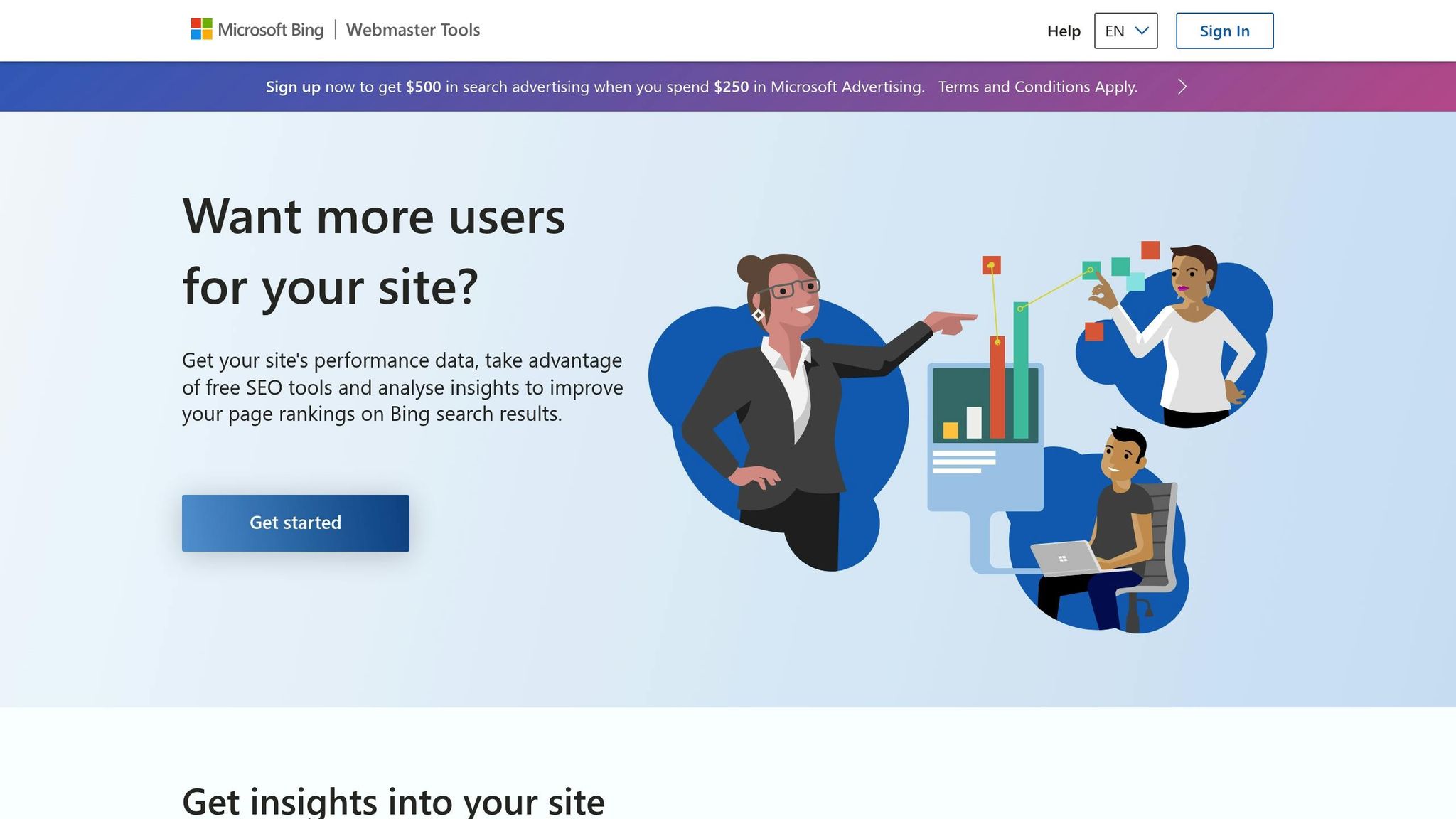
Once your on-page elements are optimized, it’s time to monitor your progress. Bing Webmaster Tools is your go-to platform for tracking how your site performs on Bing. After verifying ownership of your site, you’ll gain access to detailed insights about how Bing crawls and indexes your pages. Performance reports reveal which pages get the most traffic, which keywords drive visits, and how your click-through rates compare across different queries.
The diagnostic tools in Bing Webmaster Tools make it easy to spot and fix technical issues. For instance, the crawl errors report highlights pages Bing can’t access or index, while the mobile-friendliness report ensures your site is user-friendly on smartphones and tablets. Slow-loading pages, broken links, and other common problems are flagged automatically.
You can also use the backlinks report to evaluate the strength of your link profile by monitoring which sites link to yours. Additionally, the platform provides content optimization suggestions, such as addressing missing meta descriptions or duplicate content. To stay ahead, set up automated alerts to catch issues before they impact your rankings.
Staying Updated with Algorithm Changes
Optimizing your site is just the start – staying relevant requires ongoing effort. Bing’s machine learning–driven algorithm updates will roll out frequently in 2025, so staying informed is essential. Keep an eye on Bing’s official updates and use Webmaster Tools to monitor your site’s performance. If you notice sudden changes in traffic, indexing, or keyword rankings, investigate and document these trends to understand their impact.
SEO forums and industry resources can also offer helpful insights from other website owners dealing with similar algorithm changes. Just make sure to verify any advice against official Bing sources before making major adjustments.
Proactive testing and regular updates are key. Sites that refresh their content at least once a month see a 12–18% increase in Bing organic traffic compared to static pages. Create a schedule to review and update your content regularly – refresh outdated stats, add new examples, or expand sections to keep your pages current.
If managing Bing SEO feels overwhelming, professional agencies can step in to monitor algorithm changes and fine-tune strategies. For businesses without in-house SEO expertise, this kind of support can be a cost-effective way to maintain strong visibility on Bing.
Finally, track what works. Document which optimization techniques deliver the best results. Over time, this data will serve as a guide for adapting to future algorithm updates. By staying proactive, you’ll ensure your Bing SEO strategies remain effective and aligned with the ever-changing demands of 2025.
Conclusion
Bing’s search algorithm in 2025 presents a valuable opportunity for businesses willing to refine their SEO strategies. With a U.S. desktop market share hovering between 7–9%, Bing captures millions of monthly searches, offering a less crowded space where well-optimized websites can achieve better visibility.
Unlike Google, Bing stands out with its distinct focus on exact-match keywords, social signals, and multimedia-rich content. While Google leans heavily on backlinks and Core Web Vitals, Bing prioritizes content quality, user intent, and social engagement – elements that businesses often have more control over and can enhance more effectively.
Bing’s advancements in machine learning further amplify the benefits of consistent optimization. Websites that regularly produce high-quality content, maintain technical precision, and utilize structured data are rewarded over time. The algorithm also evaluates relevance, quality, freshness, user engagement, and authority, creating a well-rounded approach to rankings.
For businesses operating in the U.S., Bing’s audience offers unique advantages. The platform tends to attract an older, more affluent demographic compared to other search engines. Additionally, Bing’s integration with Microsoft’s ecosystem extends its reach into voice assistants, business tools, and emerging technologies, further enhancing its value for marketers.
FAQs
How does Bing prioritizing desktop performance over mobile-first indexing impact my SEO strategy?
Bing prioritizes desktop performance over mobile-first indexing, which sets it apart from some other search engines. This means that the quality of your website’s desktop experience significantly impacts your rankings. To perform well on Bing, focus on creating a desktop site that is fast, easy to navigate, and packed with high-quality content.
Although mobile optimization still matters for user experience, Bing’s ranking system leans heavily on factors like desktop page load speed, clean formatting, and smooth navigation on larger screens. To stay ahead, conduct regular audits of your desktop site to ensure it meets these criteria and keeps pace with Bing’s algorithm updates.
How can I use social media to boost my Bing search rankings?
Social media activity plays an indirect role in boosting your Bing search rankings by driving traffic and enhancing your brand’s visibility. To make the most out of social media signals, consider these strategies:
- Encourage engagement: Post high-quality, relevant content that motivates your audience to like, share, and comment. Bing pays attention to user interaction.
- Stay active on key platforms: Build credibility by maintaining active profiles on platforms like Facebook, Twitter, and LinkedIn.
- Bring traffic to your site: Use social media to share links to your website or blog. This signals Bing that your content holds value.
While social media signals alone won’t directly increase your rankings, they can strengthen your overall SEO strategy by driving more visibility and traffic to your site.
What’s the best way to use multimedia content to boost my website’s visibility on Bing in 2025?
To improve your website’s visibility on Bing in 2025, make high-quality multimedia content a priority. This includes images, videos, and infographics that are optimized for search engines. Pay attention to details like using descriptive file names, adding alt text, and including captions. These elements help Bing better understand your content, which can lead to higher rankings.
It’s also crucial to ensure your multimedia is mobile-friendly, loads quickly (thanks to proper compression), and is hosted on a reliable platform. Not only does engaging and relevant multimedia enhance the overall user experience, but it also signals to Bing that your site delivers valuable content.